
Vandaag of morgen in huis

Kwaliteit gegarandeerd

Welkomstaanbiedingen ontgrendelen: GRATIS bezorging | Tot 80% korting | Gratis 30 dagen JoyPlus-proefperiode
Download de app
Buying bouillon seems simple until you have to choose between chicken stock, beef stock, vegetable stock, stock cubes, stock powder or an instant soup. The packaging often promises a rich flavour, but the practical differences mainly come down to dosage, salt content, ingredients, allergens and yield.
For home cooks, busy households and professional kitchens, it is wasteful to buy a large pack that does not suit your usage. A small pack can also be inconvenient if you make soup, sauces or rice dishes every day. Use these checkpoints to compare products based on information that is actually stated on the label or in the product description.
A 1 kg pack sounds good value, but the cost per meal depends on the recommended dosage. According to the product information, Knorr Bouillon Powder Chicken 900 g makes approximately 45 litres of prepared chicken stock. A smaller pack, on the other hand, may be enough for several soups or sauces and takes up less space.
So check:
Words such as “chicken”, “beef” or “mushroom” on the front do not automatically tell you how much of that ingredient the product contains. For example, Maggi Bouillon Beef 123 g lists 0.4% beef powder. According to the ingredients list, Maggi Chicken Bouillon 123 g contains 1.3% chicken meat powder and 0.7% chicken fat.
That does not make the product unsuitable, but it does indicate that the flavour may also come from flavourings, yeast extract and flavour enhancers. If you are looking for a stock with a clearly stated proportion of animal or plant-based ingredients, it is worth checking the ingredients list and any quantitative declarations.
“Vegetable” does not automatically mean vegan in every case. Check the certification mark, ingredients and allergen information. In the product information, Knorr Vegetable Bouillon 80 g is described as V-certified vegan. Other vegetable stocks may be vegetarian but still contain additional ingredients or carry precautionary allergen statements.
The same applies to halal soup: choose a product that is explicitly labelled halal. Maggi Soep Chorba 85 g is offered as halal, but it does contain wheat and celery and, according to the product information, may contain traces of egg, milk and soya.
Stock cubes are convenient for a set volume of liquid. For example, Maggi Chicken Bouillon 123 g recommends one cube per litre of boiling water. Knorr Vegetable Bouillon uses one cube per 500 ml. These differences directly affect the flavour and salt content of your dish.
Stock powder is more flexible to measure. This is useful when you only need a small amount for risotto, stir-fries, rice, pasta or a sauce. Stock paste is often compact and can be portioned straight from the jar, but check the recommended quantity for each brand.
Bouillon is generally a concentrated flavour enhancer. Knorr Vegetable Stock states that its salt concentration is high and advises tasting before adding extra salt. Nutritional values can also vary considerably: Knorr Vegetable Stock lists 50.4 g of salt per 100 g of product, while Maggi Chicken Bouillon lists 0.53 g of salt per prepared serving according to the product information provided.
Pay attention to the difference between values per 100 g of dry product and values per 100 ml of prepared stock. These cannot be compared directly. Also check ingredients such as E621, E627, E631 or E635 if you want to avoid or limit flavour enhancers.
The products mentioned may contain celery, milk, egg, soya, fish, shellfish, mustard or gluten, among other ingredients. Always read the current packaging, particularly if you have allergies or food intolerances.
For plant-based dishes, an explicit vegan certification mark or a clear ingredients list is more useful than simply relying on the term vegetable stock. According to the product information, Calnort Vegetable Bouillon Powder 1 kg is described as gluten-free and vegetarian and does not list any of the 14 main EU allergens. Check the packaging again when you buy, as labels can change.
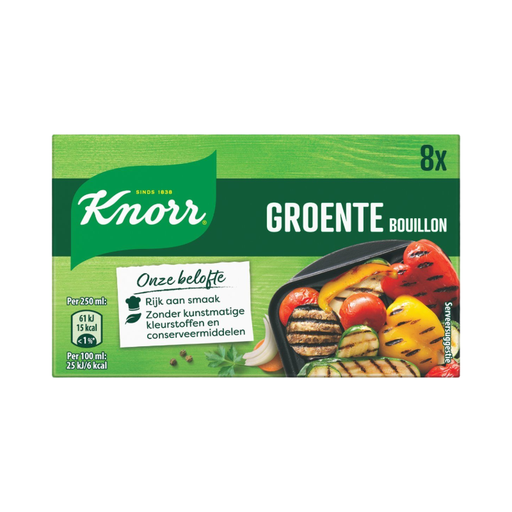
Why it suits this profile: A compact pack for anyone who occasionally makes soup, sauce or pasta and wants to start with a manageable quantity.
The pack is small enough to avoid building up more stock than necessary. The product information states that 15 cubes make approximately 7.5 litres of stock.
Cube format, suitable for soups, sauces and pasta; certified vegan according to the product information.
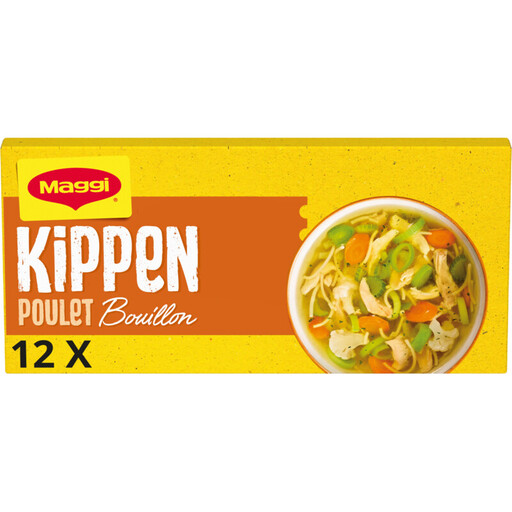
Why it suits this profile: A practical chicken stock for everyday cooking, with clear dosage guidance per litre.
The product description explicitly states a yield of 12 litres and one cube per litre. This makes it easier to compare the pack with alternatives.
Suitable as a base for stock, soup, pasta, rice and sauce; compact pack with fixed portions.
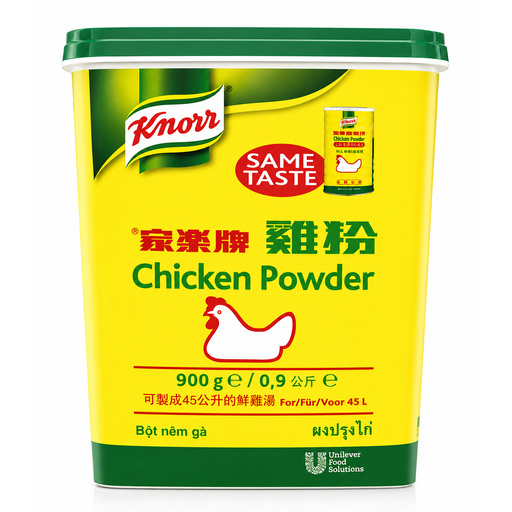
Why it suits this profile: A large pack of stock for frequent preparation in a large household, catering kitchen or food service business.
The powdered format allows you to weigh out the amount you need, while the stated yield of approximately 45 litres helps you estimate the cost per preparation.
900 g contents; according to the product information, suitable for soups, sauces, marinades, stir-fries, rice and noodles.
We have compiled a complete, up-to-date list of products that fully meet these strict selection criteria and the applicable European safety regulations.
That depends on the price per prepared litre and the recommended dosage. Divide the price of the pack by the number of litres it can make. Powder is often convenient for bulk use, while cubes offer fixed portions and require less measuring.
Shelf life varies by product. Store cubes and powder according to the label in a cool, dry place, tightly sealed and away from moisture. Check the best-before date on the packaging and do not use damaged packaging.
Yes. Dissolve a small amount in the cooking water or add the powder directly to a sauce or dish. Start with a small quantity, taste as you go and remember to account for the salt already present in the other ingredients.
