
Vandaag of morgen in huis

Kwaliteit gegarandeerd

Welkomstaanbiedingen ontgrendelen: GRATIS bezorging | Tot 80% korting | Gratis 30 dagen JoyPlus-proefperiode
Download de app
A blender seems simple: add the ingredients, press a button and you’re done. Yet many consumers buy a model that proves inconvenient after just a few weeks. The jug is too small for the family, cleaning takes longer than expected or the motor cannot process frozen ingredients properly.
So don’t focus solely on wattage or an attractive offer. Look at the combination of power, capacity, material, functions and intended use. This helps you avoid paying for features you won’t use or choosing a compact blender for tasks that require a full-size kitchen blender.
High wattage sounds convincing, but it doesn’t tell you everything about the results. The shape of the jug, blade design, speed and the way ingredients circulate also play a part. Even a powerful blender with an awkwardly designed jug may require extra shaking or more liquid.
For a smoothie blender used with soft fruit, less power is often sufficient than for ice, nuts or frozen ingredients. So check which uses are listed in the product description.
A 1.5-litre jug does not always hold 1.5 litres of ingredients that can be processed safely. The maximum fill line and the manufacturer’s instructions are what matter. For one person, a personal blender of around 475 to 700 ml can be practical. For a family, a jug with a capacity of 1.2 to 2.1 litres is more convenient.
A larger jug does take up more space and may be heavier to clean or pour from.
A portable blender is suitable for making a smoothie or shake on the go, but it usually has less power than a worktop model. A cordless blender is handy at the office, in the gym or while travelling, but it is not automatically suitable for large quantities, hot liquids or crushing ice for extended periods.
When choosing a blender for use on the go, check the battery life, charging time, leak-proof lid and capacity. Only use the appliance as described in the instruction manual.
For everyday use, there are several sensible options:
A blender with a pulse function delivers short, powerful bursts. This is useful for loosening ingredients or retaining a coarser texture. A model with multiple speeds gives you more control than an appliance with only on/off operation.
A blender with a glass jug feels sturdy and is less prone to discolouration and absorbing odours. However, glass is heavier and can break if dropped or subjected to a hard impact. Plastic is lighter and often more practical for everyday use.
Some products use Tritan. Check that the product information explicitly states that the material is BPA-free. A BPA-free claim does not automatically tell you anything about other properties, such as heat resistance or dishwasher suitability.
Look for removable parts, dishwasher-safe components and a design that allows the blades to be removed safely. A safety lock, non-slip feet and a securely sealing lid are useful practical details.
According to their product information, several models in this range must not be used to process hot liquids. Some compact models also have a maximum operating time per blending cycle. Allow the motor to cool down whenever the manual instructs you to do so. Never immerse the motor base in water and take care around sharp blades.

Why it suits this profile: The 500 ml capacity is a manageable size for one smoothie or shake. According to the product information, the cup can be used as a drinking bottle with an additional lid.
The product information clearly states 250 watts, one speed and a 500 ml capacity. This makes it clear from the outset that this model is mainly intended for simple, small portions.
500 ml Tritan cup, BPA-free according to the product description, non-slip base and dishwasher-safe removable parts.

Why it suits this profile: This model combines a large glass jug with 1,200 watts, automatic programmes and manual speed control for households that regularly prepare a variety of recipes.
The product details list both the total jug capacity and the usable capacity of 1.5 litres. The pulse function and ice-crushing programme are also clearly specified.
Heat-resistant glass jug, three automatic programmes, touchscreen controls and dishwasher-safe jug according to the product description.

Why it suits this profile: The 1.5-litre jug, 1,300 watts and four blades are designed for larger portions, smoothies, sauces and crushing ice.
The functions are not simply listed as marketing terms: the specifications state two speeds, a pulse function, four blades and a separate ice-crushing function.
Maximum power of 1,300 watts, 1.5-litre capacity, rotary dial and blades designed for hard ingredients and ice according to the product description.
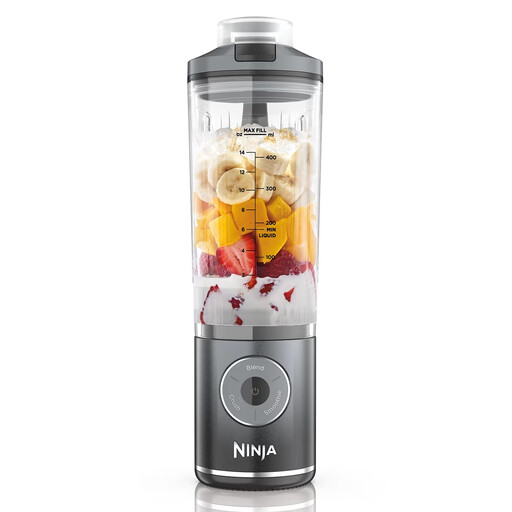
Why it suits this profile: The cordless design with USB charging and two 530 ml cups is ideal for users who want to prepare a small portion at the office, while travelling or after exercising.
The limited 150-watt motor makes it clear that this is a portable blender for small drinks, not a replacement for a powerful kitchen blender.
Cordless use, leak-proof lid, USB cable and two BPA-free 530 ml Tritan cups according to the product information.
We’ve put together a complete, up-to-date list of products that fully meet these strict selection criteria and the applicable European safety regulations.
Use this quick guide:
For soft ingredients, 250 to 350 watts is often sufficient. If you regularly want to process frozen fruit, nuts or ice, look for a more powerful model. Always compare the power rating with the listed functions and usage restrictions.
Its lifespan depends on how often it is used, how it is cleaned and whether the instructions are followed. Overloading, excessively long blending cycles and incorrect use can put strain on the motor or blades. Also check the statutory guarantee and keep your proof of purchase.
A blender usually runs for only a short time at a time. Total consumption mainly depends on its power rating and how long it is used. A 1,200-watt model uses less energy when blending for one minute than it would if you left it running for several minutes. Use the pulse function when short bursts are sufficient.
