
Vandaag of morgen in huis

Kwaliteit gegarandeerd

Welkomstaanbiedingen ontgrendelen: GRATIS bezorging | Tot 80% korting | Gratis 30 dagen JoyPlus-proefperiode
Download de app
A blender can quickly make smoothies, soup or sauces. Yet some appliances end up at the back of the kitchen cupboard after just a few weeks. Often, the problem isn’t the recipe but a mismatch between the appliance and the way it’s used.
When buying, look out for these three common pitfalls:
A smoothie blender or mini blender is ideal for small portions, while a countertop model offers more room for soup, sauces and several glasses at once. A portable blender runs on a rechargeable battery, making it handy for the office, the gym or when you’re out and about. Always check its capacity and charging method.
A hand blender, also known as an immersion blender, can be used directly in a pan, bowl or measuring jug. It’s a practical choice for soup and purée. Add a chopper or whisk and it becomes a multifunctional blender for things like herbs, nuts, whipped cream and batter.
If you want to crush ice, choose a model whose product information specifically mentions an ice-crushing function or a suitable chopper attachment. Don’t assume that a standard blender can handle ice cubes unless the manufacturer says it can.
Power is usually measured in watts. A compact smoothie blender rated at 250 to 350 W is designed for soft ingredients and small quantities. For frozen fruit, hard vegetables or ice, a more powerful model — for example, one rated at 800 to 1,300 W — may offer more leeway.
However, wattage alone doesn’t guarantee a particular texture. Also check:
With a hand blender, the attachments can matter more than motor power alone. A 500 ml chopper and a 700 or 800 ml mixing beaker give you a clearer idea of what the appliance is designed to do.
For a single portion, around 400 to 700 ml is often enough. Families may prefer a jug with a capacity of 1.2 to 2.1 litres. Just be sure to distinguish between the total capacity and the recommended maximum fill level.
A BPA-free blender has parts made without BPA in the relevant cup or jug, according to the product information. Tritan is often used for lightweight cups designed for use on the go. Glass is heavier, but may appeal if you’re looking for a sturdy countertop jug with measurement markings. Always check which parts are dishwasher-safe; this doesn’t automatically include the motor base.
A lid lock, non-slip feet and a securely fitted blade assembly help make a blender easier to use. Never immerse the motor base in water. Unplug the appliance before removing or cleaning any parts.
For a portable blender, look for:
Many portable models aren’t designed for hot soup. A hand blender may be more suitable, provided the manual allows you to use it with warm ingredients.

Why it suits this user: The 500 ml capacity is just right for a smoothie or shake. According to the product information, the cup can also be used as a drinks bottle.
The specifications state a fixed capacity, one speed and 250 W of power. That makes it easier to know what to expect than broad claims about versatility.
500 ml Tritan cup, BPA-free according to the product information, non-slip base and dishwasher-safe removable parts.

Why it suits this user: The 2.1-litre jug is designed for larger portions. The listed programmes and manual speed settings let you choose how to make smoothies, chop and blend.
The product information lists 1,200 W, 14 manual speed settings, four programmes and a separate ice-crushing function. This makes it easy to compare the features that matter.
2.1-litre jug, 700 ml cup, automatic programmes according to the product description and 1,200 W of power.

Why it suits this user: This hand blender is designed for people who want to make soup, sauces, purée and chopped ingredients using one system.
The set includes 25 speeds, a turbo setting and a chopper with three texture settings. This makes it easier to check what the appliance can be used for.
1,000 W motor, whisk and chopper attachments, EasyClick system and dishwasher-safe accessories according to the product information.
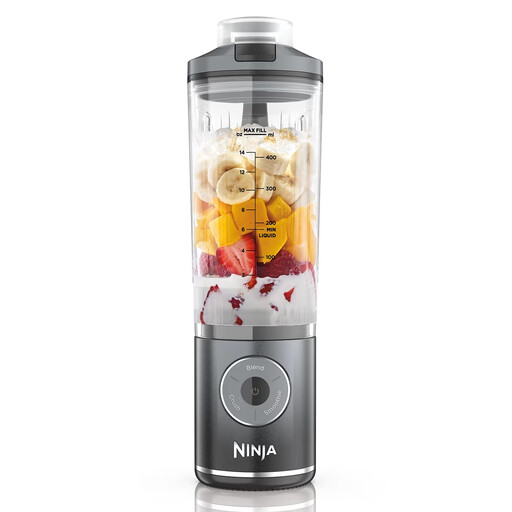
Why it suits this user: Its compact design and USB charging make it suitable for use at home, at work or on the go.
The battery power and leakproof lid are listed separately in the product details. You won’t need to rely on a mains socket while blending.
150 W motor, two 530 ml BPA-free Tritan cups, USB charging and a portable design.
We’ve put together a complete, up-to-date list of products that meet these strict selection criteria and the applicable European safety regulations.
For one or two portions, a smoothie blender with a cup of around 400 to 700 ml is usually enough. If you often use frozen fruit, check whether the manufacturer recommends it, as well as checking the power. A smoothie blender with a pulse function can help you adjust the texture to your liking.
That depends on the model. A sealed countertop blender or portable blender isn’t automatically suitable for hot liquids, as steam can build up pressure. A hand blender is often more practical for soup, but always follow the manual and take care to avoid splashes.
A blender usually uses electricity for only short periods, so the motor itself generally doesn’t account for a large proportion of its running costs. Focus instead on its power, how long you use it for each preparation and how you clean it. A dishwasher-safe blender can save time, but check which parts are suitable for the dishwasher.
