
Vandaag of morgen in huis

Kwaliteit gegarandeerd

Welkomstaanbiedingen ontgrendelen: GRATIS bezorging | Tot 80% korting | Gratis 30 dagen JoyPlus-proefperiode
Download de app
Buying a blender may seem straightforward, until you have to choose between a smoothie blender, stick blender, hand blender or a model with a large jug. Manufacturers often focus on wattage, clever programmes or a long list of accessories. That information doesn’t always tell you enough about how a blender will perform day to day.
So, look out for these three common pitfalls:
A compact model may be enough for soft vegetables, fruit, sauces and cooked ingredients. If you regularly blend frozen fruit, ice cubes, nuts or larger quantities, you’ll generally need more power and a suitable blade design.
According to the product information, a powerful blender such as the Ninja Detect Blender Pro has a 1200 W motor, a 2.1-litre jug and fourteen manual speeds. It’s better suited to larger portions and a range of preparations than a compact smoothie maker. A 300–500 W stick blender, on the other hand, is practical for making soup, purée and sauces in a pan or bowl.
Bear in mind that stated power isn’t always reported in the same way. As well as wattage, compare:
A smoothie blender with a 475–700 ml cup is suitable for one person and takes up very little space. A 1.2–1.5-litre jug is better for making several glasses, dips or soup for a household. Bear in mind the difference between the total capacity and the usable capacity; you usually can’t fill a jug right to the brim.
A personal blender is handy if you want to drink straight from the cup. Check whether it comes with a secure lid and whether the material suits your needs. Tritan and plastic are lightweight; glass is heavier, but feels different and is less likely to retain odours. A blender with a glass jug does need to be handled carefully when lifting and cleaning.
A stick blender or hand blender is versatile if it comes with a range of accessories, such as a whisk, chopper or measuring jug. Check whether these parts are included or only available as optional extras.
For everyday convenience, look out for:
The motor base must not be submerged in water. Always follow the instructions when preparing hot food: some models aren’t designed for boiling liquids. Also check for the CE mark, safety instructions and statutory guarantee. Consumers in the European Union are entitled to a minimum level of statutory protection; additional manufacturer terms may vary by brand.
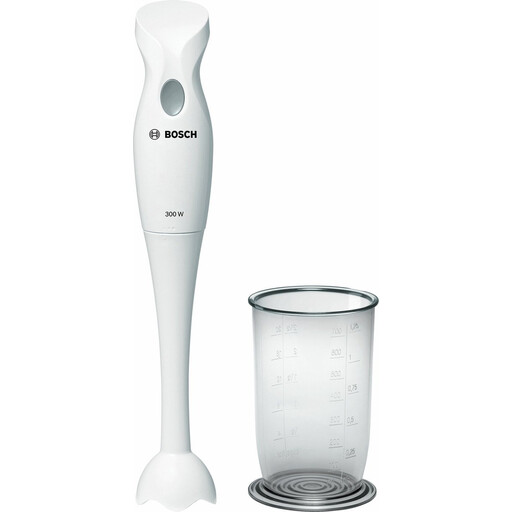
Why it suits this type of user: This compact hand blender is suitable for simple soups and sauces, and for blending soft ingredients. It’s easy to use, with one speed and a turbo function.
The product information lists 300 W, a measuring jug and removable dishwasher-safe parts. This makes it clear from the outset what the model is designed for.
300 W of power, a 1.5-metre cord and a compact height of 37.4 cm.

Why it suits this type of user: This model is designed for households that prepare larger portions and a range of recipes, including smoothies, iced drinks and chopped ingredients.
As well as the stated 1200 W of power, the product description lists a 2.1-litre jug, fourteen manual speeds and four automatic programmes.
Large capacity, pulse function, ice-crushing capability and a separate 700 ml cup.
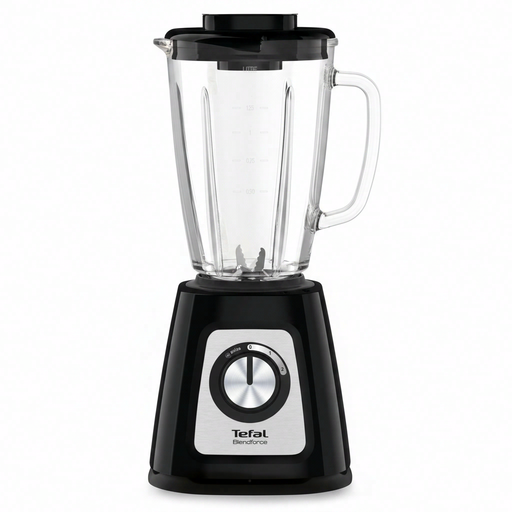
Why it suits this type of user: A glass jug, 800 W of power and a 1.25-litre capacity make this model a good fit for families and anyone who regularly prepares larger quantities.
The specifications list two speeds, pulse and ice-crushing functions, non-slip feet and a safety lock. Be sure to check the weight of the glass jug before buying.
1.25-litre capacity, glass jug, stainless steel blades and dishwasher-safe parts according to the product information.
We’ve put together a complete, up-to-date list of products that meet these strict selection criteria and the applicable European safety requirements.
A stick blender can be used directly in a pan, bowl or measuring jug, making it practical for soup, sauces and purée. A jug blender is better for larger portions, smoothies and recipes where a closed blending space is useful. If you want to tackle a range of tasks, consider a hand blender with a whisk and chopper.
It depends on the ingredients. A compact model may be enough for soft vegetables and fruit. For frozen fruit, ice or hard ingredients, don’t just look at wattage; check the blade design, pulse function and manufacturer’s instructions too. Based on the stated specifications, a model rated at 800–1200 W offers more capacity for demanding tasks. Always stick to the maximum fill line and recommended running time.
Consumption depends on the power rating and how long you use the blender. A 800 W appliance running for five minutes would theoretically use around 0.067 kWh. In practice, blenders are usually used for short periods. So, focus on the power rating, preparation time and how often you’ll use the appliance. A compact personal blender may suit everyday use thanks to its short blending times, while a larger model gives you more options for each preparation.
