
Vandaag of morgen in huis

Kwaliteit gegarandeerd

Welkomstaanbiedingen ontgrendelen: GRATIS bezorging | Tot 80% korting | Gratis 30 dagen JoyPlus-proefperiode
Download de app
Buying a blender seems simple until you have to choose between a smoothie blender, a powerful blender, a countertop blender or a stick blender. Marketing copy often focuses on wattage, extra programmes and a wide range of accessories. But those details don’t tell you everything about how a blender will perform day to day.
The most important question is: what do you want to make, for how many people and how often? A compact model for making one smoothie has different requirements from a blender for soups, sauces and multiple portions.
A higher wattage doesn’t automatically mean that every ingredient will be blended more effectively. The shape of the jug, blade design, capacity and recommended running time all matter too. So always check the full specifications. A 600W model may be suitable for soft fruit and vegetables, while frozen ingredients or ice call for different features.
A large 1.5-litre blender jug is handy for a household, but you can’t fill it right to the top. Check the maximum fill line and allow for froth when making smoothies or preparing hot ingredients. For one person, a 400–700 ml cup may mean less washing up and take up less storage space.
A multifunctional blender with a whisk, chopper and measuring jug can be useful, but only if you’ll actually use those accessories. Check whether the parts are dishwasher-safe and whether the blade is removable. On some models, the blades can’t be removed, which can make cleaning more difficult.
For everyday blending of fruit, yoghurt, soft vegetables and sauces, a model from around 600W upwards is often sufficient. If you regularly want to blend frozen fruit, nuts or ice, you may want to consider a more powerful blender. Also check the maximum continuous running time. Some stick blenders and compact blenders, for example, can only run continuously for one minute before they need a break to cool down.
A plastic jug is lightweight and practical. Glass feels sturdy, but is heavier and takes up more space. Look for:
Take care with hot ingredients. Not every smoothie blender is suitable for them. For example, the Nutribullet Original 600W states that hot liquids must not be blended. The product information for the Nutribullet Select, on the other hand, describes a jug with a vented lid for hot and cold preparations. Always check the manual for the model you choose.
A blender with a pulse function delivers short bursts of power. This is useful for chunkier textures or distributing ingredients evenly. Non-slip feet, a jug lock and automatic shut-off all help you use the blender safely and with control.
A blender with an ice-crushing function must be explicitly specified as suitable for this. Don’t use ice, bones or very hard objects in a model unless the manufacturer says it’s suitable. Some brands’ product information may include claims about speed or blending results based on their own testing; treat these as product information and focus your comparisons on verifiable specifications.
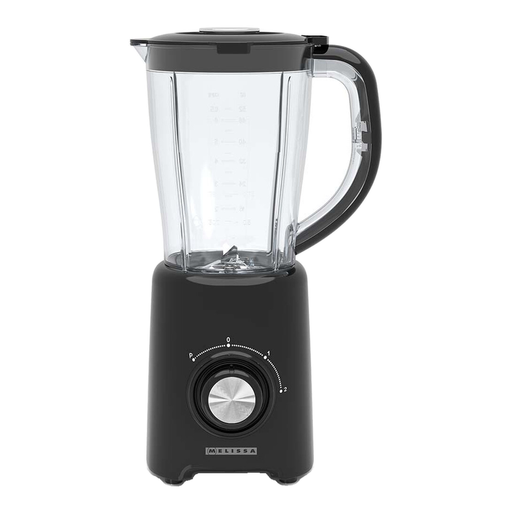
Why it suits this profile: A straightforward countertop blender for smoothies, sauces and everyday preparations for several people.
The specifications list 800W, two speeds and a pulse function, so you’re not limited to a single automatic setting.
1.5-litre capacity, four stainless steel blades, non-slip feet and a dishwasher-safe jug.
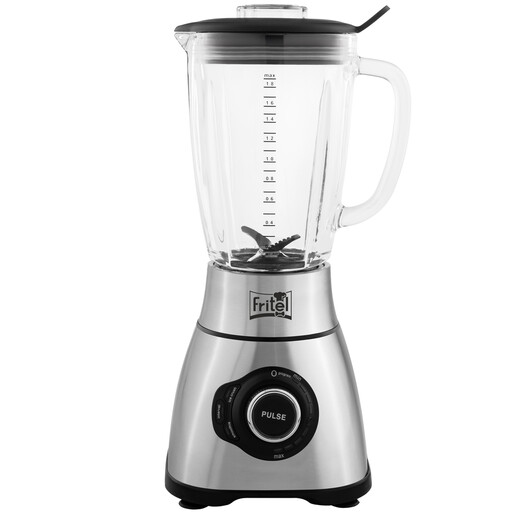
Why it suits this profile: For those who value a generous jug, several programmes and a robust design.
As well as manual controls, the product information lists programmes for smoothies, ice crushing and interval use.
1.8-litre glass jug, pulse function, three programmes and dishwasher-safe parts, according to the product description.

Why it suits this profile: For anyone who wants to whisk, chop and process small quantities as well as purée.
You don’t need to buy a separate appliance for every task: the set includes a whisk, chopper, mixing beaker and stick blender attachment.
600W motor, two speeds, 500 ml chopper bowl and 800 ml mixing beaker; the attachments are removable.
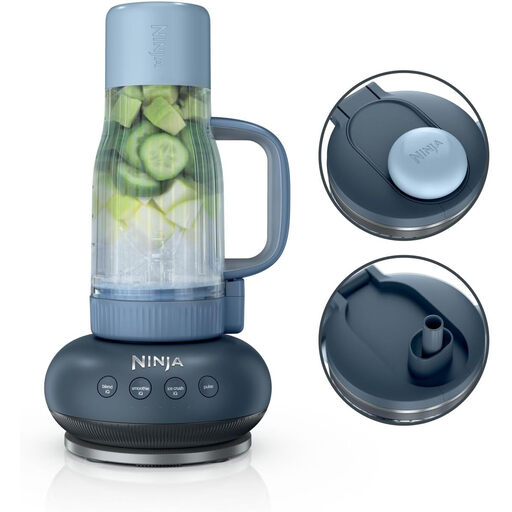
Why it suits this profile: A compact option for anyone who wants to blend and drink straight from a travel cup.
The product information lists three automatic programmes and a separate pulse function, rather than just a general on/off button.
1100W according to the product description, 710 ml travel cup, leakproof lid and removable dishwasher-safe parts.
We’ve put together a complete, up-to-date list of products that meet these strict selection criteria and current European safety regulations.
A blender will usually last longer if you follow the instructions for use. Don’t fill the jug above the maximum mark, don’t run the appliance empty and keep the motor base away from water. Always unplug the blender before removing parts or cleaning it.
Clean the jug immediately after use. A quick rinse stops residue drying around the blades. For a dishwasher-safe blender, check which parts can actually go in the dishwasher; the motor base and many blade assemblies should be kept out.
For soft ingredients, a model from around 600W upwards is often a practical choice. For frozen fruit, ice or hard ingredients, wattage isn’t the only thing that matters: check the blade design, pulse function and whether the blender is explicitly suitable for that use.
A stick blender takes up very little space and is suitable for soups, sauces and small portions. A countertop blender usually has a fixed jug and is more convenient for making several smoothies at once. If you want to tackle different tasks, consider a multifunctional stick blender with a chopper and whisk.
Energy consumption depends on the power rating and how long you use the blender. A 1,000W appliance running for one minute theoretically uses around 0.017 kWh. In practice, preparation time, breaks and how often you use it matter more than wattage alone. So focus on choosing a model that suits your everyday portions and routine.
