
Vandaag of morgen in huis

Kwaliteit gegarandeerd

Welkomstaanbiedingen ontgrendelen: GRATIS bezorging | Tot 80% korting | Gratis 30 dagen JoyPlus-proefperiode
Download de app
Buying a blender seems simple until you compare the differences between a smoothie maker, hand blender, food processor and stand mixer. A high wattage, lots of accessories and terms such as “professional” don’t automatically mean an appliance is right for everyday use. The best choice depends mainly on what you make, how much you prepare at a time and how much space you have.
A motor’s wattage gives an indication of its electrical power, but not of the results it will produce. The blade design, jug shape, speed settings and the way ingredients circulate all play a part too. A compact smoothie maker with 350 watts may be enough for soft fruit, while frozen ingredients or ice put greater demands on the appliance.
As well as checking the wattage, find out:
A 1.8 or 2.1-litre jug sounds spacious, but you mustn’t fill it beyond the maximum fill line. Hot ingredients often need extra room to help limit pressure build-up and splashes. If you make one smoothie at a time, a personal cup holding 600 to 900 ml may be more practical than a large glass jug.
Consider the material too. Glass is sturdy and generally absorbs fewer odours, but it is heavier. Plastic is lighter and often easier to handle. Always check that the material is suitable for hot ingredients; this varies from product to product.
A blender with accessories can partly replace a hand blender, mini chopper and whisk. However, extra bowls and attachments take up cupboard space. Decide in advance whether you really want to chop, whisk, purée or knead dough.
A multi-function blender is useful if you make a variety of dishes. For blending soup directly in a pan, a hand blender is often the more practical choice. For bread dough and cake batter, a stand mixer with a dough hook is a better fit.
Lower-powered models are often sufficient for soft vegetables, fruit and sauces. If you regularly process nuts, frozen fruit or ice, look for a model with a higher stated wattage and a suitable ice function. A powerful blender isn’t automatically quieter or more durable.
Check the controls too. Manual speed settings give you more control over the texture. Automatic programmes can be useful for smoothies, chopping or pulsing, but check the manual to see which ingredients are suitable.
Choose the capacity to suit your household:
Measure the clearance beneath your kitchen cupboards in advance. A large jug, wide base or long hand blender can be awkward to store in a small kitchen.
Removable parts make cleaning easier, but check whether they’re dishwasher-safe. The motor base, plug and cord must not be immersed in water. Blades are sharp: unplug the appliance before changing accessories or cleaning the blade.
Take extra care when handling hot liquids. Always follow the product manual and let ingredients cool if the appliance isn’t suitable for hot food. Smooth purée is important for baby food, but only use ingredients and temperatures permitted by the manual. A baby food blender is not a substitute for food safety advice.
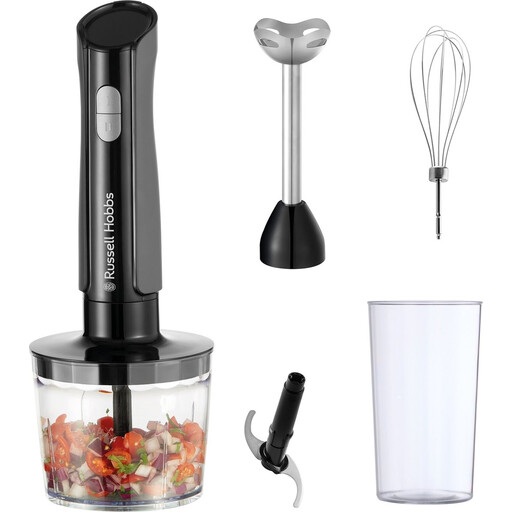
Why it suits this profile: This model combines a hand blender with a mini chopper, whisk and beaker. According to the product information, it has a 500-watt motor, two speeds and a 600 ml beaker.
You’re not paying for a high wattage alone: the included accessories make it useful for blending, chopping and whisking.
Compact hand blender, two speeds and, according to the product information, dishwasher-safe removable parts.

Why it suits this profile: The 2.1-litre jug is suitable for larger households, while the 700 ml cup is ideal for an individual smoothie. According to the product information, this model has a 1200W motor, 14 manual speeds and four programmes.
The specifications cover more than just wattage: they also include capacity, speeds, programmes and an ice-processing function.
Large jug, separate cup and manual control; according to the product description, BlendSense adjusts the time and speed to suit the ingredients and quantity.
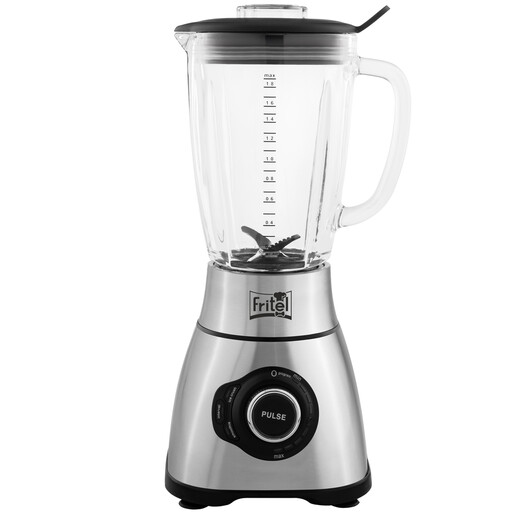
Why it suits this profile: This model is designed for smoothies, sauces, pesto and drinks with ice. According to the product information, it has a 1.8-litre glass jug and programmes for Ice Crush, Smoothie and Interval.
The choice is based on its features and jug material, not just a marketing claim about speed or power.
1.8-litre capacity, glass jug, removable blade assembly and, according to the product information, automatic shut-off after 10 minutes.
We’ve put together a comprehensive, up-to-date list of products that meet these strict selection criteria and the applicable European safety regulations.
Choose a hand blender if you want to purée soups and sauces directly in a pan and have limited cupboard space. A jug blender is better suited to smoothies, iced drinks and larger portions. A food processor is better for slicing, grating, chopping and kneading. For bread, cake batter and whipped cream, a stand mixer with a whisk and dough hook is the obvious choice.
If you want several functions, consider a 3-in-1 blender. Check that the accessories are genuinely suitable for your recipes and that replacement parts are available.
Look for a cup or jug size that suits your portions, a pulse function and compatibility with frozen fruit. A smoothie maker with a personal cup is practical for one person; a larger jug is a better fit for families.
No. Always check the manual. Some models are designed for cold ingredients, while others are suitable for hot ingredients according to the product information. Never fill the jug beyond the marked line, and follow the instructions on temperature and ventilation.
Energy consumption depends on the power drawn and how long you use the appliance for. A 1,000-watt appliance running for one minute theoretically uses around 0.017 kWh. In practice, the preparation time, speed and pauses all affect consumption. So a short programme doesn’t automatically mean every model is equally energy-efficient.
