
Vandaag of morgen in huis

Kwaliteit gegarandeerd

Welkomstaanbiedingen ontgrendelen: GRATIS bezorging | Tot 80% korting | Gratis 30 dagen JoyPlus-proefperiode
Download de app
Buying a blender seems straightforward, until you have to choose between a portable blender, smoothie blender, powerful blender or blender with a drinking cup. Marketing copy often focuses on wattage, revolutions per minute and “smooth” results. However, these figures do not tell you everything about day-to-day use.
The most common disappointing purchases arise from three pitfalls:
For soft fruit, yoghurt and liquid shakes, a compact personal blender is often sufficient. Models with around 250 to 400 watts are suitable for simple smoothies and drinks. If you want to process frozen fruit, seeds or ice more often, look for a more powerful model and check whether ice crushing is permitted according to the product description.
A Nutribullet blender with 600 watts and a Ninja BlendBoss with 1100 watts are examples of models with a mains-powered motor. The difference in wattage can be relevant when blending hard or frozen ingredients, but always follow the recommended filling tips and blending time in the manual.
With a cordless blender, power is often specified differently, for example as battery voltage. The Ninja Blast has a 150-watt motor and charges via USB. Nutribullet Portable models operate with a 7.4-volt battery. Do not compare these figures directly with the wattages of mains-powered blenders.
First, work out how much you usually make:
Also consider the material. BPA-free Tritan is used for various models and is lightweight and suitable for everyday transport. A blender with a drinking cup should also have a secure to-go lid. “Leak-proof” is a product specification provided by the brand, so check that the lid locks correctly and transport the cup upright whenever recommended.
A blender with dishwasher-safe parts can save time, but the motor base and blades usually must not go in the dishwasher. Check exactly which parts are dishwasher-safe.
For a rechargeable blender, the following points are particularly important:
Do not blend hot or carbonated liquids in models where this is not recommended. Pressure can build up. Sharp blades also require extra care during assembly and cleaning. A statutory warranty of at least two years generally applies under EU consumer rules; check the product page and manual for additional terms and conditions.

Why it suits this profile: This compact smoothie blender has 250 watts, a 500 ml cup and an extra drinking lid. This makes it suitable for simple smoothies and shakes without lots of settings.
The capacity and power are clearly specified. The interchangeable lids make transport more straightforward, and according to the product description, the removable parts are dishwasher-safe.
500 ml Tritan cup, 250 watts, drinking lid and non-slip base.
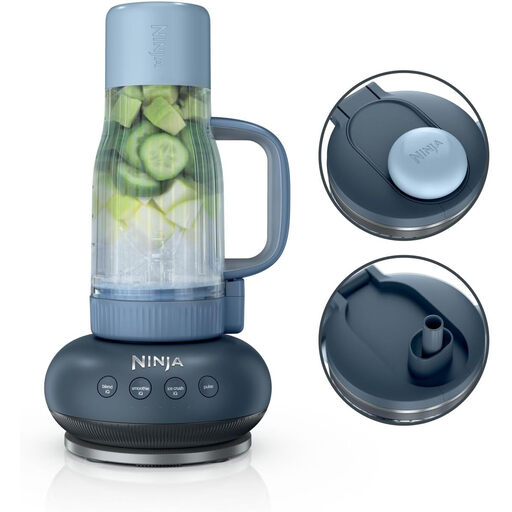
Why it suits this profile: This countertop model combines a 1100-watt motor with three automatic programmes, a pulse function and a 710 ml cup with a straw.
The different modes mean you do not have to rely on wattage alone. According to the product description, the removable parts are dishwasher-safe.
1100 watts, three automatic programmes, 710 ml travel cup and leak-proof lid.
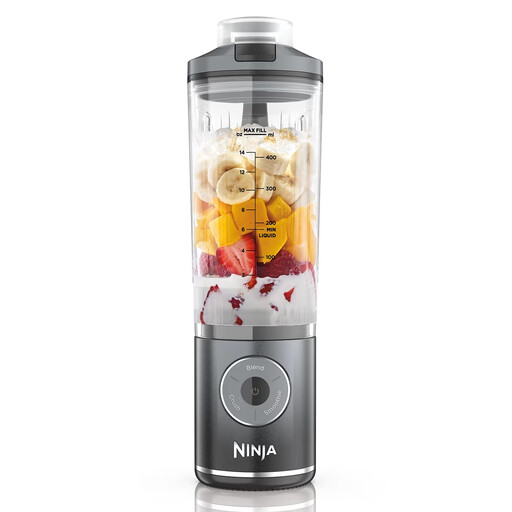
Why it suits this profile: This cordless blender has a 150-watt motor, two 530 ml Tritan cups and a USB-rechargeable battery. It is practical when you want to use an extra cup.
The two cups and leak-proof lids make capacity and transport clear. According to the product description, the parts are easy to clean and dishwasher-safe.
Two 530 ml cups, cordless use, one-touch control and USB charging.
We have compiled a complete, up-to-date list of products that fully meet these strict selection criteria and the applicable European safety regulations.
For one person, a personal blender or blender to go with a capacity of 475 to 600 ml is often sufficient. If you regularly want to process ice or frozen ingredients, check the product specifications and choose a model where this is explicitly stated. For multiple portions, a cup of 700 ml or more is more practical.
That depends on the ingredients and the model. A rechargeable blender is convenient for soft fruit, yoghurt and liquids, but usually has less motor power than a mains-powered model. So do not look only for the word “powerful”; check the battery specifications, motor power, recommended ingredients and maximum blending time.
In addition to the purchase price, electricity, cleaning and any replacement parts are particularly relevant. A cordless blender uses little electricity while blending, but it does need to be charged. A model with dishwasher-safe parts can save time. Also check whether blades or lids are available separately, and follow the manufacturer’s maintenance instructions.
