
Vandaag of morgen in huis

Kwaliteit gegarandeerd

Welkomstaanbiedingen ontgrendelen: GRATIS bezorging | Tot 80% korting | Gratis 30 dagen JoyPlus-proefperiode
Download de app
Buying a basketball seems straightforward, until you have to choose between size 5 or size 7, rubber or synthetic leather, and a ball on its own or a complete basketball set. Marketing copy often uses terms such as “all-weather”, “extra grip” or “durable construction”, but they only mean something if you know which specifications are behind them.
The most common buying mistakes come down to three pitfalls:
Checking the size, material and playing environment makes buying a basketball much easier.
The size affects ball control, dribbling and shooting. So check not only the recommended age, but also your club or competition’s requirements.
A smaller ball is usually easier for children to handle. An oversized ball can make learning to dribble and pass unnecessarily difficult. If you’re looking for a basketball for children, it’s worth checking the size chart on the product page.
A rubber basketball is a practical choice for a driveway, school playground or other rough surface. Rubber is generally easy to clean and suitable for regular outdoor use. A PU or microfibre leather ball often feels softer and can be a comfortable choice for indoor basketball, but always check whether the product description says it’s suitable for indoor and outdoor use.
An indoor/outdoor basketball is designed for use on different playing surfaces. That doesn’t mean every ball will perform equally well in all conditions. Tarmac and concrete cause more wear than a wooden sports floor. Whenever possible, use the ball for the purpose recommended by the manufacturer.
Deep grooves can help you hold and control the ball. Also check:
A basketball with a pump is handy for use at home and on the go. If you’re buying a set, it’s also worth checking exactly what’s included. A basketball set might include a carry bag, pump or hoop, for example, but this varies by product.

Why it suits this player: This size 7 rubber ball is designed for recreational use indoors and outdoors. According to the product description, it comes with a hand pump, two needles and a carry bag.
You won’t need to buy a pump and needles separately. Just check that size 7 is right for the player before ordering.
Rubber outer layer, suitable for different playing surfaces according to the product description, plus a pump, needles and storage bag.
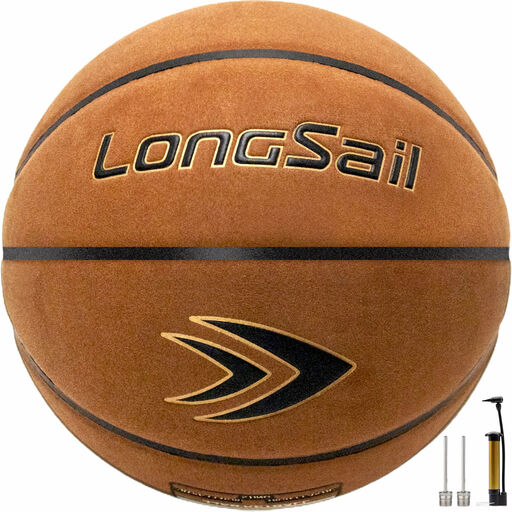
Why it suits this player: The PU or microfibre leather covering is designed for players who value ball feel and grip during training or recreational games.
The product information explicitly offers a choice of size 7 or size 5. This lets you choose a size to suit the player’s age and intended use, rather than going by appearance alone.
PU or microfibre leather outer layer, deep grooves and a rubber inner ball according to the product description.
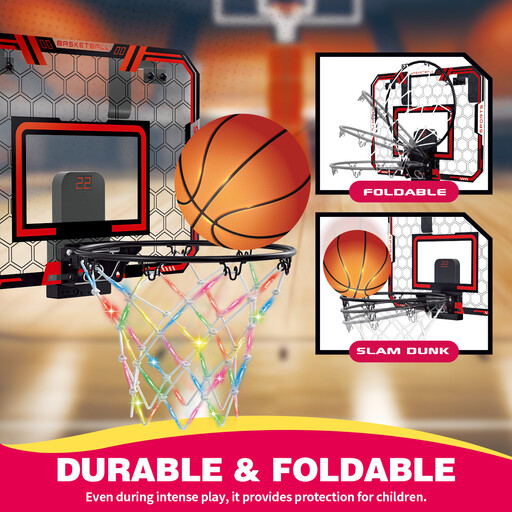
Why it suits this player: This mini basketball hoop is suitable for home use, such as on a door or wall. The set is designed for short shooting practice and recreational play.
The set contents are clearly listed: four rubber basketballs and a pump are included. AA batteries for the scoreboard are not included.
Foldable design, electronic scoreboard with two scoring modes and a spring-loaded hoop, according to the product information.
We’ve put together a complete, up-to-date list of products that meet these strict selection criteria and the applicable European safety regulations.
For children aged around 9 to 12, a size 5 basketball is often a good starting point. Younger children may benefit from a size 4 or size 3 ball. Always check your sports club’s rules and choose a ball the child can hold comfortably.
You can if the product description explicitly says it’s suitable for indoor and outdoor use. A rubber basketball is a practical choice for outdoor play, while a PU or microfibre leather ball is often chosen for a softer feel. Playing outdoors on tarmac generally causes more wear than playing on an indoor floor.
Its lifespan depends on how often it’s used, the playing surface, air pressure and storage. Clean the ball with a slightly damp cloth and store it somewhere dry, away from direct sunlight and extreme heat. Check the valve regularly, too, and avoid prolonged use on rough surfaces if the ball isn’t designed for them.
