
Vandaag of morgen in huis

Kwaliteit gegarandeerd

Welkomstaanbiedingen ontgrendelen: GRATIS bezorging | Tot 80% korting | Gratis 30 dagen JoyPlus-proefperiode
Download de app
Buying a backpack seems simple, until you find that it doesn’t fit under the aeroplane seat, barely protects your laptop or becomes uncomfortable on your shoulders. What’s more, marketing terms such as “large capacity”, “waterproof” and “anti-theft” don’t always tell you enough about how a bag performs day to day.
So, keep an eye out for these common pitfalls:
If you’re looking for a Ryanair cabin backpack or another hand luggage backpack, first check the size allowance for your flight. Rules can vary by ticket type and airline. Measure the backpack, including any parts that stick out, and allow for overfilled side pockets.
A 40 x 20 x 25 cm model is designed to work as a compact personal item. A 40 x 30 x 20 cm bag offers more space, but may come under a different baggage allowance. Always check your airline’s current rules before you travel.
As well as the external dimensions, consider:
A 15.6-inch laptop backpack won’t necessarily fit every laptop of that size. Manufacturers allow for different clearances and use different layouts, so check both the maximum screen size and the available internal space.
A padded laptop compartment is useful for commuting, school and business trips. Ideally, place your laptop close to the back panel, and avoid putting hard objects in the same compartment where they could press against it. A separate sleeve or extra protection may be useful if you cycle or travel by public transport regularly.
A lightweight backpack reduces the weight you carry every day. At the same time, check the strength of the fabric, seams, zips and handle. Polyester and Oxford fabric are often used for school and business backpacks, though their properties vary from one product to another.
A backpack with a USB port is handy if you want to charge your devices on the go, but check whether:
For cycling or walking, padded shoulder straps, a breathable back panel and an adjustable chest strap are all worth considering. A business backpack often benefits more from a laptop compartment, space for documents and an organiser, while a travel backpack is better suited to roomy compartments and easy access.
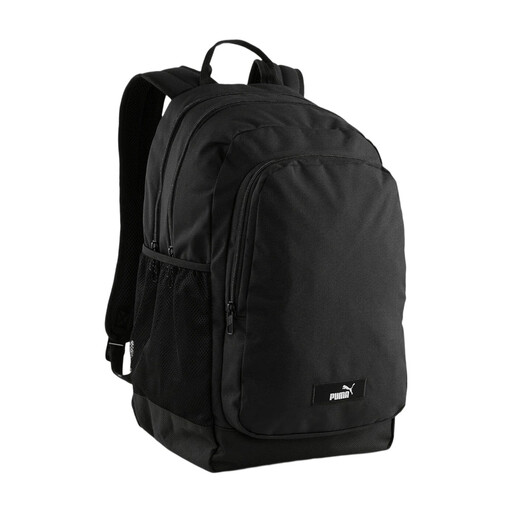
Why it suits this profile: A practical everyday backpack for school, studying or a short commute, without specific travel features you may not need.
The stated dimensions of 45 x 30 x 18 cm and capacity of around 24 litres make the available space clearer than a general claim of “large capacity”.
Two main compartments, mesh side pockets, padded shoulder straps and a padded back panel. According to the product information, at least 70% of the material is made from recycled materials.
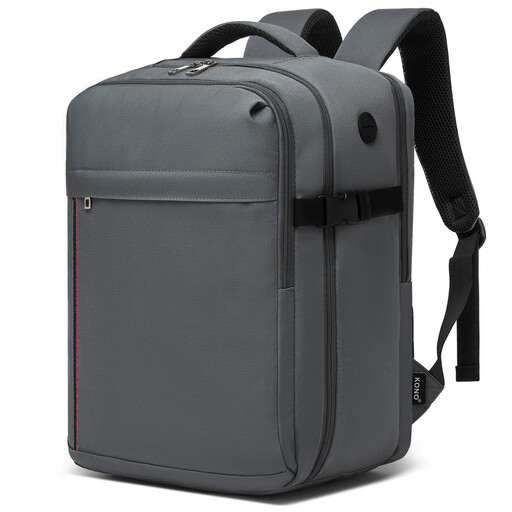
Why it suits this profile: Designed for holidaymakers and business travellers looking for a hand luggage backpack for short trips, commuting and flights.
The external dimensions, weight of around 0.5 kg and capacity of approximately 24 litres are clearly stated. Always check your flight’s baggage allowance too.
Water-resistant polyester, three compartments, a padded compartment for a 15.6-inch laptop, a trolley strap and compression straps.
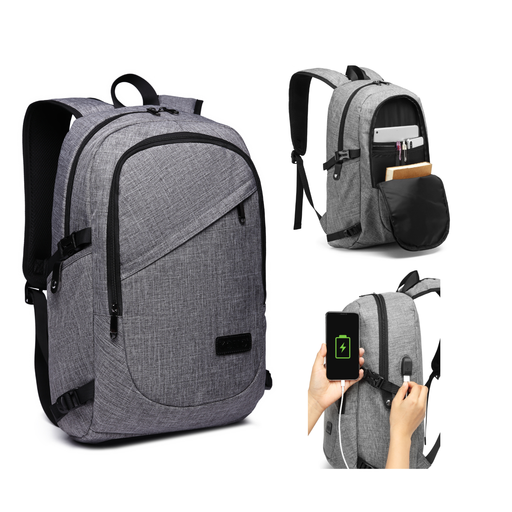
Why it suits this profile: A business backpack for work, study and everyday travel, with laptop protection, organisation and easy access to a power bank.
The product information clearly states that the power bank is not included. The combination lock is a deterrent, not a guarantee of security.
Fits laptops up to 15.6 inches and features multiple pockets, a USB port, a removable three-digit lock, and padded, breathable shoulder straps. The stated weight is approximately 0.73 kg.
We’ve put together a complete, up-to-date list of products that meet these strict selection criteria and the current European safety requirements.
For work, school or commuting, around 15 to 25 litres is often practical. If you need to carry clothes, lunch and equipment, a larger capacity may be useful. Always check that the bag doesn’t become too large or heavy when packed.
Its lifespan depends on how heavily it’s used, the materials, zips, exposure to moisture and how well it’s cared for. Avoid overloading it, use both shoulder straps and clean the bag according to the instructions. A model made from polyester or Oxford fabric may be water-resistant, but you’ll need extra protection in prolonged rain.
It depends on how you use it. The feature is handy if you carry a power bank and want to charge your phone while on the go. However, you’re not paying for a built-in battery: you’ll need to buy the power bank separately and store it safely in the bag.
