
Vandaag of morgen in huis

Kwaliteit gegarandeerd

Welkomstaanbiedingen ontgrendelen: GRATIS bezorging | Tot 80% korting | Gratis 30 dagen JoyPlus-proefperiode
Download de app
Buying Asian sauces seems straightforward, until you are faced with a shelf or online range containing dozens of bottles. A dark sauce is not automatically soy sauce, a sweet variety will not work in every stir-fry and a large bottle is only good value if you use it before it goes out of date.
As a Joybuy Product Recommendation Officer, I filter product information based on practical points: ingredients, volume, allergens, uses and pack size. This helps you see more quickly which sauce suits your kitchen, from Thai flavourings to Indonesian sauces and vegetarian alternatives.
A dark bottle may contain sweet soy sauce, dark soy sauce or ketjap manis. These sauces add colour and often sweetness too. Light soy sauce, by contrast, is mainly intended to add saltiness and umami. If you use a dark, sweet sauce as standard soy sauce, a dish can quickly become too sweet or heavy.
Terms such as “traditional”, “authentic” or “natural” say little about how a product should be used. Check the ingredients list and nutritional information. The proportion of oyster extract, for example, can vary between oyster sauces. Maekrua Oyster Sauce 600 ml lists 30% oyster extract, while Healthy Boy Thick Oyster Sauce 815 g lists 20% oyster extract. Both are oyster sauces, but their composition is not identical.
A 4.5-litre bottle can be practical for restaurants, catering or a large family, but inconvenient for someone who only cooks stir-fries occasionally. As well as the price, consider the volume, shelf life and storage requirements. A smaller bottle may work out cheaper in practice if it helps you avoid waste.
First, choose the dish you need the sauce for:
In the EU, relevant allergens must be clearly stated. With many Asian sauces, soya and wheat are important ingredients to check. Fish sauce often contains fish; oyster sauce contains molluscs; satay sauce generally contains peanuts and may also contain milk or soya.
Examples from the range:
If you have a food allergy or follow a specific diet, always use the ingredients list on the packaging as your reference.
Sauces are generally used in small quantities, but they can contain relatively high levels of salt or sugar. The stated nutritional values vary from product to product. For example, Maekrua Oyster Sauce 600 ml lists 7.6 g of salt per 100 g, while Healthy Boy Thick Oyster Sauce 815 g lists 10.4 g of salt per 100 g. Sweet soy sauce often contains more sugar: A KETJAP Kental Sweet Soy Sauce 1L lists 44.4 g of sugar per 100 g.
Use this information to compare products within the same category. Also check the unit: some labels give values per 100 ml, while others use 100 g.
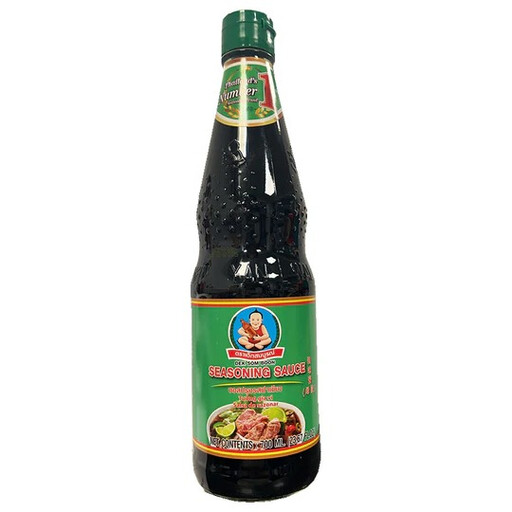
Why it suits this profile: A versatile liquid flavour enhancer for stir-fries, soups, rice, marinades and dips. The 700 g bottle is a practical size for trying it in a range of dishes.
The product information describes this sauce as lighter than ordinary soy sauce. However, check the salt content of approximately 13 g per 100 g and use it carefully.
700 g; suitable for cooking, marinating and serving at the table; contains soya and wheat.
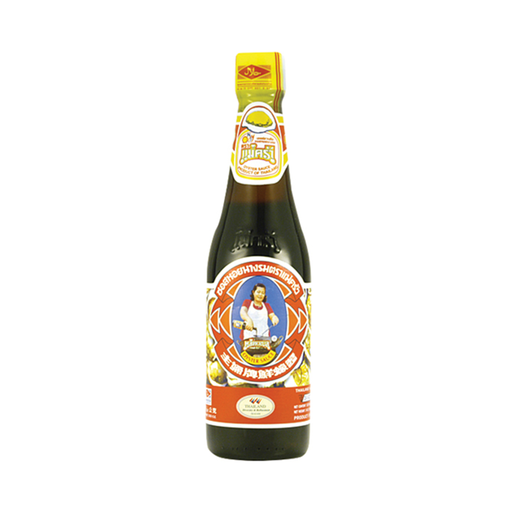
Why it suits this profile: A targeted choice for anyone looking for oyster sauce for Thai stir-fries, vegetables, noodles and marinades.
The stated proportion of 30% oyster extract makes the composition easy to check. However, the sauce contains soya, wheat and molluscs.
600 ml; 30% oyster extract according to the product information; clear allergen labelling.
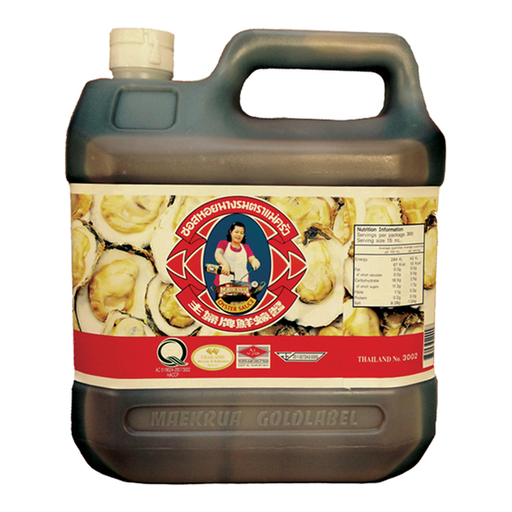
Why it suits this profile: A large size for restaurants, catering, large households or anyone who regularly uses sauce for stir-fries.
The packaging is clearly designed for high-volume use. This means you do not need to combine several small bottles, but you should only buy this size if your usage justifies it.
4.5 litres; suitable for stir-frying, marinating and dips; contains oyster, soya and wheat.
We have put together a complete, up-to-date list of products that fully meet these strict selection criteria and the applicable European safety regulations.
It depends on the flavour you want. Light soy sauce adds salt and umami, oyster sauce provides a savoury, fuller flavour, while dark or sweet soy sauce mainly adds colour and sweetness. Start with a small amount and taste before adding more sauce.
The best-before date and any information about storage after opening are stated on the packaging. Store opened bottles according to the manufacturer's instructions, usually in a cool, dry place away from direct sunlight. Keep the cap and bottle opening clean, and do not use a product if its packaging is damaged.
A vegetarian sauce contains no fish or oyster ingredients. Mushroom Vegetarian Sauce may be suitable; the product information states that this sauce is suitable for vegetarians and vegans. However, always check the label, particularly for allergens such as soya and wheat.
