
Same-day & Next-day Delivery

Quality Guaranteed

Unlock Your Welcome Offers: FREE Delivery | Up to 80% OFF | Free 30-day JoyPlus trial
Download the APP
Buying almonds might seem straightforward, until you have to choose between raw almonds, roasted almonds, salted almonds, flavoured almonds or a sweet almond snack. The packaging often highlights terms like “premium”, “natural” or “healthy”, but those words don’t always tell you enough about the ingredients, portion size or how to use them.
So pay attention to the information you can actually verify: ingredients, allergens, nutritional values, net weight and storage advice. That way, you won’t end up buying a large bag that doesn’t suit your snacking habits, or mistaking a flavoured snack for plain almond nuts.
With biscuits, bars and chocolate products, almond can be prominent on the packaging, even though the product also contains a lot of sugar, flour, chocolate or coating. Always check the ingredients list and the percentage of almond. Daliyuan Crispy Almond Cookies, for example, contains 8% almonds. That’s quite different from a bag of 100% raw almonds.
Almonds in 500g packs are handy for families, baking and regular use, but only if you consume them in time and seal the bag properly. For a lunchbox or the office, a pack of 30g to 200g can be more practical. An opened bag that becomes damp will lose its crunch much faster.
Almonds naturally contain fats, protein and fibre, but they’re also relatively high in energy. Flavoured almonds can additionally contain sugar, syrup, milk ingredients, oil or salt. According to product information from brands, claims like “high in fibre” or “low glycaemic index” may be based on their own product assertions. Don’t treat such statements as personal health advice, and always compare the nutrition table.
Choose unsalted almonds or raw almonds when you want to decide how to use them yourself. They work well in granola, yoghurt, salads, batter and hot dishes. Anatolia Badem Natural contains 100% natural almonds according to the product information, and is suitable as a snack, topping or ingredient.
Roasted almonds generally have a more intense flavour and a firmer, crunchier texture. With salted varieties, check the salt content. The Anatolia Roasted Salted Almonds 500g pack states 1.0g salt per 100g. G’woon Roasted & Salted Almonds lists 97% almonds, sunflower oil and 0.7% salt as ingredients.
Compare products on the same basis: usually per 100g. Raw G’woon almonds list per 100g: 591 kcal, 24g protein, 13g fibre and 0.03g salt. Flavoured or coated snacks can have different values. For example, Nutsholic Almond Strawberry states 597 kcal and 19.7g sugar per 100g.
A nutritional value doesn’t tell you how much you actually eat. So also look at the net weight and portion size. An individual 90g bar is structured differently from a 500g bag from which you serve your own portions.
Almonds are an EU allergen declaration and therefore appear clearly in the ingredients list. Also check warnings for peanuts, other nuts, milk, soya, gluten and sesame. With composite Asian almond snacks, milk, soya or wheat are common ingredients.
Store almonds according to the label: cool, dry, dark and well sealed. Don’t use a product if the packaging is damaged. For young children, be aware of the choking hazard of whole nuts; follow the safety information on the packaging.
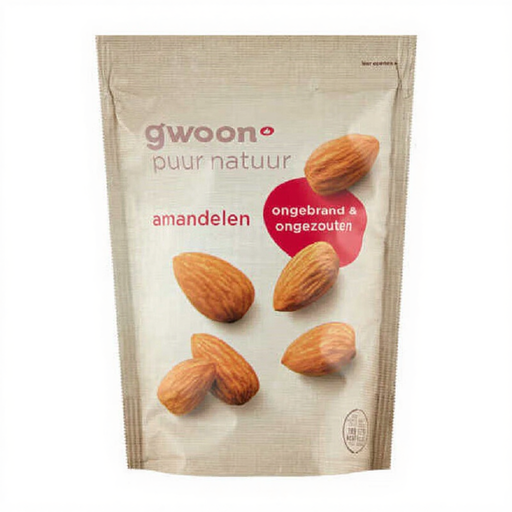
Why this fits the profile: A straightforward pack for anyone who wants to try raw, unsalted almonds first, without committing to a 500g supply straight away.
The ingredients list states almonds as the ingredient and there is no added salt according to the product information. This makes the composition easy to check.
200g, raw and unsalted; states 24g protein and 13g fibre per 100g.
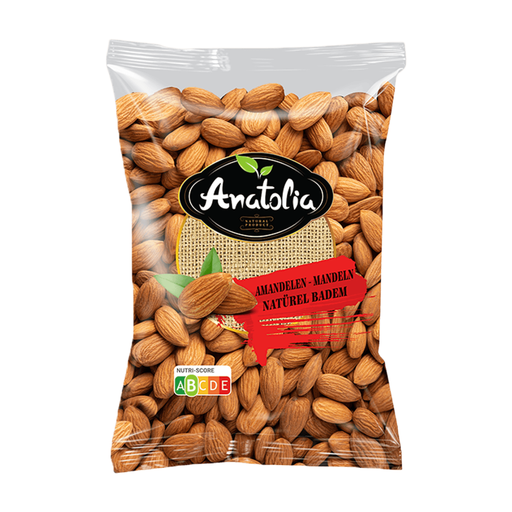
Why this fits the profile: Ideal for households that use almonds regularly for cooking, baking, breakfast or as a snack.
The product is described as 100% natural almonds, with no added salt stated. So you’re not paying for a coating or an elaborate flavour mix.
500g; 578 kcal, 21g protein and 12.5g fibre per 100g according to the product information.
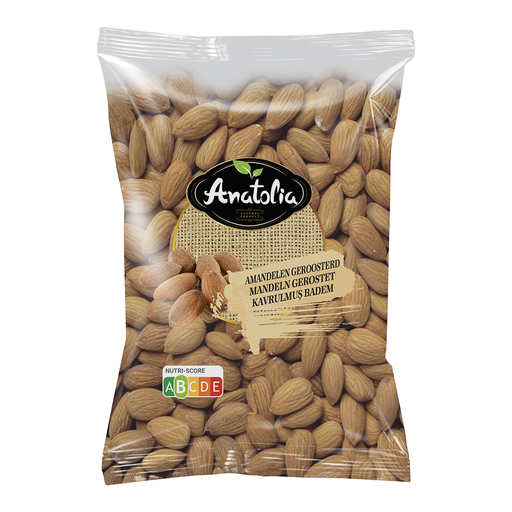
Why this fits the profile: For anyone who wants a supply of crunchy, savoury almonds for drinks parties, on the go or as a topping.
The ingredients are limited to almonds and salt. The salt content of 1.0g per 100g is stated, so you can tailor your choice to your own diet.
Roasted and salted; 500g; 21g protein per 100g according to the label.
We’ve put together a full, up-to-date list of products that fully meet these strict selection criteria and comply with current European safety regulations.
If you’re after something sweet, you can choose almonds with chocolate, fruit or spices. The KIND Caramel Almond Nut Bar (90g) combines almonds with caramel and sea salt, according to the product information. The bar states 16g protein and 40g fat per 100g. If you have allergies, check the warning that the product may contain peanuts and other nuts.
For Asian almond snacks, there are varieties with wasabi, garlic bread or corn. BT21 Wasabi Almond contains, according to the label, sugar, wasabi seasoning, condensed milk and soya. HBAF Almond Garlic Bread Flavor lists wheat, milk and soya as allergens. These products are intended primarily as flavoured snacks and not as a substitute for plain almonds in baking or cooking.
Raw and unsalted almonds are the most versatile. You can chop them, grind them, roast them or work them into batter. Choose a 500g pack if you bake or cook regularly.
The shelf life depends on the product, packaging and storage. Roasting alone doesn’t determine the best-before date. Always check the label and seal the pack well after opening. Store almonds in a dry place away from direct sunlight.
That depends on your personal dietary needs. Look at the nutritional values per 100g and serve a portion into a bowl rather than eating straight from the bag. For on the go, individually wrapped bars or small bags are practical; for home use, almonds in 500g packs are often more convenient.
