
Vandaag of morgen in huis

Kwaliteit gegarandeerd

Welkomstaanbiedingen ontgrendelen: GRATIS bezorging | Tot 80% korting | Gratis 30 dagen JoyPlus-proefperiode
Download de app
At first glance, a wok seems simple: a round pan with high sides. However, models vary considerably in heat distribution, maintenance, size and suitability for induction hobs. If you focus only on a low price or a promising coating, you could end up after a few months with a pan that warps, sticks or does not work properly on your hob.
When buying a wok, pay particular attention to these three common pitfalls:
The material determines how quickly the wok heats up, how much heat it retains and how much maintenance it requires.
A pan without a coating is not necessarily maintenance-free. Carbon steel needs seasoning, while stainless steel mainly requires the correct cooking technique. If easy cleaning is your priority, consider a ceramic wok or a model with a non-stick coating.
Terms such as “healthy”, “non-stick” and “without Teflon” are not always enough to assess a product properly. Check the specific description:
A PFAS-free wok may, for example, have a ceramic coating. According to Brabantia’s product information, the Onyx wok has a PFAS-free ceramic double non-stick coating. Other models may only state that they do not use Teflon; this does not automatically mean that the entire coating is PFAS-free. Therefore, check the specific product specifications rather than relying solely on the marketing name.
For one or two people, a 28 cm wok may be sufficient. A 30 cm model is practical for everyday meals for several people. A 32 cm wok offers extra cooking space but may heat less evenly on a small cooking zone.
A wok with a lid is useful for simmering, steaming and keeping food warm. Also check whether the lid is included, as this varies from product to product. A flat base is important for an induction wok. In addition, check that the diameter of the base matches the cooking zone, not just the pan’s overall diameter.
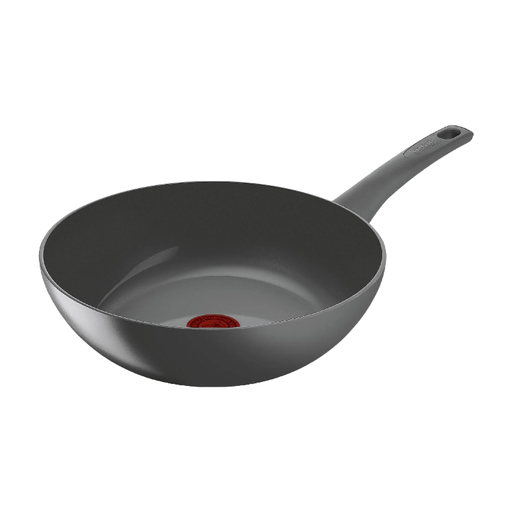
Why it suits this profile: The 28 cm diameter is easy to manage for everyday cooking, and the pan is suitable for gas, electric, ceramic and induction hobs.
The compatible heat sources are clearly stated. According to the product description, the ceramic Inoceram coating is free from PTFE, lead and cadmium; hand washing is still recommended.
28 cm; Thermo-Signal heat indicator; flat base for induction.
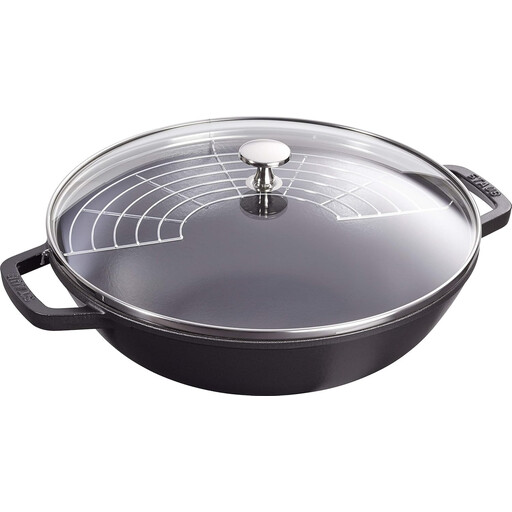
Why it suits this profile: This heavy cast-iron wok is designed for those who value heat retention more than low weight.
The 5.1 kg weight is stated clearly, so you can assess in advance whether your worktop and cooking routine can accommodate it.
Suitable for induction; enamelled cast iron; glass lid, steaming rack, bamboo spatula and chopsticks included.
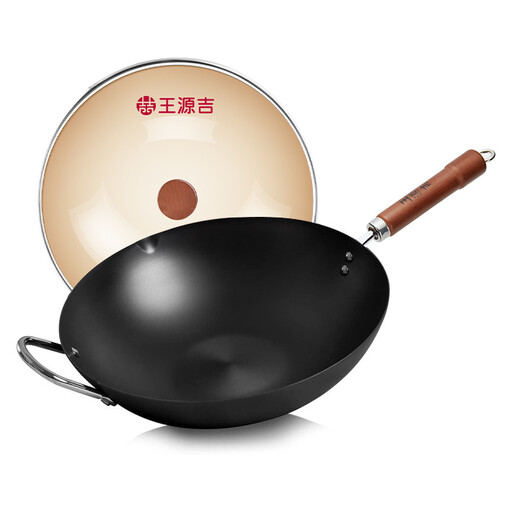
Why it suits this profile: This carbon steel wok is aimed at high-temperature cooking, stir-frying and enthusiasts of traditional Chinese wok cooking.
No chemical coating is mentioned. However, seasoning, hand washing, thorough drying and applying a thin layer of oil after use are essential.
Flat base; suitable for induction, gas, electric and ceramic hobs; glass lid and extra handle.
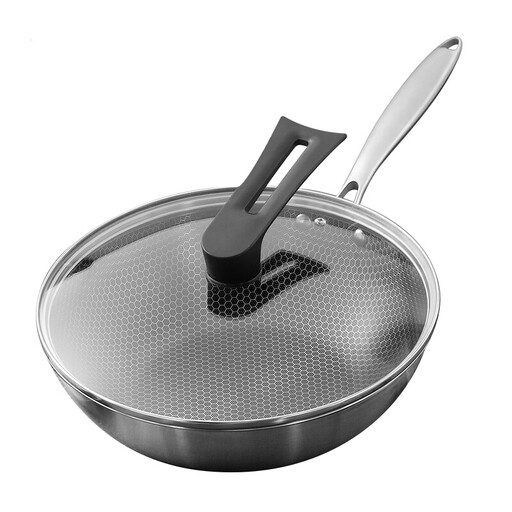
Why it suits this profile: The 30 cm flat-bottomed wok is designed for stir-frying, sautéing and deep-frying on gas, induction and electric hobs.
The product information mentions a stainless-steel honeycomb structure without Teflon and explicitly lists a matching lid. Always check the supplied instructions before use.
30 cm; lid included; suitable for gas, induction and electric cooking.
We have put together a complete, up-to-date list of products that fully meet these strict selection criteria and the applicable European safety regulations.
The right care varies depending on the type of wok:
When using induction, choose a cooking zone that matches the base. A zone that is too small will mainly heat the centre, while one that is too large may work less efficiently.
For one or two people, 28 cm is often practical. A 30 cm wok provides more space for a family or several portions. A 32 cm wok is suitable for larger quantities but requires sufficient cupboard space and a suitably sized induction zone.
That depends on the base. A traditional round wok is often unstable on induction. Choose a flat magnetic base and always check the stated heat sources. According to their product information, certain carbon steel and stainless steel models are suitable for induction.
Its lifespan depends on temperature, utensils and cleaning. Hand washing, moderate preheating and soft spatulas help keep the coating usable for longer. If you want to cook at very high temperatures, consider a carbon steel wok without a coating, but bear in mind that it requires regular maintenance.
