
Vandaag of morgen in huis

Kwaliteit gegarandeerd

Welkomstaanbiedingen ontgrendelen: GRATIS bezorging | Tot 80% korting | Gratis 30 dagen JoyPlus-proefperiode
Download de app
Buying a trampoline seems simple until you see the vast array of options. From large outdoor trampolines for the garden to compact fitness trampolines for indoor use. What size is right? Is a net really necessary? And what's the difference between a model for kids and a rebounder for adults?
As a Joybuy Product Recommendation Officer, I'm here to help you understand the specifications. This guide is designed to help you make an informed choice that suits your needs, whether you're looking for fun for the kids or an effective piece of fitness equipment for yourself.
Before you make a choice, it's helpful to consider a few key points. These specifications determine the trampoline's safety, ease of use, and lifespan.
Safety is a key consideration, especially for a kid's trampoline. A trampoline with a net prevents users from falling off the jumping mat. Ensure the net fits snugly against the mat with no gaps. A sturdy, thick pad that completely covers the springs is also essential to prevent contact with the steel parts. Products that comply with the EN 71 standard are designed with toy safety in mind.
The type of trampoline depends on its intended use and the available space.
Measure the available space beforehand. For an outdoor trampoline, it is recommended to maintain at least two metres of clear space around it.
A trampoline's durability is largely determined by the materials used. A frame made of galvanised steel is treated to prevent rust, which extends its lifespan, especially for outdoor use. The jumping mat and edge pad should be made of weather-resistant material that can withstand UV radiation and moisture.
Based on product specifications and intended uses, we have highlighted some popular choices for you.
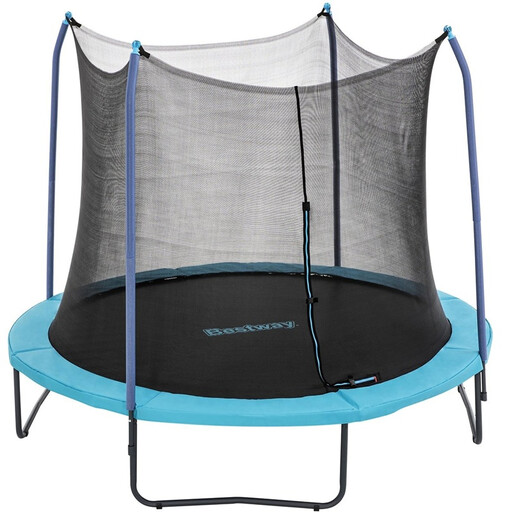
Why it stands out This model is a complete set for the garden. With a diameter of 3.05 metres, it offers ample space for jumping. The focus is on safety, with a fully enclosed net sewn directly to the jumping mat, leaving no gaps.
Key features
Who is it for? For families with a garden looking for a robust and safe outdoor trampoline for children aged 6 and up (maximum user weight 90 kg).
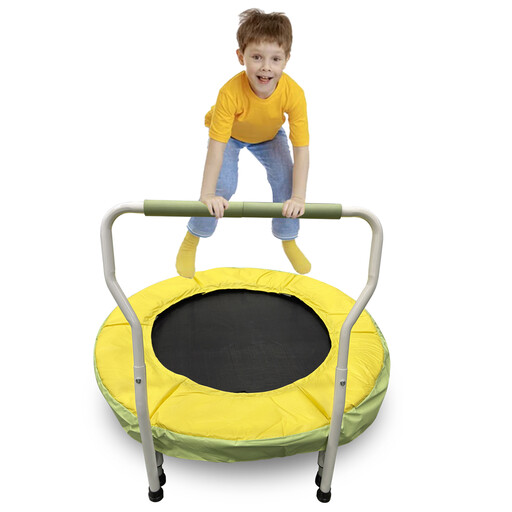
Why it stands out This toddler trampoline is specifically designed for young children. Its compact size (91 cm) and foam-covered handlebar provide stability and support for their first jumping experiences.
Key features
Who is it for? For parents looking for a first, safe kid's trampoline for children aged 3 to 6 with a maximum weight of 25 kg.

Why it stands out This fitness trampoline combines functionality with ease of use. It's a foldable trampoline, allowing it to be stored compactly after use. The adjustable handlebar provides extra support during more intense workouts.
Key features
Who is it for? For adults (maximum user weight 80 kg) who are looking for a rebounder for low-impact cardio exercises at home and value a compact storage option.
A rebounder is a popular tool for a workout with low impact on the joints. If you want to compare more options designed specifically for fitness, such as models with elastic bands instead of springs or different sizes, you can view our wider selection.
Discover more rebounder trampolines
For safety, it is recommended to have a clear space of at least 2 metres around the trampoline. Also, ensure there is sufficient overhead clearance (at least 2 metres above the highest point of the trampoline) and place it on a soft, level surface like grass, not on concrete or tiles.
This depends heavily on the model. A special toddler trampoline can be suitable for children from 3 years old, always under direct supervision. Larger outdoor trampolines are often recommended for children aged 6 and up. Always check the manufacturer's age recommendation and weight limits.
A fitness trampoline, also known as a rebounder, is used for low-impact cardio training. Jumping can increase your heart rate and engage various muscle groups. According to proponents of this form of exercise, the stress on joints like knees and ankles is lower than with activities such as running on a hard surface.
