
Vandaag of morgen in huis

Kwaliteit gegarandeerd

Welkomstaanbiedingen ontgrendelen: GRATIS bezorging | Tot 80% korting | Gratis 30 dagen JoyPlus-proefperiode
Download de app
Buying a juicer seems straightforward until you have to choose between a citrus press, electric citrus juicer, slow juicer or centrifugal juicer. A compact appliance can be handy for a glass of orange juice, while a family may prefer a large feed chute, generous pulp container and easy cleaning.
Look out for these three common pitfalls:
Below are the key specifications to consider, along with some suitable models for different households in the Netherlands.
A citrus juicer or orange press is designed for halved citrus fruit. It’s usually simple to use and doesn’t require a cutting blade. This type is suitable if you mainly make orange, lemon or grapefruit juice.
An electric citrus juicer usually has a rotating cone or an electric pressing mechanism. Check the capacity of the container, which pressing cones are included and how the pulp is filtered.
A traditional centrifugal juicer grates ingredients and separates the juice from the pulp using a filter. This type is practical for ingredients such as apples, carrots and cucumber. Check the diameter of the feed chute, as this determines how much preparation is needed.
A centrifugal juicer with a wide feed chute can save time, but always check the instruction manual for suitable ingredients. A large opening doesn’t mean you can leave hard stones or thick skins in.
A slow juicer presses ingredients slowly using an auger. Models in this category may be suitable for a mix of fruit and vegetables. Check the capacity of the juice and pulp containers, the maximum running time and how easy the juicer is to take apart for cleaning.
Claims about nutrients, oxidation or enzymes often come from marketing materials, so don’t treat them as guaranteed results. For your purchase, verifiable details such as capacity, noise level, materials and suitable ingredients are more relevant.
A wide feed chute means less chopping. Models in the range, for example, have feed chutes measuring 110 mm, 130 mm or 135 mm, while other centrifugal juicers have an 8 cm opening. A larger chute can be useful for families, but it often takes up more worktop space too.
Also check:
A 600 to 700 ml container is suitable for a few glasses. For a family, 1.4 to 1.8 litres may be more practical.
If you prefer clear juice, good separation between the juice and pulp is useful. Other users may prefer a thicker texture. A juicer with pulp settings or several filter options gives you more control over the consistency.
Check how the setting works, though. Some appliances have an adjustable filter, while others come with different filters or pressing cones. So the term ‘pulp setting’ doesn’t mean the same thing for every model.
According to the product information, a BPA-free juicer uses BPA-free materials for parts that come into contact with food. Check this claim for the specific model and see which parts are dishwasher-safe.
Also look out for:
A juicer that’s easy to clean should ideally have removable parts, few hard-to-reach corners and clear cleaning instructions.

Why it suits this user: This compact model is designed for citrus fruit and has one-button operation. According to the product information, it’s ready to use and suitable for oranges, lemons and grapefruit.
The 110 mm-wide feed chute reduces the amount of chopping needed. The product information also lists five pulp settings, so you can adjust the consistency.
BPA-free materials according to the product specifications, removable parts and non-slip feet.
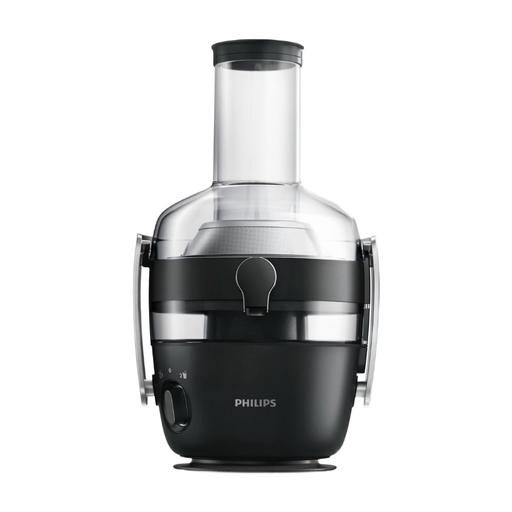
Why it suits this user: According to Philips, this home juicer features FiberBoost, which lets you adjust the texture of your juice. It’s designed for fruit and vegetables and has a 1,000-watt motor.
The product information lists an 8 cm feed chute, a pre-clean function and removable dishwasher-safe parts. This makes it easier to keep on top of regular use.
Adjustable juice texture, an integrated drip stop and BPA-free plastic according to the product specifications.
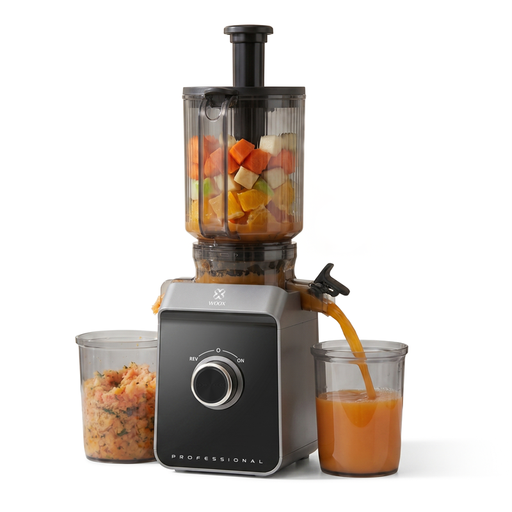
Why it suits this user: According to the product description, this model is designed for fruit and vegetables. It has a 726 ml juice jug and an 836 ml pulp container. The XXL feed chute has a diameter of 130 mm.
The product information lists overheating protection, a maximum continuous running time of 10 minutes and a design that’s easy to clean. This makes the operating limits clearer.
150 watts of power, a listed noise level below 72 dB and BPA-free parts according to the product information.
We’ve put together a complete, up-to-date list of products that meet these strict selection criteria and the applicable European safety regulations.
Usually not. A citrus juicer is designed for halved citrus fruit. For apples, carrots and other vegetables, you’ll generally need a centrifugal juicer or slow juicer. Always check the instruction manual for suitable ingredients.
Its lifespan depends on how often you use it, how you clean it, the maximum running time per session and whether it’s assembled correctly. Let the motor cool down if the product information recommends it, and don’t use ingredients that the appliance isn’t designed to process.
As well as the purchase price, your main costs are electricity and ingredients. Energy use depends on the wattage and how long you use the appliance. A 40-watt citrus juicer uses less electricity per short pressing session than a 1,000-watt centrifugal juicer, but your overall costs also depend on how much juice you make and how often you use the appliance.
