
Vandaag of morgen in huis

Kwaliteit gegarandeerd

Welkomstaanbiedingen ontgrendelen: GRATIS bezorging | Tot 80% korting | Gratis 30 dagen JoyPlus-proefperiode
Download de app
A freshly squeezed juice is a simple way to increase your fruit and vegetable intake. However, the search for the right juicer can quickly become a maze of marketing jargon and unrealistic promises. Before you make a purchase you'll later regret, it's wise to know what to look for. As a Product Recommendation Officer at Joybuy, I'm here to help you separate fact from fiction.
Many consumers fall into the same traps. Here are the most common ones:
slowjuicer sounds advanced, but if all you want is a quick glass of orange juice, a simple citrus press is often a better and more affordable choice. The technology should match your needs.juicer with a large feed chute is one of the most underrated, yet crucial, specifications for daily convenience.To avoid a bad purchase, it's helpful to understand three core specifications. These determine how the appliance will fit into your daily routine.
The term juicer is used for different appliances, each with its own method of operation.
A large feed chute (ideally 75 mm or more) will save you significant preparation time. You can put whole apples, pears, or peeled oranges directly into the appliance without having to chop them into small pieces first. This makes it much more approachable to use the juicer daily.
An easy-to-clean juicer is crucial. Look for objective features in the product description:
Based on these practical criteria, we have selected a number of models that suit different user profiles.
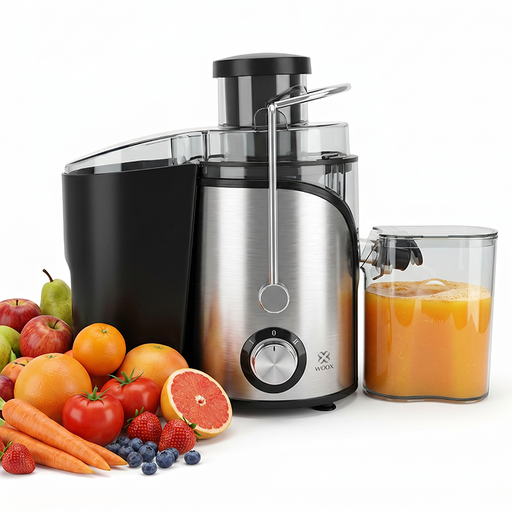
Why This Fits Their Persona: For those who want a fresh juice quickly and without a large investment. This model is an affordable entry-point into the world of centrifugal juicers, perfect for a quick morning routine with common fruits and vegetables.
This is a no-nonsense appliance without the expensive, complex features of a slow juicer. The wide 7.6 cm feed chute reduces prep time, so you don't fall into the trap of a chute that's too small.
The combination of a 600W motor and a large feed chute makes it an efficient choice for beginners. The parts are removable for easier cleaning.
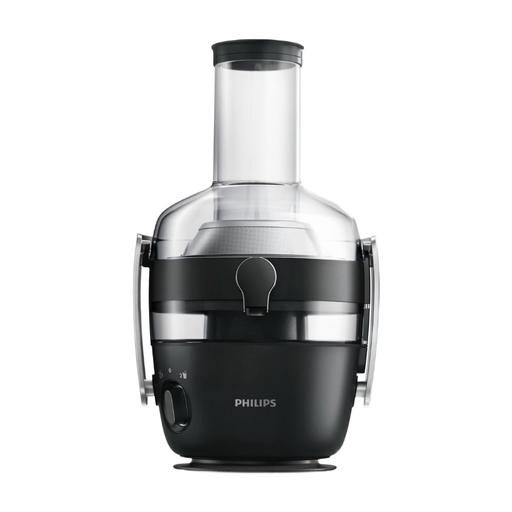
Why This Fits Their Persona: Ideal for families who want variety and convenience. With FiberBoost technology, everyone can choose their own juice texture, from clear to fibre-rich. The powerful motor and large feed chute are suitable for larger quantities.
Philips tackles the "easy to clean" myth with QuickClean technology and a pre-clean function. According to the manufacturer, a water fountain rinses away residue, which significantly speeds up cleaning.
The adjustable fibre level (FiberBoost) is a unique feature. The XXL 8 cm feed chute allows for processing whole fruits, which saves a lot of time.

Why This Fits Their Persona: For those who want to extract the maximum amount of nutrients from fruits and vegetables. The cold press technique of a slow juicer minimises oxidation and heat, which manufacturers claim results in higher quality juice, ideal for green juices and delicate ingredients.
This is a deliberate choice for a specific technique (cold pressing) rather than a general-purpose centrifugal juicer. It's not an unnecessary feature, but the core of the product. The filter-free design is intended to simplify cleaning, a known drawback of slow juicers.
Cold press technology for a higher juice yield and, according to the manufacturer, better nutrient retention. The quiet operation (<72dB) is a major advantage over noisy centrifugal juicers.
We have compiled a complete, up-to-date list of products that fully meet these strict selection criteria and comply with Dutch safety regulations.
The main difference lies in the technique. A centrifugal juicer uses a high rotation speed (centrifugation) to fling juice from the pulp. This is fast but generates heat and oxygen, which can affect the shelf life and, according to some, the nutritional value. A slow juicer slowly crushes and presses ingredients to push the juice out. This process is slower and often yields more juice with less foam and oxidation.
The golden rule is: immediately after use. Rinse all removable parts immediately under the tap. Pulp and sugars will not have dried on yet and will come off easily. Use the included brush to clean the sieve or filter, as this is the most stubborn part. Always check if the parts are dishwasher-safe before placing them in the machine.
Generally, this is not recommended for either centrifugal or slow juicers. Hard, frozen fruit can overload the motor and damage the sieve or auger. If you want to use frozen fruit, let it thaw partially first. For making smoothies with frozen fruit, a blender for smoothies is a more suitable appliance.
