
Vandaag of morgen in huis

Kwaliteit gegarandeerd

Welkomstaanbiedingen ontgrendelen: GRATIS bezorging | Tot 80% korting | Gratis 30 dagen JoyPlus-proefperiode
Download de app
Choosing a new fridge seems simple until you dive into the specifications. Manufacturers use many terms that sound impressive but mean little in practice. The result? You end up paying for features you don't use or get stuck with an appliance that becomes an annoyance within a year. Before you make a choice, it's crucial to know where the real pitfalls lie.
Many people fall into these two common marketing traps:
This guide will help you cut through the marketing jargon and choose a model that truly fits your situation, whether you have a large family, live in a dorm, or are looking for a portable cooler for on the go.
Focus on the specifications that matter in daily use. These are the three most important points to check before purchasing a fridge.
An energy-efficient fridge is good for your wallet and the environment. The energy label (running from A to G) indicates efficiency, but the annual energy consumption in kWh tells the real story. This figure, which is mandatory on the energy label, can be multiplied by your electricity rate to calculate the annual costs. This allows you to fairly compare a compact fridge-freezer with a large American-style fridge.
The noise level is expressed in decibels (dB) and categorised into noise classes (A to D). For a freestanding fridge in an open living space, this is a crucial point.
Ice build-up in the freezer compartment reduces efficiency and takes up freezer space. The solution is a system that makes defrosting unnecessary.
Not every fridge is suitable for every situation. We have selected a number of models that align well with different user profiles, based on their objective specifications.
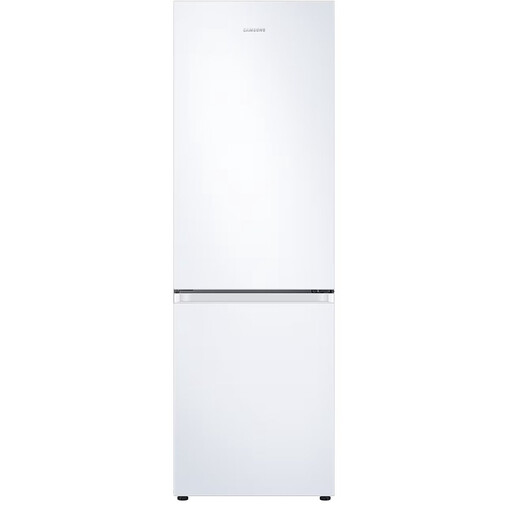
Why This Fits Their Persona: With a total capacity of 344 litres, there's plenty of room for a family's weekly groceries. According to Samsung, the SpaceMax technology provides more interior space with the same external dimensions. The Wi-Fi connectivity with the SmartThings app allows you to monitor energy consumption, which is useful for a cost-conscious household.
This model tackles the noise pitfall with a level of just 35 dB, which is very quiet for an open-plan kitchen. The AI Energy Mode in the app provides insight into actual consumption and helps optimise it, so you're not just relying on the label.
Full No Frost technology (never defrost again), a spacious 344-litre capacity, and very quiet operation.
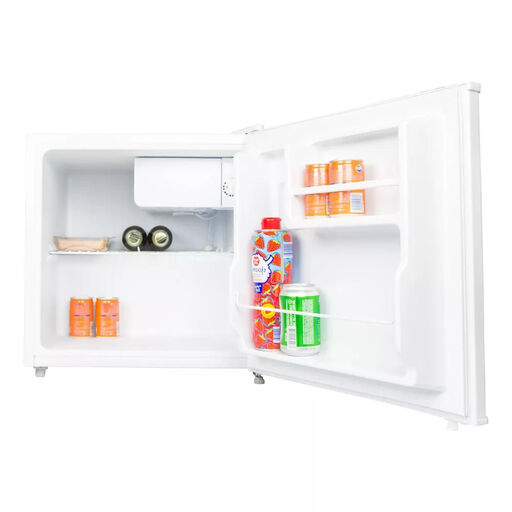
Why This Fits Their Persona: Ideal for a dorm room, office, or as an extra minibar. With 43 litres of capacity, there's enough space for drinks and basic snacks. The compact tabletop model (49.2 cm high) fits almost anywhere, and the reversible door offers placement flexibility.
This model focuses on the essentials: cooling in a compact size. It has no expensive, superfluous features. The F energy label is relative, as its annual consumption of 107 kWh is low in absolute terms, resulting in low running costs.
Very compact tabletop model, 43-litre net capacity, and a handy small freezer compartment for ice cubes.
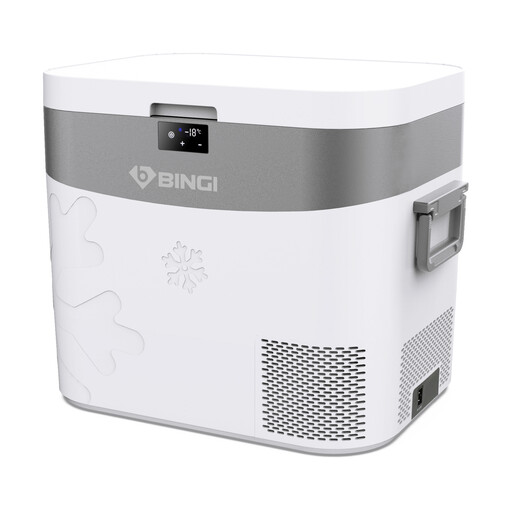
Why This Fits Their Persona: Perfect for anyone looking for a reliable fridge for camping, a boat, or a truck. It runs on both 12V/24V (vehicle) and 100-240V (mains). With a 22-litre capacity, there's enough room for drinks and food for a few days.
This is a compressor cooler, not a cheaper thermoelectric model. This means it can actually freeze (down to -18℃), regardless of the ambient temperature. You're paying for performance you need on the road, not for a 'cooler' that fails on a hot day.
Powerful compressor that can cool and freeze, works on 12V/24V DC and 100-240V AC, and has built-in battery protection to save your vehicle's battery.
We have compiled a complete, up-to-date list of products that meet these strict selection criteria.
A quiet fridge typically produces less than 38 decibels (dB). Models with a noise level of 35 dB or lower (noise class A or B) are considered very quiet and are ideal for open-plan kitchens, studios, or other spaces where peace is important.
No Frost completely prevents ice formation by circulating cold, dry air through the freezer compartment. This means you never have to defrost manually. Low Frost significantly reduces ice build-up, but over time (usually several years), manual defrosting is still necessary. No Frost offers the most convenience, while Low Frost is often found in more budget-friendly models.
The average lifespan of a fridge is between 10 and 15 years. This depends on the quality of the components (especially the compressor), usage, and maintenance. Regularly cleaning the dust from the back and keeping the door seals clean can help extend its lifespan.
