
Vandaag of morgen in huis

Kwaliteit gegarandeerd

Welkomstaanbiedingen ontgrendelen: GRATIS bezorging | Tot 80% korting | Gratis 30 dagen JoyPlus-proefperiode
Download de app
An extra freezer is a lifesaver for storing weekly groceries, pre-made meals, and special offers. But when choosing a model, you quickly encounter a maze of energy labels, technical terms, and marketing promises. Many people fall into the same traps, leading to a freezer that consumes too much power, makes excessive noise, or breaks down after just a few years. As a Product Recommendation Officer at Joybuy, I'm here to help you make the right choices based on facts, not hype.
Before you buy a freezer, it's important to recognise these three common mistakes:
To find a freezer that suits your household, it's essential to look beyond the sales pitches. Focus on these three objective criteria.
The right size and type are the foundation of a good purchase. Capacity is expressed in litres. A rough guideline:
There are three main types:
An energy-efficient freezer will save you a lot of money in the long run. The new energy label (scale A-G) provides a clear indication. Always check the annual consumption in kWh to get a realistic estimate of the costs.
The noise level, expressed in decibels (dB), is especially important if the freezer will be placed in or near your living space. A quiet freezer has a noise level of 38 dB or lower. Remember that every 3 dB increase represents a doubling of the audible sound.
As mentioned earlier, No Frost is a key feature for anyone seeking convenience. This technology completely prevents ice build-up, making manual defrosting obsolete and keeping the freezer running efficiently. For those who want to seamlessly integrate a freezer into their kitchen, a built-in freezer is the go-to option. These are installed behind a cabinet door for a clean, streamlined look.
Based on specifications and user profiles, we have selected a few models that cater to different needs.

Why This Fits Their Persona: Ideal for a single-person household, student room, or as extra freezer space in a small kitchen. With a 60-litre capacity and a compact size, this undercounter model offers just enough space without consuming unnecessary power or taking up much room.
This model lacks expensive extras like No Frost, which keeps the purchase price low. You don't pay for features you're less likely to need in a small household.
Compact size: Fits easily under a counter or in a small nook. Reversible door: Offers flexible placement in any room.
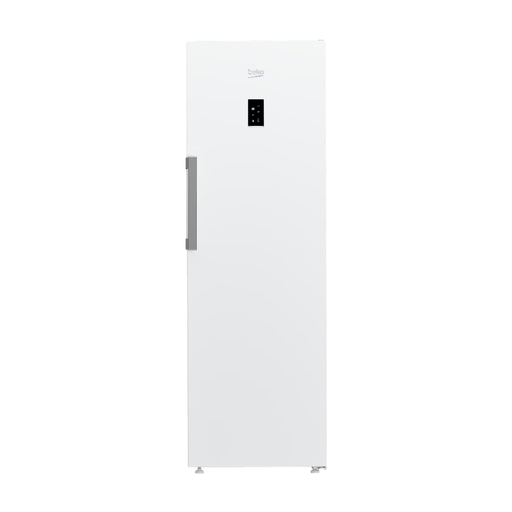
Why This Fits Their Persona: Families need space, convenience, and low energy consumption. With 286 litres of capacity, a highly efficient C-label, and No Frost technology, this Beko freezer meets all the requirements of a modern, busy household.
This model has a true No Frost system, so you avoid the confusion with 'Low Frost'. Its C-label under the new standards guarantees a genuinely low energy bill.
Very quiet: At 34 dB, this is a quiet freezer, ideal for an open-plan kitchen. Energy-efficient: The C-label is excellent for a freezer of this size.
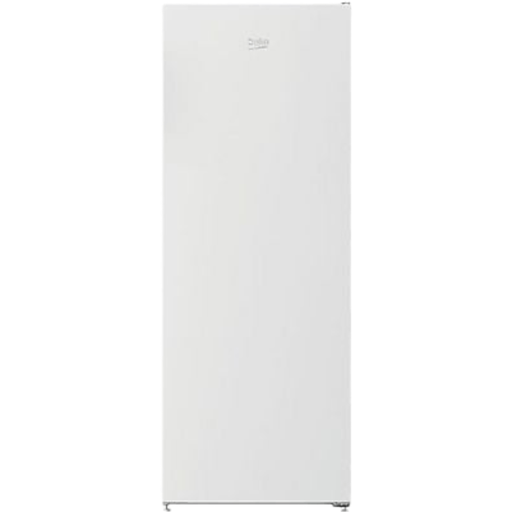
Why This Fits Their Persona: For those who want to place a freezer in an unheated space like a garage or utility room. This upright freezer is specially designed to keep functioning in low ambient temperatures, a crucial feature for reliability.
This model directly addresses the 'incorrect placement' trap. The FreezerGuard technology, as Beko calls it, ensures the freezer continues to work in temperatures as low as -15°C.
Works in cold spaces: Specifically designed for garages and sheds. Ample capacity: With 196 litres, there's plenty of room for extra stock.
We have compiled a complete, up-to-date list of products that fully meet these strict selection criteria and safety regulations.
No Frost is a system that continuously circulates cold, dry air throughout the freezer. This prevents ice from forming on the walls and on your products. You never need to manually defrost a No Frost freezer. Low Frost (or similar technologies) significantly reduces ice build-up by integrating the evaporator coils into the walls. This means you need to defrost far less often (about 1-2 times a year) than with a traditional freezer, but it is not completely maintenance-free.
The cost depends on the energy label, the size, and your electricity rate. The energy label shows the annual energy consumption in kWh. Multiply this number by the price per kWh you pay (for example, €0.30). A freezer with a consumption of 150 kWh/year would then cost 150 x €0.30 = €45 per year. An energy-efficient freezer with a good label (e.g., C or D) is always a wise investment in the long run.
No, definitely not. Most freezers are made for an ambient temperature between 10°C and 32°C (climate class SN/N). In an unheated shed, the temperature can drop below this in winter. The freezer may then stop working, causing your food to thaw. For such a location, always choose a model that is explicitly suitable for cold environments. Pay attention to the climate class (SN-T is the widest range) or look for specific technologies from brands like Beko (FreezerGuard) that guarantee this functionality.
