
Vandaag of morgen in huis

Kwaliteit gegarandeerd

Welkomstaanbiedingen ontgrendelen: GRATIS bezorging | Tot 80% korting | Gratis 30 dagen JoyPlus-proefperiode
Download de app
A desk should suit your space, working posture and everyday essentials. Yet many people choose one mainly for its colour or an attractive product photo. At home, they may find that the desktop is too small, there isn’t enough storage, or the desk won’t fit under a window or into an alcove.
As a Joybuy Product Recommendation Officer, I start by checking the facts: dimensions, materials, adjustability, storage and assembly requirements. This helps you avoid finding out too late that a compact desk isn’t practical.
A desk that’s 80 or 90 cm wide might seem suitable for a small room, but its depth determines how much space you really have for a monitor, keyboard and documents. A 40 cm-deep desktop is practical for writing or using a laptop, but can feel cramped with a large monitor and keyboard.
So don’t just measure the available wall space. Remember to allow for:
A desk with drawers can keep books, cables and stationery neatly tucked away. However, drawers can limit legroom. Check whether they’re on the left or right, and whether they can be opened fully.
A desk for small spaces with an open compartment gives you quick access to your things, while a desk with drawers creates a tidier look. Choose based on what you use every day, not just the number of compartments.
A height-adjustable desk offers flexibility, but an electric sit-stand desk needs power, enough clear space and correct assembly. Check the minimum and maximum height, maximum weight capacity and frame dimensions.
Some brands’ product descriptions say that features such as memory settings or a quiet motor are designed to make adjustments easier. These are product specifications, not a guarantee of a particular working posture or health outcome.
For a laptop and writing, a 80 cm desk or 90 cm desk may be enough. Models measuring 80 x 40 cm or 90 x 40 cm often fit in a child’s room, student room or corner of a small living room.
A larger desktop is usually more practical for a computer desk with a monitor, keyboard and accessories. A size of 120 x 60 cm gives you more room to move. If you use multiple screens, speakers or gaming accessories, consider a larger desk for your home.
A fixed height of around 72 to 76 cm is common for a standard study desk. Make sure the height suits your chair and your height. You should have enough room for your knees, and the desktop shouldn’t press against your armrests.
For an electric model, the adjustment range matters more than simply having a motor. Check:
Processed wood, engineered wood and particleboard have a smooth surface and are generally easy to clean with a slightly damp cloth. Avoid abrasive cleaning products or using too much water, as these can damage the finish.
Check whether each desk needs to be secured to the wall. According to the safety instructions, a model with several drawers may need to be fixed to the wall to prevent it from tipping over. Also place the desk on a level surface and don’t exceed its stated weight capacity.
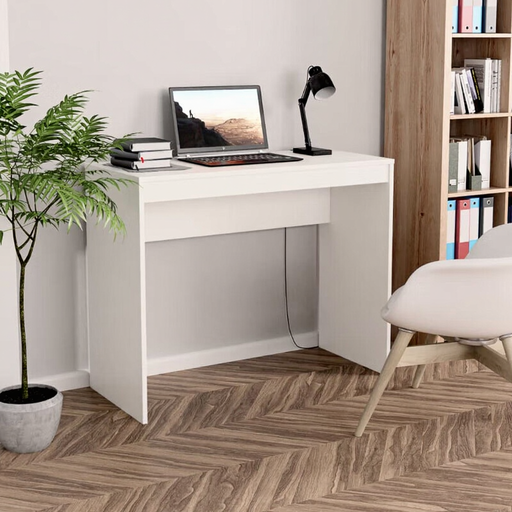
Why it suits this profile: This compact desk is 90 cm wide and 40 cm deep. It’s suitable for a laptop, documents or light computer use in a student room, bedroom or small workspace.
The dimensions are clearly stated, so you can check in advance whether 90 x 40 cm will suit your space and equipment. There are no adjustable or electric features that require extra installation.
Processed wood, a fixed height of 72 cm and a white finish. According to the product description, the surface can be cleaned with a slightly damp cloth.
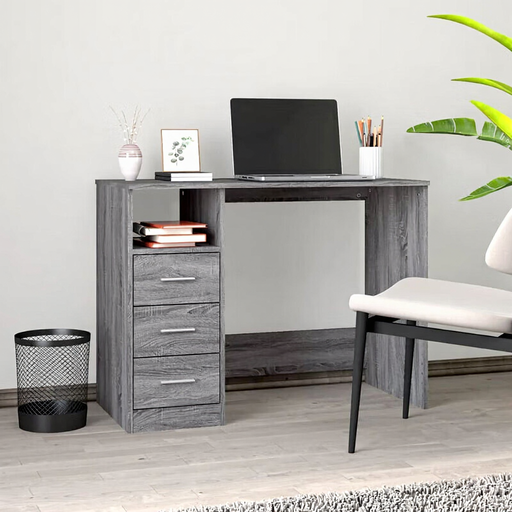
Why it suits this profile: With a 102 x 50 cm desktop, three drawers and an open compartment, this desk suits home workers and students who want to keep documents, books and accessories out of sight.
The storage helps prevent a relatively compact desktop from becoming cluttered. To reduce the risk of tipping, the product information says this desk must be secured to the wall.
Three drawers, one open compartment, a smooth surface and dimensions of 102 x 50 x 76 cm. Assembly is required.
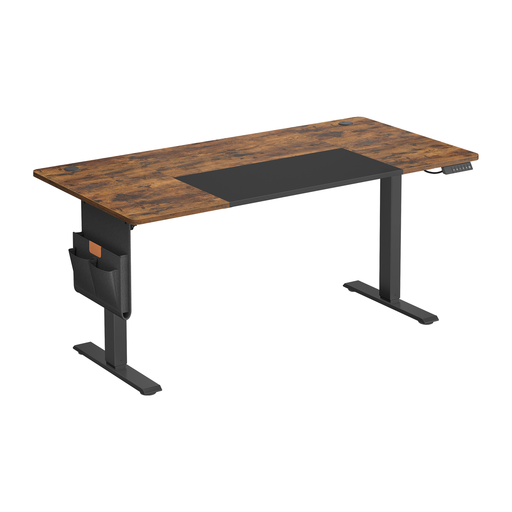
Why it suits this profile: With a 160 x 70 cm desktop and an electric height range of 72 to 120 cm, this model is designed for intensive home working, gaming or a shared workspace.
The height is adjustable rather than fixed. Check that there’s enough clear space around the desktop, and bear in mind the stated maximum load of 70 kg and the electrical assembly instructions.
Memory function, USB-C port, cable management and a steel frame. The model has a 160 x 70 cm desktop and a height range of 72 to 120 cm.
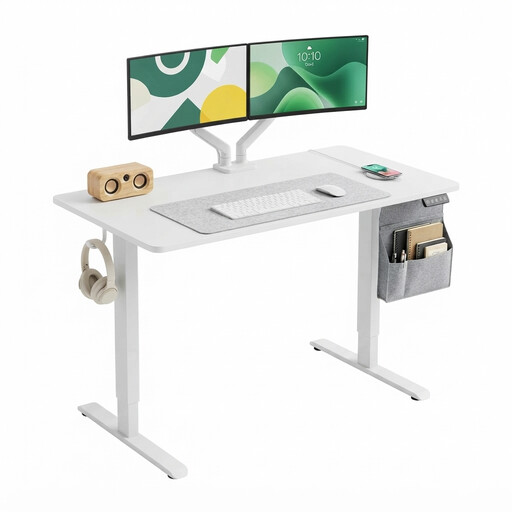
Why it suits this profile: This size gives you more workspace than an 80 or 90 cm desk, without taking up as much room as a large office desk. It’s suitable for working from home, studying and gaming.
The product information gives both the dimensions and the adjustment range of 72 to 118 cm. This lets you check in advance whether the desktop and your preferred working height will suit your space.
120 x 60 cm desktop, two memory settings, digital controls, two hooks and a stated weight capacity of 70 kg.
We’ve put together a complete, up-to-date list of products that meet these strict selection criteria and the applicable European safety regulations.
For a laptop alone, 40 cm may be enough. For a monitor and keyboard, 50 to 60 cm is usually more practical. Check the size of your monitor stand and the distance from the wall, too. For a gaming setup with multiple screens, a desktop that’s 70 cm deep or more is often more convenient.
Its lifespan depends on the materials, load, assembly and how you use it. Keep heavy equipment within the stated weight capacity, avoid prolonged exposure to moisture and check the screws regularly after assembly. If your desk has drawers, keep checking the wall fixings and attachment points, too.
Power consumption depends on the type of motor, how often you adjust the height and the standby function. The motor mainly uses energy while the desk is moving. Check the technical information before buying, and disconnect the power when appropriate according to the manual. With any electric desk, make sure the cables don’t get trapped as you adjust the height.
