
Vandaag of morgen in huis

Kwaliteit gegarandeerd

Welkomstaanbiedingen ontgrendelen: GRATIS bezorging | Tot 80% korting | Gratis 30 dagen JoyPlus-proefperiode
Download de app
A broom might seem like a simple product, but you’ll soon notice if you’ve made the wrong choice. The handle feels unstable, hairs get stuck between the bristles, or the broom head is too big for tight corners. So, if you’re looking to buy a broom, it’s worth looking beyond just the price or appearance.
In this article, you’ll find out what to look for in a floor broom, rubber broom, yard broom or electric broom. We’ll also compare some practical cleaning products for different households and situations.
A wide broom head can be handy in a hallway, garage or workshop. In a kitchen, toilet or bathroom, a large size actually makes it harder to manoeuvre around furniture and skirting boards. So, check the width of the head and think about where you’ll mainly use the broom.
A broom head of 60 cm, for example, is suitable for larger areas. For crumbs on the table or a quick clean in the kitchen, a dustpan and brush set is more practical.
A wooden broom sounds sturdy, but the material of the bristles or fibres determines how the broom works on the floor. Hard plant fibres can be suitable for cement or ceramic tiles, whereas a soft floor broom is better for delicate indoor floors.
A rubber broom works differently from a traditional broom: the flexible rubber edge can gather hair, dust and liquids. This makes it interesting for households with pets, but do check whether the head is suitable for your floor.
With an electric broom, wattage or suction power doesn’t tell you everything. Also look at battery life, accessories, charging method, dust container and maintenance. According to the product description of some brands, a model may offer a long run time or a special brush, but the actual run time depends on the selected mode and the floor surface.
Also pay attention to the application. A device for dry dirt is not automatically suitable for liquids. Only use a wet-dry model according to the manufacturer’s instructions.
For daily indoor use, a manoeuvrable head is often more important than maximum width. Check:
For outdoors, a driveway or patio, a yard broom with a working width of 60 cm can be more efficient. According to the product information, the Colombo yard broom has a length of 60 cm and a width of 10 cm. The product is specified for cement and ceramic tiles and uses wood and plant fibres.
A handle that’s too short means you’ll be bending over; a handle that’s too long can give less control. An adjustable handle is handy when several people use the same cleaning product. Check that the connection between the handle and head is secure and that spare parts are available.
With a squeegee mop, the length of the handle is also important. A model with an aluminium tube and plastic parts can be suitable for floors and smooth surfaces, but follow the maintenance instructions and let the squeegee dry after use.
A broom that stands loose in a corner is more likely to fall over and takes up unnecessary space. A broom holder with a suitable clamping range can help you hang brooms, mops and garden tools neatly.
Pay attention to the maximum load weight and the diameter of the handle. Mount a wall holder on a stable, load-bearing wall and only use the supplied wall plugs and screws if they are suitable for the surface.
Clean broom heads regularly with lukewarm water and mild soap. Let them dry completely before storing them. With an electric broom, the dust container, filters and any water tank must be emptied and dried according to the manual.
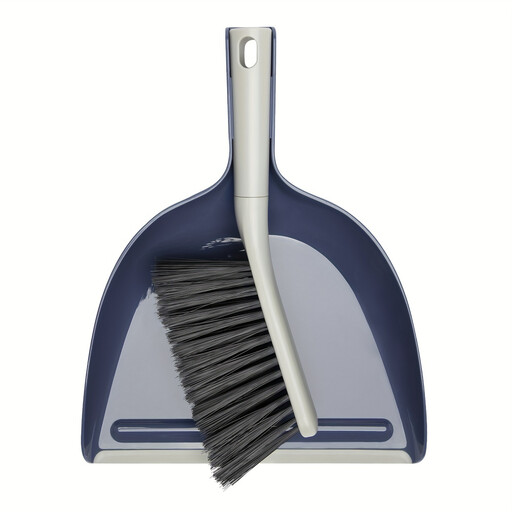
Why this fits the profile: This compact dustpan and brush set is designed for crumbs, dry dirt and quick tidying jobs in the kitchen, living room or bedroom.
The stated dimensions of the dustpan are approximately 30 by 23.3 cm, so you don’t have to use a large floor broom for small messes.
Polypropylene is easy to clean; the rubber dustpan edge and round brush head are practical details for everyday use.

Why this fits the profile: This cordless model suits households that want to tackle multiple floor types and larger areas with one device.
You can check the product specifications: a removable battery, LED lighting and a stated run time of up to 80 minutes according to Jimmy’s product description.
The device has a stated power of 600 W, a removable battery and a display. Check which accessories are included before purchasing.
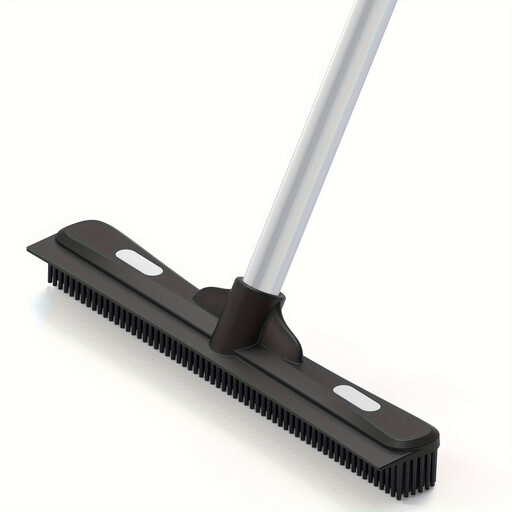
Why this fits the profile: The rubber head is designed to gather hair, fluff and dust on carpet and hard floors, with a built-in squeegee edge for smooth surfaces.
The adjustable handle allows you to change the working height. This helps you avoid a fixed, awkward length when different people use it.
Rubber can be cleaned with water and mild soap; the combination of broom and squeegee makes the product useful for hair and liquids on smooth floors.
We’ve put together a full, up-to-date list of products that fully meet these strict selection criteria and comply with current European safety regulations.
That depends on use, material and storage. Replace a broom when the bristles are permanently splayed, the rubber edge is cracked or the handle connection keeps coming loose. A dry, clean storage place can extend its lifespan.
According to the product description, a rubber broom is designed to loosen and gather pet hair, fluff and dust from carpet and hard floors. The result varies depending on the floor and type of hair. On delicate surfaces, first test on a small, inconspicuous area.
The running costs depend on the power, charging time, battery capacity and how often you use the device. A cordless broom mainly uses electricity during charging. So, don’t just compare the wattage; also look at the stated battery life, charging method and maintenance costs.
