
Vandaag of morgen in huis

Kwaliteit gegarandeerd

Welkomstaanbiedingen ontgrendelen: GRATIS bezorging | Tot 80% korting | Gratis 30 dagen JoyPlus-proefperiode
Download de app
Buying a blender seems simple, until you have to choose between a smoothie blender, a powerful blender, a portable blender or a multifunctional blender. Product pages often highlight wattage, the number of programmes and terms such as “ice crush”. But those details don’t tell you everything about everyday use.
The most common buying mistakes come down to three pitfalls:
Power is measured in watts. A 600W blender is usually suitable for soft vegetables, fruit, shakes and simple sauces. For frozen ingredients, nuts or regular ice crushing, a higher power rating, such as 1000W, 1200W or 1300W, can provide more headroom.
Bear in mind that manufacturers may use different measurement methods. “Maximum power” isn’t always the same as continuous motor power. So check:
A personal blender or portable blender with a rechargeable battery is handy for small portions, but it usually has less power than a mains-powered countertop blender.
A cup of around 600 to 700 ml may be enough for one person. Families often benefit from a larger jug, with a capacity of 1.5 to 2.1 litres. Check whether the stated capacity is the total volume or the recommended fill level.
A blender with a glass jug is an option if you value a sturdy jug that’s less likely to retain odours or stains. Glass is heavier, though, and can break if dropped or exposed to a sudden change in temperature. Plastic jugs are often lighter and more practical for everyday use.
Don’t blend boiling liquids unless the instructions explicitly say it’s safe. Steam can build up pressure beneath the lid. So, if you’re making soups, it’s important to choose a suitable jug and follow clear safety instructions.
Four or six stainless steel blades can help distribute ingredients, but the number of blades alone doesn’t predict blending performance. The combination of blade shape, jug design and speed all play a part.
A blender with a pulse function delivers short, powerful bursts. This is useful for coarser mixtures and some hard ingredients. Automatic programmes are handy for everyday use, but check which functions are actually included. For example, a “multifunctional blender” may also chop or grind, while a smoothie blender is mainly designed for drinks.
Before you buy, check for:
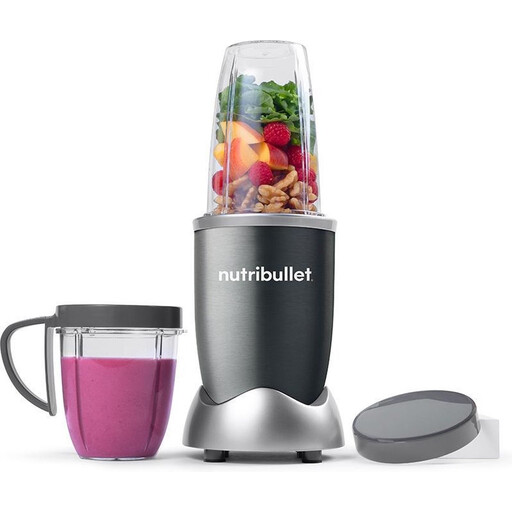
Why it suits this type of user: This compact personal blender has a power rating of 600W and a 700 ml cup, and comes with drinking cups and a storage lid. It’s a good fit for small portions and everyday use.
The specifications make it clear that this model is intended for smaller portions. It doesn’t claim to crush ice, so you’re less likely to buy an appliance for a job it wasn’t designed to do.
600W motor, 700 ml capacity and dishwasher-safe parts according to the product description, except for the base and blade.

Why it suits this type of user: This model combines a 1200W motor with a 2.1-litre jug, 14 manual speed settings and four automatic programmes. That gives you plenty of control if your household makes a variety of dishes and drinks.
You’re not relying on a high wattage alone: the product description also mentions automatic adjustment, a pulse function and a warning when more liquid is needed.
2.1-litre jug, 1200W power, 14 speed settings and a specifically stated ice-crushing function.

Why it suits this type of user: The 1.5-litre jug and stated maximum power of 1300W are designed for larger portions and ingredients that need extra power.
The product information specifies two speed settings, a pulse function, four titanium-coated blades and an ice-crushing function. Before buying, check the latest instructions and maximum fill guidance.
1300W maximum power, 1.5-litre capacity, pulse function and a specific ice-crushing function.
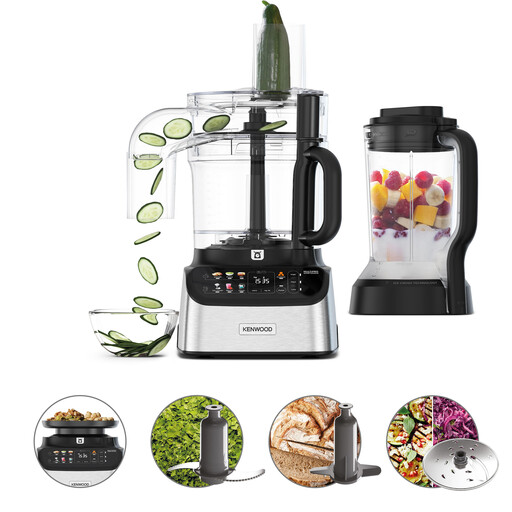
Why it suits this type of user: This food processor comes with a blender, digital scales, a chopping blade, slicing and grating disc, and a dough tool. That makes it a good choice for meal prep and a wide range of kitchen tasks.
You’re not just buying extra programmes on paper: the accessories and functions are listed individually, including blending, kneading, grating and ice crushing.
1000W motor, 3-litre bowl, 1.5-litre blender and multiple speed settings, including pulse.
We’ve put together a complete, up-to-date list of products that meet these strict selection criteria and the applicable European safety regulations.
A 600W blender can be suitable for soft ingredients and everyday smoothies. If you often use frozen fruit, nuts or ice, compare the blade design, pulse function and any specifically stated ice-crushing function too. Wattage alone doesn’t give you the full picture.
Its lifespan depends on how often you use it, how hard you push it, how you clean it and whether you follow the instructions. Don’t run the motor for longer than recommended, and give the appliance time to cool down. In the European Union, consumers are generally entitled to a legal guarantee of at least two years, in addition to any further rights under the relevant national law.
Energy use depends on the power rating and how long you use the blender. A 1000W appliance running for six minutes would theoretically use around 0.1 kWh. In practice, short programmes often have more of an impact on running costs than maximum wattage. Also check whether the parts are easy to clean: less cleaning time doesn’t reduce electricity use, but it does make a difference to everyday use.
