
Vandaag of morgen in huis

Kwaliteit gegarandeerd

Welkomstaanbiedingen ontgrendelen: GRATIS bezorging | Tot 80% korting | Gratis 30 dagen JoyPlus-proefperiode
Download de app
Buying a blender sounds simple until you have to choose between a smoothie blender, hand blender, stick blender, food mixer or complete food processor. The wattage on the packaging often grabs your attention, but it does not tell you everything about how easy the appliance is to use. A long list of accessories can also be misleading if you rarely use them or find them difficult to clean.
This practical guide helps you compare blenders based on verifiable specifications. You can discover which type is best for smoothies, soup, sauces, baby food, baking or everyday food preparation.
A powerful blender sounds appealing, but the stated power is not always directly comparable. Some brands list peak power, while others state nominal power. For example, the Monsga SM100 lists 1000 watts peak power and 600 watts nominal power. The AUCMA ASM1559, meanwhile, features a 450-watt copper motor.
You should also consider:
A blender with accessories can be useful for chopping, whisking and mixing. However, check exactly which parts are included. A hand blender with a whisk and chopper is suitable for a range of smaller preparations, while a food processor with a dough hook is better suited to bread dough and batters.
Capacity is also important. A 350 or 500 ml chopper is practical for small portions, but not for a large pan of soup. A 600 to 800 ml blender cup is better suited to one or two smoothies.
Blades are sharp and motor units should generally not be immersed in water. Check whether the accessories are removable and dishwasher-safe, and read the operating time stated in the manual. For example, the ochama blender specifies a maximum of one minute of continuous use, followed by two minutes of rest. The ROUNY hand blender likewise specifies a cycle of one minute of use followed by one minute of rest.
Take extra care when preparing hot food, such as soup. Allow liquids to cool according to the product instructions before processing them with a hand blender. Always use a stable bowl or jug, and do not exceed the maximum fill line.
A smoothie blender with a fixed jug is useful for preparing several glasses at once, as well as blending ice, fruit and vegetables. The Bear LLJ-B12K1, for example, has a capacity of 1.2 litres, a 500-watt motor, four stainless-steel blades and a pulse function. The product description states that at least 300 ml of liquid must be added.
A hand blender or stick blender is more compact and suitable for soup, sauces, purée and small portions. You use it directly in a measuring jug or pan, but you need to control the movement and position yourself. Models with multiple speeds give you greater control over the texture.
A food mixer or food processor is mainly designed for whisking, mixing and kneading. A stand mixer does the holding for you and generally has a larger bowl. For bread, cake, pizza and biscuit dough, this type of appliance makes more sense than a standard blender.
A lower power rating may be sufficient for light smoothies and sauces. For thicker mixtures, nuts or frozen ingredients, the right motor, sharp blades and an appropriate method of use are all important. More speeds are useful if you want to switch between gentle mixing and finer preparation, but having more settings does not automatically make an appliance more suitable.
The Braun MQ10.201MWH uses a 450-watt motor and has a single control button. According to the product information, Royalty Line hand blenders offer 800 watts, 20 speeds and a turbo function. With claims like these, always check whether the stated power is nominal or maximum.
A BPA-free Tritan cup is lightweight and features clear measurement markings. The Ninja Blast BC251EUGY comes with two 530 ml cups and operates wirelessly using a rechargeable battery. This makes it suitable for use in the office, on the go or at the gym, but less so for large family portions.
A stainless-steel bowl is practical for baking. According to the product specifications, the Monsga SM100 has a bowl with a maximum capacity of 6 litres and a recommended usable capacity of 5 litres. The AUCMA ASM1559 also has a 6-litre bowl. When preparing dough, always check the maximum quantity in the manual; a large bowl does not mean you can mix unlimited amounts of heavy dough.
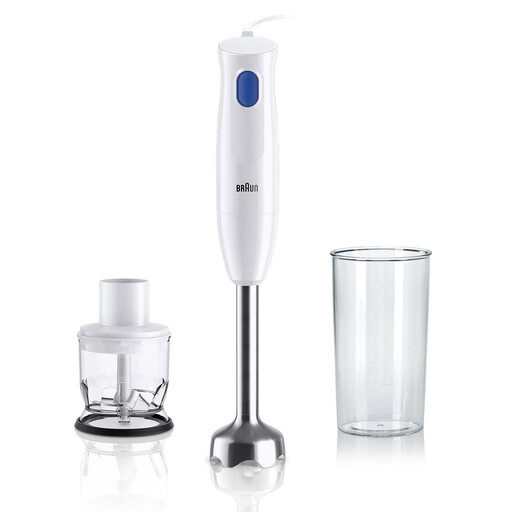
Why it suits this profile: This compact hand blender is designed for simple preparations such as smoothies, desserts and sauces. The single-button control keeps it straightforward to use.
The product information clearly states 450 watts, a 600 ml measuring jug and a 350 ml chopper. This means you know in advance which accessories and portion sizes you are getting.
Lightweight design, EasyTwist system, 600 ml BPA-free measuring jug and dishwasher-safe parts according to the product description.
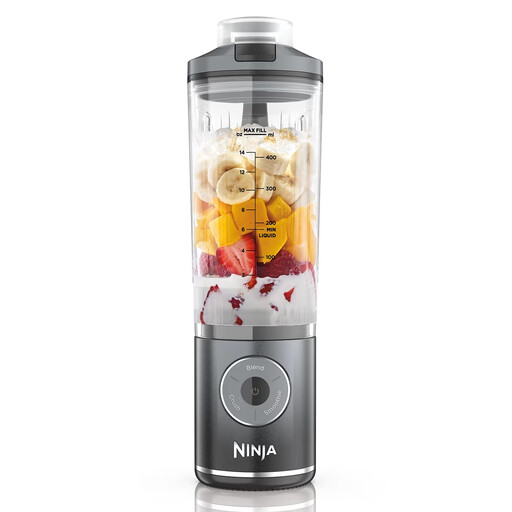
Why it suits this profile: If you are looking for a blender for smoothies on the go, this wireless model comes with portable cups and USB charging.
The model does not need to be plugged in while blending. The product details specify a leakproof lid design and two 530 ml cups.
150-watt motor, rechargeable battery, one-button control and BPA-free Tritan cups with measurement markings.
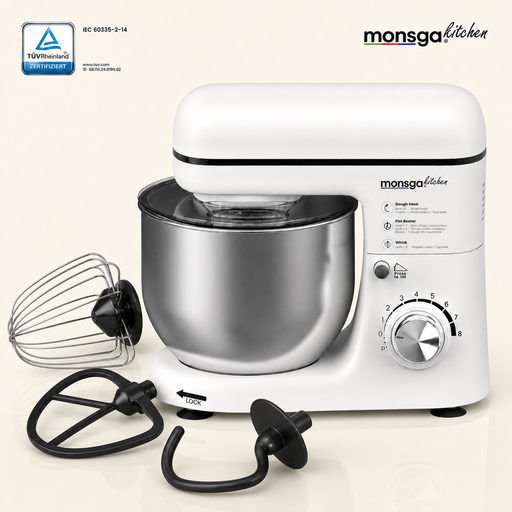
Why it suits this profile: This food processor is designed for baking and larger preparations, including bread, cake, biscuits and whipped cream.
The specifications distinguish between peak and nominal power and state a recommended usable bowl capacity of 5 litres. This helps you plan larger portions.
Stainless-steel bowl, eight speeds, tilting head, dough hook, beater, whisk and splash guard according to the product description.
We have put together a complete, up-to-date list of products that fully meet these strict selection criteria and the applicable European safety regulations.
A hand blender or stick blender is practical for soup because you can work directly in a pan or deep bowl. Check the temperature limit in the manual and allow hot liquid to cool according to the instructions. A fixed-jug blender is suitable if you can transfer the soup safely and the jug is designed for this purpose.
It depends on how you plan to use it. For smoothies, sauces and purée, a 450 to 800-watt hand blender may be suitable. For ice, nuts or thicker mixtures, the blades, speed, liquid ratio and operating time are also important. Always compare the nominal power and maximum operating time, rather than focusing solely on the highest wattage shown on the packaging.
Energy consumption depends on the appliance’s power and how long it runs. A 600-watt appliance used for five minutes consumes approximately 0.05 kWh. In practice, preparation time, frequency of use and the selected setting are more important than maximum wattage alone. Removable, easy-to-clean parts can also save time when the appliance is used every day.
