
Vandaag of morgen in huis

Kwaliteit gegarandeerd

Welkomstaanbiedingen ontgrendelen: GRATIS bezorging | Tot 80% korting | Gratis 30 dagen JoyPlus-proefperiode
Download de app
Buying a blender seems straightforward, until you have to choose between a smoothie blender, hand blender, kitchen blender or portable blender. The wattage is displayed prominently on the packaging, but it does not tell you everything about everyday use. An appliance may appear powerful yet be awkward to use because of a small jug, difficult cleaning or limited operating time.
So pay particular attention to these common pitfalls:
For soft fruit and simple shakes, a compact smoothie blender with a lower wattage may be sufficient. If you regularly process frozen fruit, ice cubes, nuts or fibrous vegetables, you will benefit more from a powerful blender with a robust blade and jug design.
Always consider the stated wattage alongside the features. The range includes models from 250 W for a compact Aigostar to 1,300 W maximum for the Cecotec Power Black Titanium. A higher number does not automatically mean that every recipe will turn out better. Also check whether the product specifically lists functions for crushing ice, pulse operation or hard ingredients.
For one person, a cup of around 400 to 700 ml is often practical. A 1.5-litre blender is more convenient for several glasses, soup or sauce for the household. When choosing, look at the difference between the jug’s total capacity and its permitted working capacity.
A blender with a glass jug feels sturdy and is less prone to discolouration and odours. Glass is heavier, however, and can break. Plastic or Tritan is lighter, making it often more suitable for a mini blender or a model for use on the go. Always check the product information for details about BPA-free materials, heat resistance and dishwasher use.
A blender with a pulse function delivers short bursts of power. This is useful for chopping more coarsely, crushing ice or loosening ingredients that stick to the sides. Several speed settings are handy when you prepare both sauces and coarser mixtures.
Also look out for:
A hand blender is an alternative when you want to purée food directly in a saucepan. For soup, baby food and small quantities, it is often more flexible than a kitchen blender. A hand blender with a whisk and chopper can also handle several tasks, but generally has a smaller portion capacity.

Why it suits this profile: The 1.5-litre jug and rotary dial with two speed settings provide a straightforward starting point for smoothies, juices and larger portions.
The product description mentions a pulse function, four blades and an ice-crushing function. Before use, check the fill limit and maximum running time in the instructions.
1,300 W maximum power, 1.5-litre jug, two speeds and rotary-dial controls.

Why it suits this profile: This model combines a large jug, manual speed control and automatic programmes for households that regularly switch between cold and hot preparations.
The product information mentions a glass jug which, according to the manufacturer, is resistant to thermal shock. Nevertheless, allow hot preparations to cool and follow the stated temperature limit.
1,200 W, 1.5-litre usable capacity, pulse function, ice programme and a glass jug according to the product description.

Why it suits this profile: The combination of a large jug, manual speed settings and programmes is aimed at anyone who regularly makes recipes with different textures.
You are less dependent on a single automatic setting: the specifications list 14 manual speeds, a pulse function and four programmes.
1,200 W motor, 2.1-litre jug, 700 ml cup and functions including ice crushing and pulsing.
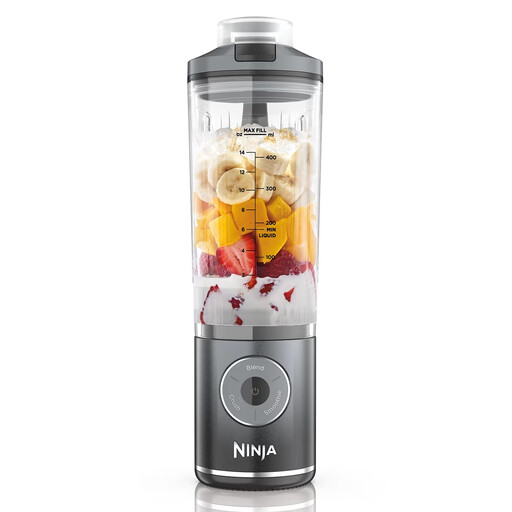
Why it suits this profile: For anyone who wants to make a smoothie at work, while travelling or after exercising without needing a power socket.
The portable design means you do not have to buy a large kitchen appliance for small portions only. The product information mentions a leak-proof lid and USB charging.
150 W motor, two 530 ml Tritan cups, rechargeable battery and one-button operation.
We have put together a complete, up-to-date list of products that fully meet these strict selection criteria and the applicable European safety regulations.
A hand blender is practical when you want to purée soup directly in a saucepan and are making small quantities. A kitchen blender can produce a smoother texture, but you should allow hot liquids to cool first unless the instructions state otherwise. Also check the maximum temperature and fill limit.
A lower wattage is often sufficient for smoothies made with soft fruit. If you are looking for a blender for crushing ice, frozen ingredients or nuts, you can compare models from around 800 W upwards. As well as wattage, consider the blades, pulse function, operating time and the manufacturer’s instructions.
Energy consumption depends on the wattage and operating time. A 1,000 W appliance running for one minute theoretically uses around 0.017 kWh. In practice, short pulses and a limited preparation time are usually more important for consumption than the nominal wattage alone. Also take replacement cups, blades and accessories into account.
