
Vandaag of morgen in huis

Kwaliteit gegarandeerd

Welkomstaanbiedingen ontgrendelen: GRATIS bezorging | Tot 80% korting | Gratis 30 dagen JoyPlus-proefperiode
Download de app
Buying a blender seems straightforward, until you have to choose between a smoothie maker, a powerful blender, a personal blender or a portable blender. Manufacturers often highlight wattage, high speeds and features such as ‘ice crushing’. That information is useful, but it doesn’t tell the whole story.
A blender for everyday use should suit your portions, ingredients and available space. You should also consider cleaning, materials and how to use the appliance safely. Read on to find out which specifications really make a difference and which models suit different needs.
Higher wattage doesn’t automatically mean you’ll always get a smoother result. The shape of the jug, the blades, the amount of liquid and the maximum operating time all play a part. For example, a compact 350-watt blender is mainly intended for smaller portions, while a 1,200- or 1,300-watt model is a more sensible choice for larger quantities and harder ingredients.
So always check:
A personal blender with a 475–700 ml cup is handy for making a smoothie or shake for one. For several people, you’ll need to blend multiple batches. If you want to make soup, sauce or smoothies for a family, a large-capacity blender of around 1.2 to 2.1 litres is usually a better choice.
Check the difference between the total capacity and the recommended maximum fill level. You can’t always fill the jug to the top, especially when making frothy or hot recipes.
A blender with an ice-crushing function can process ice according to its specifications, but that doesn’t mean you should add large ice cubes without limit. Use the pulse function if available, add enough liquid and follow the instructions. Some models are only suitable for hard or frozen ingredients in small portions.
A compact smoothie maker is often enough for smoothies with soft fruit. For frozen fruit, nuts, ice cubes or firm vegetables, a more powerful model is more practical. For example, the Cecotec Power Black Titanium is listed as having 1,300 watts, 20,000 revolutions per minute, two speeds and a pulse function. The jug has a capacity of 1.5 litres.
A less powerful model may still suit you if you mainly make small portions. According to the product information, the Philips 3000 Series Mini Blender has 350 watts, a capacity of 0.6 litres, two speeds and a pulse function. This makes it a straightforward option for everyday use with smaller quantities.
A blender with a glass jug feels sturdy and is generally less likely to retain smells or become discoloured. Glass is heavier, though, and can break if knocked hard. Plastic is lighter, but check which material is used and whether the parts are dishwasher-safe.
Tritan is used in various personal blenders. The Ninja Blast product information lists two 530 ml BPA-free Tritan cups. The Philips Eco Conscious Edition is listed with a 600 ml Tritan Renew cup. Always check whether only the cup, or the blades and lid too, can go in the dishwasher.
A blender should stand firmly and have a well-fitting lid. Non-slip feet, a safety lock and a well-fitting jug help reduce the risk of spills during use. Never immerse the motor base in water. Unplug the appliance before removing or cleaning any parts.
Hot liquids need extra care. Several personal blenders aren’t suitable for hot ingredients. For example, the Philips HR2500/00 has a stated maximum temperature of 60 °C. Hot liquid in a sealed cup can build up pressure. Always check the instructions before making soup or sauce in a blender.

Why it suits this type of buyer: Its compact 0.6-litre capacity and 350 watts are a good fit for single-serve smoothies, sauces and small portions.
Its capacity makes it clear that this is a model for smaller portions. That way, you won’t buy a large jug for a type of use you don’t need.
Two speeds, a pulse function, dishwasher-safe removable parts and non-slip feet.
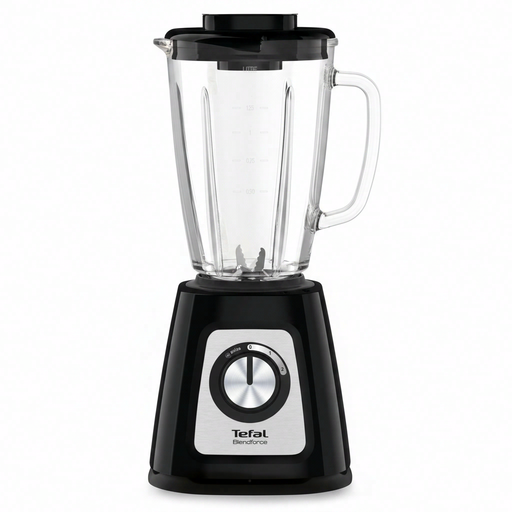
Why it suits this type of buyer: Its 1.25-litre glass jug is a good choice if you value a sturdy jug material and need portions for several people.
As well as its 800 watts, the product information lists the jug capacity, pulse setting and ice-crushing function. This lets you compare the relevant features side by side.
Glass jug, two speeds, a pulse function, an ice-crushing setting and dishwasher-safe parts.

Why it suits this type of buyer: With 1,200 watts, a 2.1-litre jug, 14 manual speeds and automatic programmes, it’s designed for larger quantities and a wide range of recipes.
Its generous jug and specific programmes make it more suitable for family portions than a personal blender. Be sure to follow the stated fill limits.
2.1-litre jug, 1,200 watts, a pulse function, ice-crushing capability and an included 700 ml cup.
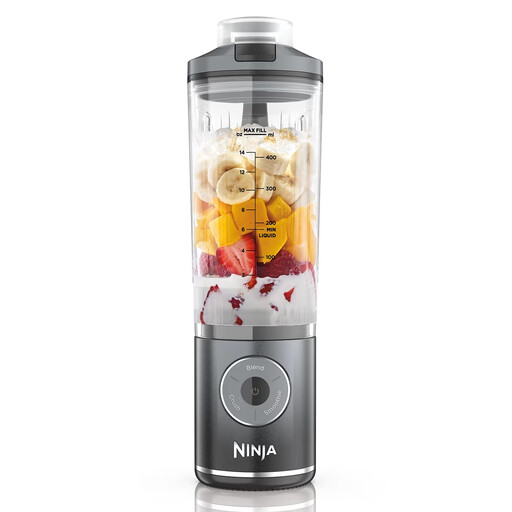
Why it suits this type of buyer: Its cordless design, USB charging and leakproof lid are handy for the office, gym or when you’re on the go.
Its capacity is clearly defined, with two 530 ml cups. This helps you avoid mistaking a portable model for a family blender.
150-watt motor, two BPA-free Tritan cups, USB charging and dishwasher-safe parts according to the product information.
We’ve put together a complete, up-to-date list of products that meet these strict selection criteria and comply with current European safety regulations.
A compact model with around 350 watts may be enough for soft ingredients and small portions. For frozen fruit, ice cubes and larger quantities, a model from around 800 watts is more practical. As well as power, check the pulse function, jug capacity and the manufacturer’s instructions.
No. A personal blender or sealed drinking cup is often unsuitable for hot liquids. Check the maximum temperature in the instructions. If necessary, let the ingredients cool and don’t fill the jug above the stated limit.
Power consumption depends on the wattage and how long you use the blender. A 1,000-watt blender running for six minutes a week uses around 0.1 kilowatt hours per week. Cleaning and replacing worn parts can have a greater impact on the total cost over time. So choose a model with parts that are easy to clean and readily available.
