
Vandaag of morgen in huis

Kwaliteit gegarandeerd

Welkomstaanbiedingen ontgrendelen: GRATIS bezorging | Tot 80% korting | Gratis 30 dagen JoyPlus-proefperiode
Download de app
At first glance, a blender seems simple: add the ingredients, press a button and you’re done. However, unrealistic expectations can quickly lead to a disappointing purchase. If you want to buy a blender for smoothies, sauces, soup or ice, you should focus mainly on power, capacity, materials and ease of cleaning. A compact smoothie blender is convenient for one person, for example, but less suitable for a family. Conversely, a powerful blender with a large jug takes up more space than you may need.
A high wattage sounds appealing, but it does not tell you everything about the result. The shape of the jug, the blades, the speed control and the way ingredients circulate also make a difference. A 350-watt blender may be suitable for soft fruit and simple smoothies, while ice, nuts and frozen fruit generally require more power and a suitable blade design.
That is why you should consider the combination of motor power, speed, blade material and operating functions. A blender with an ice-crushing or pulse function gives you more control than a model with just one fixed setting.
A 2-litre jug does not automatically mean you can blend 2 litres at once. Manufacturers sometimes state the total capacity, while the maximum filling level is lower. So check the usable capacity and the indicated maximum line.
For one person, a personal blender with a cup of around 475 to 700 ml is often enough. For several people, 1.2 to 1.5 litres is more practical. A model with a 2.1-litre jug, such as the Ninja Detect, provides room for larger portions, but it also takes up more space in the kitchen.
Baked-on residue around the blades makes everyday use less pleasant. So check whether the parts can be removed and are dishwasher-safe. Also consider the material of the jug. A blender with a glass jug is heavier, but may be ideal if you are looking for a sturdy, heat-resistant container. Always check the manual before processing hot liquids; not every blender is suitable for this.
With cordless models, the battery is also important. A portable blender only works well when you’re out and about if you charge it in good time and do not fill the cup above the maximum line.
For soft smoothies made with banana, yoghurt or soft fruit, a basic mini blender is often sufficient. For frozen fruit, ice cubes and fibrous ingredients, a more powerful blender with a pulse setting or ice-crushing function is the more sensible choice.
Higher power does not mean you can blend continuously without limits. Follow the recommended operating time and allow the motor to cool down when indicated in the manual. This helps prevent unnecessary strain.
Choose the capacity based on your daily portions:
Measure the space beneath your kitchen cupboards beforehand and also check where you can keep the cable. A countertop blender usually stays on the worktop, while a blender to go is easier to fit in a cupboard or bag.
A dial with two speeds is easy to understand. Automatic programmes can be useful if you do not want to set the time and speed yourself every time. A safety lock, non-slip feet and a firmly closing lid are practical features that make everyday use safer.
For all models, remember: do not touch the blades, unplug the appliance before assembly and cleaning, and never immerse the motor base in water.

Why it suits this profile: The 500 ml capacity is ideal for daily smoothies and shakes for one person. With a different lid, the cup can also be used as a drinking bottle.
The product specifications state 250 watts, a non-slip base and a safety lock. This makes it clear that the model is intended for simple preparations, rather than heavy daily ice crushing.
500 ml capacity, Tritan cup, stainless steel blades and dishwasher-safe removable parts.

Why it suits this profile: This model offers plenty of adjustment options for users who want to prepare different textures, portions and recipes.
The product description lists 14 manual speeds, four programmes and a function which, according to Ninja, adjusts the settings to the ingredients and quantity. Check the manual for details of exactly how it works.
1200 watts, 2.1-litre jug, ice-crushing function and an additional 700 ml cup.

Why it suits this profile: The 1.5-litre jug and the stated pulse and ice-crushing functions are well suited to families and users who regularly prepare larger quantities.
Rather than looking only at the wattage claim, the product specifications also show four blades, two speeds, a pulse function and a capacity of 1.5 litres.
Maximum power of 1300 watts, 20,000 revolutions per minute according to the product description, and a dial control.
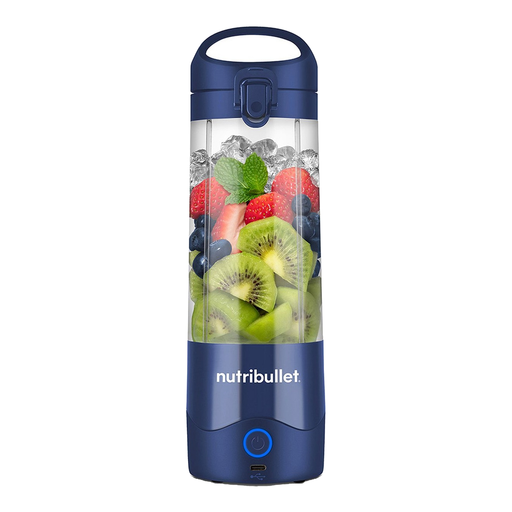
Why it suits this profile: This cordless blender is designed to make one drink at a time. Thanks to its handle and drinking lid, you can take it to the office, the gym or use it while you’re out and about.
The specifications state a charging time of around one hour and more than 15 blends per charge. Do not use the blender for hot or carbonated liquids.
475 ml capacity, USB-C charging, 17,000 revolutions per minute according to the product information, and removable parts.
We’ve put together a complete, up-to-date list of products that fully meet these strict selection criteria and the applicable European safety regulations.
Look for a motor with sufficient power, sturdy blades and a pulse or ice-crushing function. Add enough liquid according to the instructions and, if necessary, blend in short pulses. A mini blender with low power is mainly intended for smaller, softer preparations.
Its lifespan depends on how it is used, maintained and loaded. Do not run the motor for longer than recommended, do not overfill the jug and clean away residue straight away. According to the product information, the products mentioned come with a statutory minimum guarantee of two years; additional manufacturer terms may vary by brand.
Consumption depends on the power and how long the blender is used. A 1200-watt blender theoretically uses 0.02 kWh when running for one minute, excluding losses. As blending usually takes only a short time, its overall contribution to electricity consumption is limited. A cordless blender also uses electricity while charging.
