
Vandaag of morgen in huis

Kwaliteit gegarandeerd

Welkomstaanbiedingen ontgrendelen: GRATIS bezorging | Tot 80% korting | Gratis 30 dagen JoyPlus-proefperiode
Download de app
Buying a blender seems straightforward until you discover how many differences there are between a smoothie blender, mini blender and high-powered blender. Some models are designed for a single drink on the go, while others have a jug holding more than a litre for the whole household. Terms such as “powerful”, “cordless” and “suitable for ice” only tell you so much, so always check the technical specifications.
Higher power can help with hard ingredients, but the results also depend on the blade design, jug, speed and running time. A compact personal blender with 150 or 175 watts is mainly designed for small portions and soft ingredients. A model with 800 to 1,300 watts is better suited to frozen fruit, ice cubes and larger quantities.
Check the instructions too. Some blenders should only run for about one minute at a time. So a powerful appliance isn’t automatically suitable for prolonged, intensive use.
A portable blender or blender to go may have a built-in battery, but always check the charging time, capacity and charging connector. A cordless blender is handy at the office, at the gym or when travelling, but a small 400 to 590ml cup is less suitable for several people.
With a rechargeable blender, it’s also important to remember that the motor base must not be submerged in water. After use, check that the charging port is dry before plugging the appliance in.
Always check the full product description. The Adler AD 4499, for example, is listed under a name that includes “Mini Smoothie Maker Blender”, while the available specifications describe it as a battery-powered milk frother. According to that information, it’s designed for milk froth, hot chocolate and matcha, not smoothies or ice.
A blender with a drinking cup should also include an actual blending cup, blade unit and suitable drinking lid. A separate cup or travel lid doesn’t turn a standard kitchen blender into a personal blender.
A compact model is often enough for smoothies with banana, yoghurt and soft fruit. If you also want to blend frozen fruit, nuts, vegetables or ice, look for:
According to the product information, the Ninja Detect Blender Pro has a 1,200-watt motor, a 2.1-litre jug, 14 manual speeds and an ice-crushing function. According to its specifications, the Tefal BL435831 has an 800-watt motor, a 1.25-litre glass jug, two speeds, a pulse function and a separate ice-crushing setting.
A 400 to 600ml cup is handy for one smoothie. For two or more people, a 1.2 to 2.1-litre jug is more practical. Bear in mind the actual capacity: the stated capacity doesn’t always match the recommended maximum fill level.
A glass jug is relatively heavy, but can be a good choice in a warm kitchen and for making sauces. Always check the temperature instructions. Many personal and cordless models shouldn’t be used with hot liquids because pressure can build up inside the sealed cup.
Look for removable parts, dishwasher-safe components and a secure locking mechanism. The motor base, cable and charging port must not go in water. The blades are sharp, so unplug the blender or remove the charging cable before taking it apart.
BPA-free Tritan cups are common on portable models. Check the specific product specifications rather than relying on the marketing copy alone. According to the product information, the Aigostar Marden BL-250 and Ninja Blast are among the models with BPA-free plastic cups.

Why it suits this profile: The 500ml cup is ideal for a daily smoothie or shake for one. The extra drinking lid makes it easy to take with you.
The specifications state the 250-watt power, single speed and clear capacity. This means you know in advance that the model is mainly intended for small, simple blends.
500ml Tritan cup, drinking lid, stainless steel blades and removable dishwasher-safe parts, according to the product information.

Why it suits this profile: This model is designed for households looking to prepare larger portions, different textures and hard ingredients.
The product information gives specific figures: 1,200 watts, 2.1 litres, 14 speeds, four programmes and an ice-crushing function.
Large jug, manual speed settings and a separate 700ml cup, according to the product specifications.
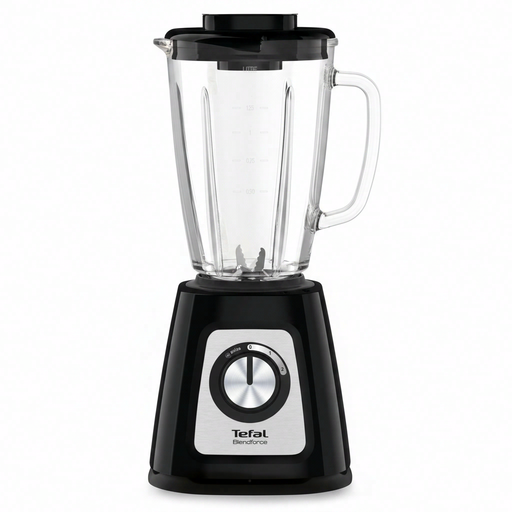
Why it suits this profile: A practical choice if you’re looking for a blender with an ice crusher, glass jug and mains-powered operation.
The 1.25-litre glass jug, two speeds, pulse function and ice-crushing mode are all listed separately. So you don’t have to rely on a general power claim alone.
800 watts, glass jug, stainless steel blades and dishwasher-safe parts, according to the product description.
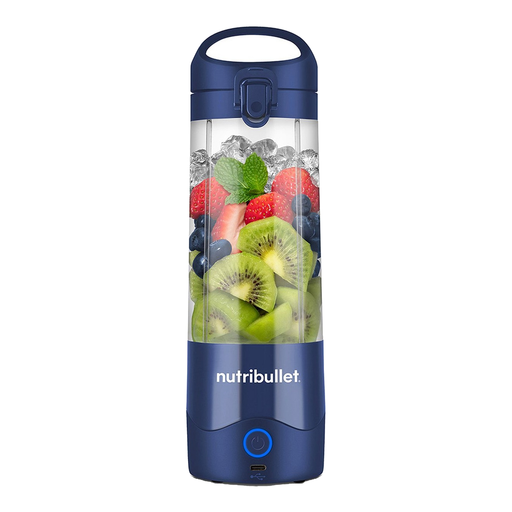
Why it suits this profile: This compact cordless blender is designed for use at the office, on the go or after a workout.
The product information states a charging time of around one hour, more than 15 blending cycles per charge and a sealed drinking lid.
17,000 revolutions per minute according to the product specifications, plus a handle and removable parts for cleaning.
We’ve put together a complete, up-to-date list of products that meet these strict selection criteria and the applicable European safety regulations.
A mini blender or personal blender with a capacity of around 400 to 600ml is practical for one person. If you’re blending frozen fruit or ice, choose a model whose specifications explicitly list an ice-crushing function. For several people, a jug of at least 1.2 litres is more convenient.
It depends on what you need it for. A rechargeable blender is suitable for small portions, soft fruit and shakes. Check the motor power, cup capacity and permitted ingredients. For regularly crushing ice or blending nuts or large quantities, a mains-powered model is usually a better fit.
Its lifespan depends on how you use and clean it, and whether you follow the instructions. Overloading it, running it for too long and getting liquid into the motor base can cause damage. Keep within the indicated fill line and regularly check the blades, cup and locking mechanism for damage.
