
Vandaag of morgen in huis

Kwaliteit gegarandeerd

Welkomstaanbiedingen ontgrendelen: GRATIS bezorging | Tot 80% korting | Gratis 30 dagen JoyPlus-proefperiode
Download de app
Buying a blender seems simple, until you discover how much models can differ in power, jug capacity, battery life and ease of cleaning. A compact appliance can be useful for a smoothie on the go, but less suitable for frozen fruit or several portions. A powerful blender is not automatically the right choice either if you mainly have limited space in your kitchen.
When comparing models, focus on the practical features. Marketing terms such as “powerful”, “professional” or “smooth results” mean little without specific specifications.
A higher wattage may indicate more motor power, but it does not tell you everything about the final performance. The shape of the jug, blade design, maximum filling level and ingredients also play a part. A 150 to 250-watt mini blender is suitable for soft ingredients and simple smoothies. For frozen fruit, ice or fibrous ingredients, a model with more power and a suitable blade design is the more logical choice.
A 700 ml jug does not always provide 700 ml of usable blending space. The maximum fill line may be lower to prevent splashing and pressure build-up. Always check the difference between total capacity and recommended filling capacity. For one person, around 475 to 600 ml is often practical. If you make several portions at once, it is better to look for a powerful blender with a jug of around 700 to 900 ml.
A blender to go is only useful if the cup seals securely and is easy to carry. Check whether a drinking lid is included, whether the cup is designed to be leak-proof and whether the appliance needs to be connected to mains power while blending. A cordless blender with USB charging gives you more freedom, but has limited battery capacity and is not suitable for all ingredients.
For smoothies containing banana, yoghurt, soft fruit and liquid, a compact model is usually sufficient. If you also want to blend frozen fruit, nuts or ice, pay attention to:
Claims about exceptionally smooth results sometimes come from the brand’s product information. Do not regard such statements as a guarantee for every preparation. The ingredients, amount of liquid and size of the pieces all affect the result.
A blender with drinking cup saves on washing up when you blend and drink from the same cup. Tritan and other BPA-free plastics are lightweight and suitable for taking on the go. Glass feels sturdy, but is heavier and less practical for a gym bag.
Also look out for:
A portable blender with a rechargeable battery is suitable for the office, gym or travelling. Check the charging time and the stated number of blending cycles per charge. These appliances are generally designed for small portions and soft or pre-cut ingredients.
A mains-powered model generally delivers more continuous power. This is more convenient if you regularly make larger portions, sauces or shakes at home. For a family or intensive use, a standard blender is often more practical than a small personal blender.

Why it suits this profile: This model is designed for small everyday portions, such as a smoothie or shake, and has a 500 ml cup with a drinking lid.
The product information states a specific capacity of 500 ml and power rating of 250 watts, so you know in advance what the model is designed for. According to the specifications, the removable parts are dishwasher-safe.
500 ml Tritan cup, drinking lid, non-slip base and 250 watts of power.
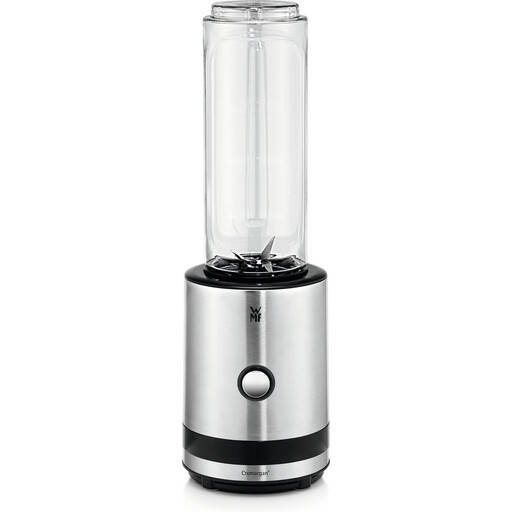
Why it suits this profile: The stainless-steel housing, two 600 ml Tritan cups and leak-proof lid are ideal for anyone who places a high value on materials and everyday convenience.
The stated 300 watts, 0.6-litre capacity and four stainless-steel blades provide more specific information than a general performance claim alone.
Two cups, leak-proof lids, an ice function according to the product description and dishwasher-safe cups.
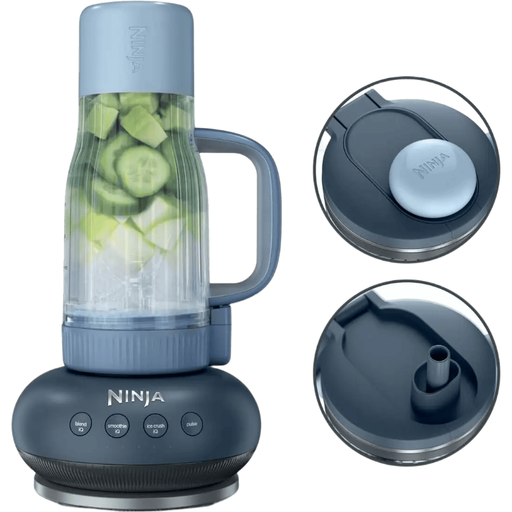
Why it suits this profile: With 1,100 watts, three automatic programmes, a pulse function and a 710 ml cup, this model is aimed at more intensive use at home.
The product description lists the power, programmes, capacity and dishwasher-safe parts separately. This allows you to compare the functions using verifiable information.
1,100 watts, 710 ml travel cup, three automatic modes and a lid with straw according to the product information.
We have put together a complete, up-to-date list of products that fully meet these strict selection criteria and the applicable European safety regulations.
Not every drink requires a blender. A citrus juicer is suitable for oranges, lemons and grapefruit, but cannot process fibrous ingredients or frozen fruit. According to the product information, the Philips HR2738/00 has 25 watts, a 500 ml collection container and dishwasher-safe detachable parts. The Nedis citrus juicer also has 25 watts, a collection container of approximately 0.7 litres and automatic rotation to the left and right.
If you mainly want to make sparkling water, look for a SodaStream sparkling water maker. The SodaStream Ensō comes with a 1-litre bottle and a Quick Connect cylinder. Only use the bottles and cylinders that the instructions state are suitable for the appliance. The separate SodaStream DuoPack glass carafes have a total capacity of 700 ml, a fill line at 615 ml and are designed for Crystal and Penguin machines.
A slushie maker is another distinct category. These appliances are designed for frozen drinks and have different dimensions, cleaning requirements and running costs from a smoothie blender.
For one smoothie, a personal blender of around 475 to 600 ml is often sufficient. Choose a model with a drinking lid if you want to take the cup with you. For frozen fruit or ice, the stated motor power and a specified crushing function are more important than the compact size alone.
In addition to the purchase price, you mainly pay for electricity, ingredients and any replacement blades, cups or batteries. A cordless blender needs to be charged, while a mains-powered model uses electricity during blending. Also check whether specific accessories or replacement parts are available.
The lifespan depends on how you use and maintain the appliance and whether you follow the maximum operating time stated in the instructions. Allow the motor to cool down when instructed, clean the blade unit carefully and do not blend hot or carbonated liquids in a cup that is not designed for them. In the EU, consumers generally have a statutory guarantee of at least two years, in addition to any further rights.
