
Vandaag of morgen in huis

Kwaliteit gegarandeerd

Welkomstaanbiedingen ontgrendelen: GRATIS bezorging | Tot 80% korting | Gratis 30 dagen JoyPlus-proefperiode
Download de app
A blender can come in handy for smoothies, shakes, sauces, soups and chopping ingredients. Yet many people buy a model that doesn’t suit their kitchen or routine. A small smoothie maker, for example, is practical for one person but less suitable for a family. A powerful blender can handle a lot, but takes up more space and is often harder to clean.
So don’t focus only on wattage or a bold product claim. Pay particular attention to capacity, controls, materials, cleaning and the ingredients you usually use.
Higher power may sound appealing, but it doesn’t tell you everything about the blending results. The shape of the jug, the blades, the programmes and the way ingredients are drawn towards the blades all play a part. A blender rated at 250 to 350 watts may be suitable for soft vegetables, fruit and shakes. For ice, frozen fruit or larger quantities, a more powerful model with a suitable ice-crushing function is more practical.
A 1.5-litre jug can’t always be filled to the brim. Follow the maximum fill line to prevent spills and splashes. A cup of around 400 to 600 ml is often enough for one smoothie. If you cook for several people, a home blender with a jug of 1.2 litres or more is a better choice.
A portable blender may seem convenient, but check that the cup seals securely and that the parts are easy to remove. With a cordless blender, you’ll also need to consider charging and the limited serving size. A model with dishwasher-safe parts can save time if you use it every day. Never immerse the motor base, plug or USB connection in water.
Wattage indicates the motor’s power consumption; it doesn’t guarantee a smooth result. A compact mini blender may be enough for smoothies made with soft fruit. If you regularly blend nuts, ice or frozen ingredients, look for:
A product description may make claims about performance. Don’t treat these as guarantees: according to the manufacturer’s product information, a model may be able to process ice or frozen ingredients, for example. Always check the manual for the permitted quantities.
A personal blender with a 475 to 600 ml cup is suitable for one serving. Some models use the same cup for blending and drinking. This means less washing up and is handy for your commute or a trip to the gym.
A countertop blender with a 1.2 to 2.1-litre jug is a better fit for families, soups and multiple smoothies. A blender with a glass jug is usually heavier, but feels sturdy and is less likely to absorb odours or stains. Check whether the jug is dishwasher-safe and whether it can be used with hot liquids.
Look for a BPA-free blender if you’re choosing a plastic cup or jug. Tritan is a type of plastic used in several portable models; check the product specifications for the exact composition. A safe blender will usually have a locking mechanism, a stable non-slip base and a lid that fastens securely.
Don’t blend hot or fizzy liquids in a model that isn’t designed for them. Pressure can build up and dislodge the lid. Always unplug the blender or disconnect the USB cable before cleaning it. The blades are sharp, so don’t handle them by hand.

Why it suits this buyer: Its 500 ml capacity and 250-watt power are well suited to simple smoothies and shakes for one person. According to the product information, you can take the cup with you using the drinking lid.
The product specifications clearly state the cup capacity, list a single speed and specify that the removable parts are dishwasher-safe. This keeps the choice straightforward.
500 ml Tritan cup, BPA-free according to the product information, stainless steel blades and a non-slip base.

Why it suits this buyer: This countertop model is designed for larger portions and a range of recipes. The jug has a 2.1-litre capacity, and the included cup holds 700 ml.
Its 1200-watt power, 14 manual speeds and pulse function give you more control than a model with just one fixed speed.
2.1-litre jug, four automatic programmes and an ice crusher described as powerful in the product information.
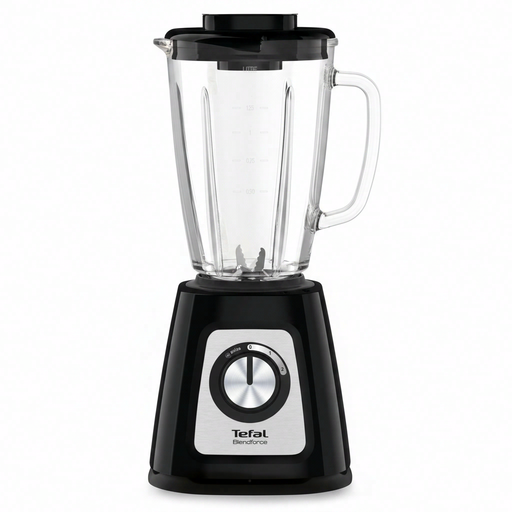
Why it suits this buyer: The combination of 800 watts, a 1.25-litre glass jug and an ice-crushing function is well suited to households that regularly prepare larger portions, cold drinks or soups.
This isn’t a portable smoothie maker, but a straightforward countertop model with two speeds, a pulse function and a safety lock.
1.25-litre glass jug, 800 watts, stainless steel blades and dishwasher-safe parts according to the product information.
We’ve put together a full, up-to-date list of products that meet these strict selection criteria and the applicable European safety regulations.
For one person, a personal blender or mini blender with a 400 to 600 ml cup is a practical choice. If you’re using frozen fruit, choose a model whose product information says it can process frozen ingredients or ice. Add enough liquid and don’t fill the cup above the marked line.
A blender’s lifespan depends on how you use and maintain it, and whether you follow the manual. Don’t run the motor for longer than recommended, avoid overloading it, and regularly check the jug, blades, cable and locking mechanism. Many models in this range come with a two-year warranty; check the product page for the current terms.
Energy use depends on the power rating and how long you use the blender. A 1200-watt model uses more electricity per minute than a 250-watt model, but blending usually takes only a short time. A cordless blender runs on a battery and needs regular charging. Choose a power rating that suits your recipes rather than simply opting for the highest wattage.
