
Vandaag of morgen in huis

Kwaliteit gegarandeerd

Welkomstaanbiedingen ontgrendelen: GRATIS bezorging | Tot 80% korting | Gratis 30 dagen JoyPlus-proefperiode
Download de app
A blender seems simple: add the ingredients, press a button and you’re done. Yet many households buy a model that doesn’t suit the way they use it. A small smoothie blender can be awkward for family-sized portions, while a large multifunction blender takes up unnecessary space if you only make breakfast shakes.
When buying a blender, don’t just look at the wattage or a long list of features. The jug capacity, blade design, ease of cleaning and recommended operating time matter just as much.
A 1,200- or 1,300-watt motor sounds powerful, but the results also depend on the blade design, program, ingredients and how much you add. A high power rating doesn’t automatically prevent overheating either. Always check the instruction manual and recommended operating time.
A 1.75- or 2.1-litre jug is handy for making several portions, but you can’t always fill it to the brim. Hard ingredients, ice and thick mixtures need room to move around properly. For one person, a cup of around 590 to 700 ml may be more practical.
Check which parts are actually dishwasher-safe. The motor base must not be submerged. Also look for removable blades, gaps around the seal and the maximum temperature for accessories. A hand blender or immersion blender with a detachable shaft is often quicker to rinse than a more elaborate appliance with lots of separate parts.
For smoothies, sauces and soft vegetables, a mid-range power rating is often enough. If you regularly want to blend frozen fruit, nuts or ice, look for a suitable blade design and a pulse function. A blender for crushing ice should state this explicitly in the product information; don’t judge by wattage alone.
Multiple speed settings give you control over liquid and thicker mixtures. A smoothie blender with one automatic setting can be convenient for quick use, while a hand blender with variable speed is better suited to soups, sauces and small quantities.
A blender with a glass jug is less prone to discolouration and generally absorbs fewer odours. Glass is heavier, though, and can be damaged by a hard impact or sudden changes in temperature. Only use hot ingredients if the manual says it’s safe.
Plastic jugs are often lighter. If you’re choosing a plastic cup, check whether the product information specifies the material and whether it’s BPA-free. For families, a capacity of around 1.2 to 2.1 litres is worth considering; for taking with you, 0.5 to 0.7 litres is often enough.
A blender with a chopper can be handy for herbs, nuts or small portions. A food processor with a blender attachment often offers extra functions such as grating, slicing and kneading, but it needs more storage space and takes more effort to clean.
Check whether:
For a blender for baby food, small portions, easy cleaning and a suitable bowl are important. Don’t use an appliance for hot liquids if the manual says not to. A blender purées food, but it can’t determine whether a recipe is suitable for a child.
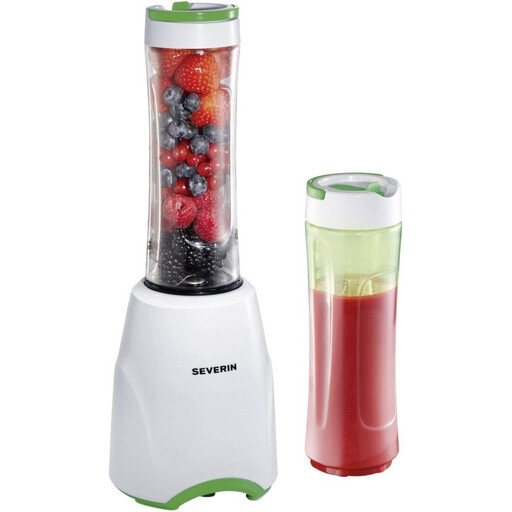
Why it suits this profile: The two 0.60-litre drinking cups are ideal for single servings you can take straight to the office or gym.
Its purpose is clearly defined: smoothies, milkshakes and sports drinks. So you don’t pay for features you’re unlikely to use.
300 watts, two speeds, pulse function and dishwasher-safe parts according to the product information.

Why it suits this profile: This model is designed for larger portions and for users who want a combination of automatic programs and manual control.
The specifications list a 2.1-litre jug, 14 manual speeds and programs for tasks including chopping and pulsing. Be sure to check the maximum fill line.
1,200 watts, a 700 ml cup and an ice-crush function according to the product description.
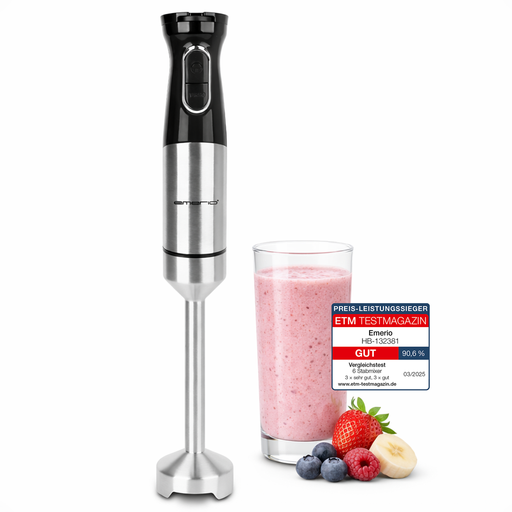
Why it suits this profile: A hand blender is ideal for making soups, sauces and purées directly in a suitable pan or bowl.
The detachable stainless-steel blending shaft makes cleaning more straightforward than with a fully enclosed base. The motor unit must not be put in water.
1,000 watts, variable speed, two stainless-steel blades and a 1.2-metre cord.
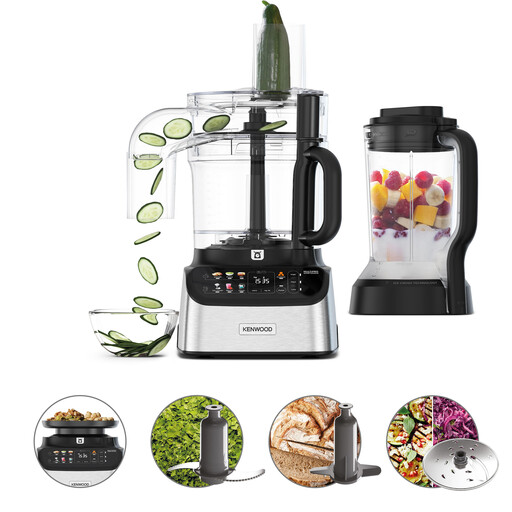
Why it suits this profile: This multifunctional appliance is for anyone who wants to do more than blend, including slicing, grating, kneading and weighing ingredients.
The functions are clearly specified: a 1.5-litre blender jug, a 3-litre bowl, six programs and integrated scales.
1,000 watts, OneTouch controls, ice crushing, dough kneading, chopping, grating and slicing according to the product information.
We’ve put together a complete, up-to-date list of products that meet these strict selection criteria and the applicable European safety regulations.
A lower power rating may be enough for smoothies and sauces. For frozen ingredients, nuts or ice, the blades, pulse function and recommended operating time matter just as much as the power. So compare the full product specifications.
Its lifespan depends on how it’s used and maintained, whether it’s overloaded and whether you follow the recommended rest periods. Let the motor cool down when instructed in the manual, and don’t use a damaged jug, blades or cable. In the EU, consumer purchases are generally covered by statutory conformity rights; also check the terms and conditions provided by the seller and manufacturer.
A blender usually runs for a short time, so the total energy used per preparation is limited. Consumption depends on the power rating and how long you use it. A 1,000-watt appliance running for one minute uses around 0.017 kWh in theory. The actual cost depends on your electricity tariff and the program.
