
Vandaag of morgen in huis

Kwaliteit gegarandeerd

Welkomstaanbiedingen ontgrendelen: GRATIS bezorging | Tot 80% korting | Gratis 30 dagen JoyPlus-proefperiode
Download de app
Buying a blender sounds simple until you start comparing motor power, capacity and accessories. A compact smoothie blender is handy for making a single serving, but it is not automatically suitable for frozen fruit or daily use. A large jug offers more capacity, but also takes up more space and is often heavier to clean.
Pay particular attention to these common pitfalls:
Motor power is usually expressed in watts. A personal blender with 600 to 900 watts is often practical for smoothies, shakes and soft ingredients. For ice, nuts, frozen fruit or larger portions, a powerful blender with, for example, 1,000 to 1,700 watts is a more logical choice.
However, wattage is no guarantee of a smooth result. Also look at:
The Nutribullet Original, for example, states that the appliance should not be used continuously for more than one minute. This is relevant if you want to make several portions one after another.
For one person, a cup with a capacity of 475 to 700 ml is often sufficient. A blender to go usually has a drinking lid, allowing you to take your drink straight to the office, the gym or on the go.
For a family, or for preparing larger quantities of soup, sauces and cocktails, a blender with a large jug is more practical. According to the product specifications, the Ninja Detect TB301EU has a 2.1-litre jug and a 700 ml cup. However, always check how much of this capacity can actually be used.
Also consider the material:
A BPA-free cup can be a useful product specification. Also check which parts are dishwasher-safe. On various models, the motor base and blade are not dishwasher-safe.
A blender for smoothies usually needs only one or more speed settings and a pulse function. The pulse function is useful when you need a short burst of extra power or want more control over the consistency.
For specific preparations, these features may be useful:
A cordless blender is flexible, but has a smaller cup and limited battery life. It is mainly intended for light, individual preparations and is not a replacement for a powerful kitchen blender.
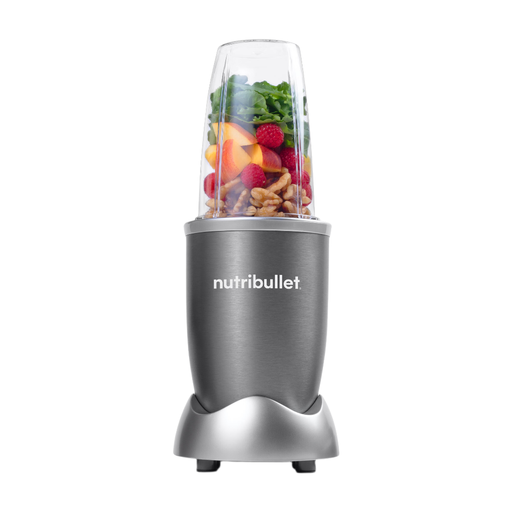
Why it suits this profile: A compact choice for anyone who mainly makes smoothies, shakes, sauces or cocktails for one person. The cup has a capacity of 700 ml.
The specifications state 600 watts and a maximum operating time of one minute. This makes it clear in advance that this model is intended for short preparations, not prolonged heavy-duty use.
600 watts, pulse function, BPA-free cup and dishwasher-safe cup according to the product information.

Why it suits this profile: Suitable for households that prepare a variety of recipes and want to use both a large jug and an individual cup.
The choice is not based solely on marketing features: the product specifications clearly state 1,200 watts, a 2.1-litre jug, a 700 ml cup and manual speed settings.
1,200 watts, 2.1-litre jug, 700 ml cup, ice-crushing function and 14 manual speeds according to the product description.
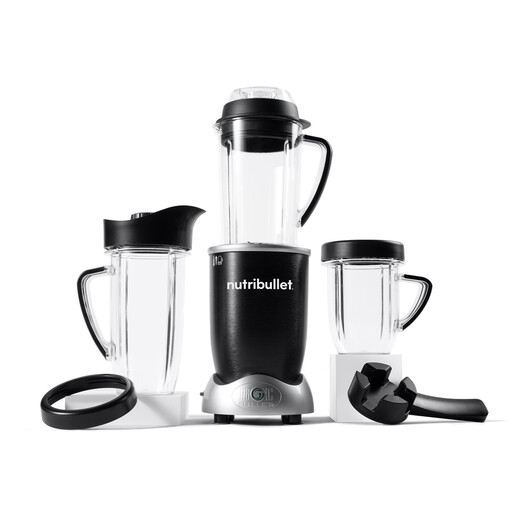
Why it suits this profile: An option for anyone who regularly wants to prepare hard ingredients, ice, nuts, sauces or larger hot and cold recipes.
The product information explicitly mentions a vented lid for hot ingredients and a soup programme. Only use hot liquids in accordance with the manual.
1,700 watts, 1.3-litre capacity, soup programme and accessories for hot and cold preparations.
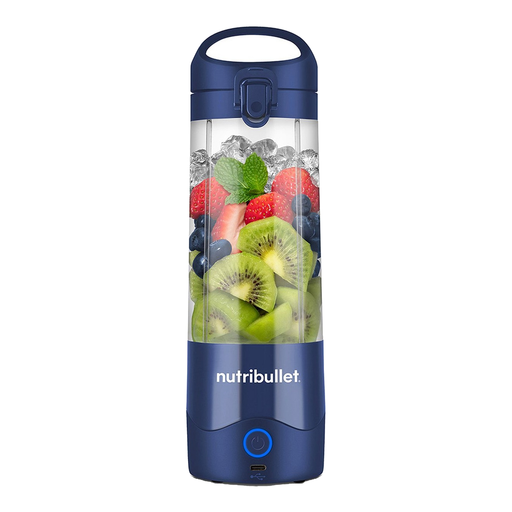
Why it suits this profile: For anyone who wants to make a small smoothie or shake without a power socket and take the cup with them afterwards.
The usage limit is clear: according to the product information, the battery supports 15 or more blending cycles after approximately one hour of charging. With a capacity of 475 ml, the cup is designed for one serving.
USB-C charging, handle, leakproof drinking lid and 17,000 revolutions per minute according to the product data.
If you only juice oranges, lemons or grapefruits, you may not need a multifunctional blender. The Nedis electric citrus juicer has 25 watts, a jug with a capacity of approximately 0.7 litres and automatic rotation to the left and right.
For everyday use with ice and smoothies, the WMF Smoothie To Go Blender may be worth considering. The product information lists two 600 ml drinking bottles, four stainless-steel blades and an ice-crushing function. Before buying, check the current stock status, included accessories and cleaning instructions.
We have put together a complete, up-to-date list of products that fully meet these strict selection criteria and the applicable European safety regulations.
For one person, a smoothie blender with a cup holding 475 to 700 ml is practical. Look for sufficient power, a pulse function and a drinking lid if you want to take your smoothie with you. For frozen fruit and ice, a model with an explicit ice-crushing function is more suitable.
No. Only use warm or hot ingredients when the manufacturer allows it and the jug has been designed for this purpose. A vented lid can help release pressure, but always follow the maximum fill level and the instructions in the manual. Models intended only for cold preparations must not be used with hot liquids.
Power consumption depends on the wattage and operating time. In theory, a 600-watt appliance running for one minute uses less energy per preparation than a 1,700-watt model that runs for longer. The difference on your energy bill is usually smaller than the purchase price, but do not choose a more powerful model than your recipes require. Also consider replaceable cups, dishwasher-safe parts and the statutory minimum two-year guarantee in the EU.
