
Vandaag of morgen in huis

Kwaliteit gegarandeerd

Welkomstaanbiedingen ontgrendelen: GRATIS bezorging | Tot 80% korting | Gratis 30 dagen JoyPlus-proefperiode
Download de app
Anyone looking to buy chocolate bars online will soon come across dozens of flavours, brands and sizes. However, eye-catching packaging reveals little about the taste, ingredients or suitability for your needs. Pay particular attention to verifiable information such as the cocoa percentage, ingredients list, allergens and net weight.
Whether you are looking for milk chocolate, dark chocolate, white chocolate, chocolate with nuts or a chocolate gift pack, the following points will help you avoid making the wrong purchase.
A higher percentage usually means a more intense cocoa flavour, but that does not automatically mean the bar will suit your preferences. A bar with 90% cocoa generally contains less sugar than many milk chocolate bars, but it may also taste noticeably more bitter.
Also check the full ingredients list. In dark chocolate, cocoa mass, sugar and cocoa butter are often listed first. In milk chocolate, milk powder and sugar play a bigger role. White chocolate contains no cocoa mass, but it does contain cocoa butter, sugar and milk ingredients.
It is difficult to compare a 90-gram bar with a 180-gram bar fairly without checking the price per kilo. A larger pack is convenient for sharing, but it is not always better value. So check the net weight and compare the price per 100 grams.
A 100-gram bar is well suited to a small treat or gift. Sizes of 180 grams, 200 grams or 250 grams make more sense when you want to share or keep several portions.
Terms such as ‘Belgian chocolate’, ‘Swiss chocolate’, ‘Alpine milk’ or ‘sustainable cocoa’ do not, on their own, indicate what the flavour will be like. At most, they provide information about origin, recipe or a sustainability programme. Always check the specific product information.
When a brand makes a social or sustainability claim, it is not presented here as a confirmed independent result. According to Tony’s Chocolonely’s own product description, the brand aims to achieve a fully slave-free standard throughout the chocolate supply chain. For some Côte d’Or and Milka products, the product description refers to the Cocoa Life programme. For up-to-date certification information, always check the packaging and the information provided by the organisation concerned.
Use the cocoa percentage as a practical indication of flavour:
According to the product description, Lindt Excellence 90% Cocoa Supreme Dark contains 90% cocoa and 7 grams of sugar per 100 grams. Côte d’Or Sensation Noir contains 70% cocoa and lists 28 grams of sugar per 100 grams. These are verifiable differences that can help you compare products, without suggesting that one flavour will suit everyone.
With chocolate with hazelnuts, caramel or sea salt, the filling has a major impact on how the bar feels and tastes. Check the stated proportion: according to the ingredients list, Tony’s Milk Hazelnut contains 10% hazelnuts. Milka Broken Hazelnuts lists 9% hazelnut pieces. Tony’s Milk Caramel Seasalt contains 10% caramel pieces and 0.5% sea salt.
Check allergens particularly carefully. Many bars contain milk, soya, hazelnuts, almonds or other nuts. Some varieties may also contain egg, cereals containing gluten or barley. ‘May contain’ indicates possible cross-contamination and is especially relevant if you have allergies. If in doubt, use the current packaging as your guide.
For personal use, a compact 90- or 100-gram bar may be sufficient. If you want to share at the office, celebrate a birthday or let people try different flavours, a larger bar or gift pack is more practical. A resealable pack, as found with some larger Milka packs, can help keep the bar in better condition after opening.
Store chocolate in a cool, dry place away from direct sunlight. Avoid moisture and sources of heat. Exact shelf-life information can be found on the packaging.
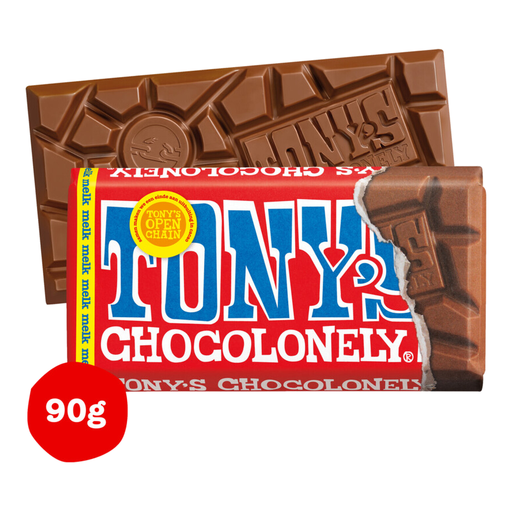
Why it suits this profile: A compact size for anyone who wants to try a familiar milk chocolate flavour without immediately buying a large bar.
The 90-gram net weight is clearly stated, making it easier to compare the price fairly with larger bars.
Belgian milk chocolate, at least 32% cocoa solids and, according to the product information, Fairtrade and vegetarian.

Why it suits this profile: For lovers of a distinctive dark chocolate flavour who want to assess the cocoa percentage in advance.
The 90% cocoa percentage is clearly stated in the product name. This makes it easier to anticipate the flavour profile than with general terms such as ‘intense’.
100 grams, 90% cocoa and, according to the product information, 7 grams of sugar per 100 grams.
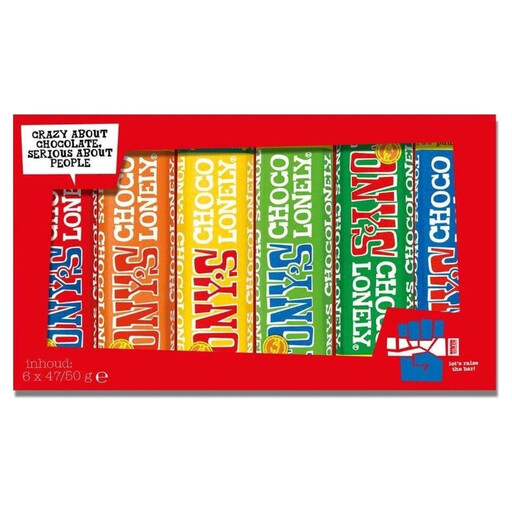
Why it suits this profile: Ideal for sharing, a birthday or a gift where trying different flavours matters more than having one large bar.
You do not have to choose one flavour in advance: the pack contains six small bars, including dark and milk chocolate, caramel, hazelnuts and almonds.
288 grams total weight and, according to the product description, a combination of Belgian dark and milk chocolate with various additions.
We have compiled a complete, up-to-date list of products that fully meet these strict selection criteria and the applicable European safety regulations.
Milk chocolate or white chocolate is usually the best choice. Milk chocolate often has a milder flavour thanks to its milk ingredients. Anyone who would like a little more cocoa flavour without choosing a very bitter bar could consider dark milk chocolate with, for example, 42% cocoa.
Yes, a 100-gram bar is compact and easy to pair with coffee, tea or a small gift. For a more substantial present, a chocolate gift pack is more practical, as the recipient can try several flavours.
Keep the bar in its original, tightly closed packaging in a cool, dry place. Keep chocolate away from direct sunlight, moisture and sources of heat. Check the shelf-life information on the packaging when buying and after opening.
