
Vandaag of morgen in huis

Kwaliteit gegarandeerd
Download de app
Categorieën

A new washing machine is a significant investment. It's an appliance you'll use almost daily for years to come. The wrong choice can lead to unnecessarily high energy bills, laundry that doesn't come out clean, or noise disturbances. With so many models, features, and specifications, the selection process can feel complex. This guide will help you find a washing machine that fits your household and needs based on key, factual characteristics.
To make an informed decision, it's helpful to understand a few core specifications. These parameters determine the appliance's performance, consumption, and ease of use.
Since 2021, the EU has used a new energy label, ranging from A (most efficient) to G (least efficient). An energy-efficient washing machine with an A energy class consumes significantly less power and water per wash cycle. Some models are even more efficient, designated as A-10% or A-20%, meaning they are 10% or 20% more efficient than the standard for class A. You'll see the impact of this directly on your energy bill.
The capacity, expressed in kilograms (kg), indicates how much dry laundry the drum can hold.
The noise level is expressed in decibels (dB) for both the washing and spinning cycles. The spin cycle is always louder. A quiet washing machine is desirable if the appliance is located in or near a living area. A model with a noise level of 72 dB or lower during the spin cycle is generally considered quiet. Brushless motors (inverter motors) are often quieter and more durable.
Modern washing machines offer various programmes and technologies that make washing easier and more effective.
The standard dimensions of a washing machine are approximately 85 cm high, 60 cm wide, and 55-65 cm deep. If you have less space, such as in an apartment or a small utility room, a slimline washing machine (also known as a "slim" model) is an excellent option. These are often less deep (e.g., 45 cm). Always measure your available space carefully before making a purchase.
Below is a selection of washing machines, highlighted for their specifications and features.
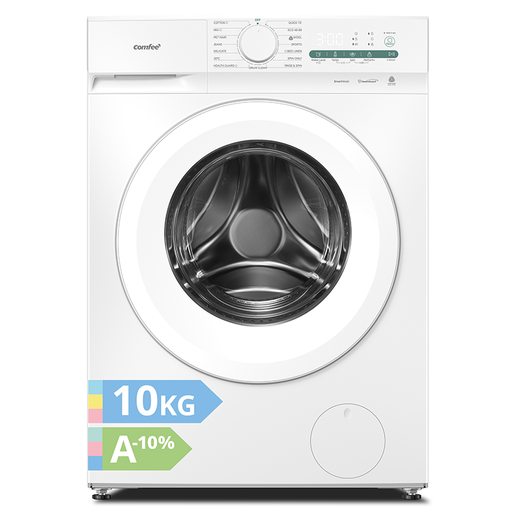
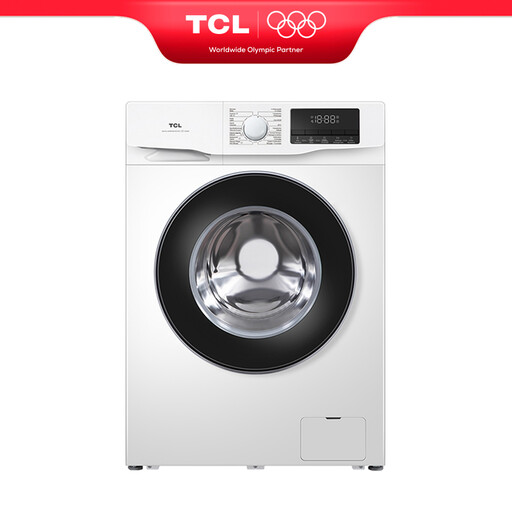
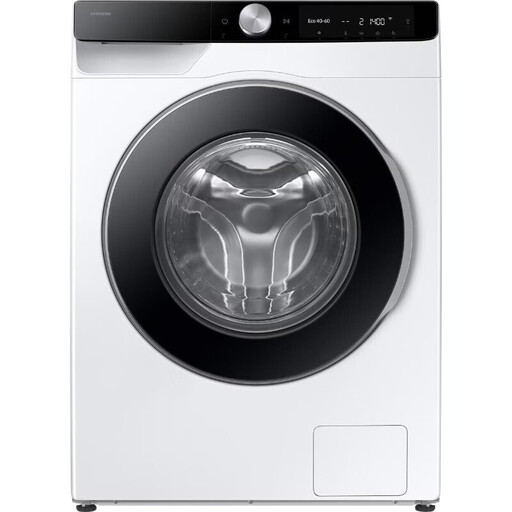
The models mentioned above come in a white finish. If you prefer a specific colour to better match your interior, such as black, you can browse our dedicated selection. For an overview of models with this finish, please visit our category page for black washing machines with steam.
1. What is the practical benefit of a washing machine with a steam function? A steam function can be useful in three ways. First, it reduces wrinkles in clothes, which can save time on ironing. Second, it can quickly refresh garments that aren't truly dirty, eliminating odours without a full wash cycle. Third, the hot steam helps remove allergens like dust mites and pollen, which can be beneficial for people with allergies.
2. How much more efficient is a washing machine with an A energy class? The new energy label (since March 2021) is stricter than the old one. A washing machine with an A class rating is among the most energy-efficient appliances on the market. The exact consumption is expressed in kWh per 100 wash cycles and is listed on the energy label. Choosing an A-class model over one with a lower rating (e.g., D or E) can make a noticeable difference in your annual energy costs, depending on how often you do laundry.
3. Is a washing machine with an inverter motor really quieter? Yes, generally it is. A traditional washing machine motor uses carbon brushes that create contact and friction, leading to more noise and wear. An inverter motor (also known as a BLDC or brushless motor) is electronically controlled and has fewer moving, friction-causing parts. This results in fewer vibrations, a lower noise level (especially during the spin cycle), and a longer lifespan.