
Vandaag of morgen in huis

Kwaliteit gegarandeerd

Welkomstaanbiedingen ontgrendelen: GRATIS bezorging | Tot 80% korting | Gratis 30 dagen JoyPlus-proefperiode
Download de app
If you want to buy vitamin D3, you’re probably faced with a confusing mix of micrograms, tablet types and brand names. That makes it hard to quickly work out what suits your situation. A high dosage isn’t automatically necessary, and a large number of capsules doesn’t always mean the lowest cost per day.
As a Joybuy Product Recommendation Officer, I filter product information by verifiable points: dosage, format, ingredients, target audience and pack size. This way, you avoid relying solely on flashy marketing claims.
Vitamin D3 products are available with 10 mcg, 20 mcg, 25 mcg and 75 mcg per dose, among others. A higher amount may be suitable for a specific purpose, but it isn’t automatically right for everyone’s daily use.
According to the advice of the Dutch Health Council, a supplement of 10 mcg per day is often recommended for certain groups, including people with darker skin, limited sun exposure, pregnant women and women aged 50 to 69. For adults aged 70 and over, 20 mcg per day is advised. Always check your personal circumstances and the label.
A pack of 60 capsules might look cheaper than a pack of 365 capsules, but the price per daily dose can be very different. So, divide the price by the number of recommended servings. Also pay attention to the stated dosage: one capsule or tablet per day makes comparing much easier.
If you struggle to swallow, vitamin D3 chewable tablets or melt-in-the-mouth tablets might be more practical. For babies and young children, vitamin D drops are often easier to administer. Also check for gelatine, sweeteners, allergens and dietary preferences. A capsule containing gelatine, for example, isn’t suitable if you’re buying vegan.
The amount of vitamin D is usually listed in micrograms (mcg) and sometimes also in IU. The product information will show, for example:
Don’t just look at the percentage reference intake. That percentage helps with comparing, but it doesn’t on its own determine which dosage you need.
A vitamin D3 capsule is usually taken with water and preferably with a meal. A melt-in-the-mouth tablet dissolves in the mouth without water, according to the product description. Chewable tablets can be handy for adults who don’t want to swallow capsules. Gummies have an appealing format, but check the sweeteners and keep them out of reach of children.
For vitamin D for adults, there are variants with 10, 20, 25 or 75 mcg. For vitamin D for children, always follow the age limit and daily dosage on the label. Some products are only suitable from age 1 or 10. Don’t just give an adult product to a child.
With babies and young children, extra attention is needed for the dosage and ingredients. According to the product information, Davitamon Vitamin D Oil Baby and Child contains peanut oil. If there is a known peanut allergy, this product is not suitable.
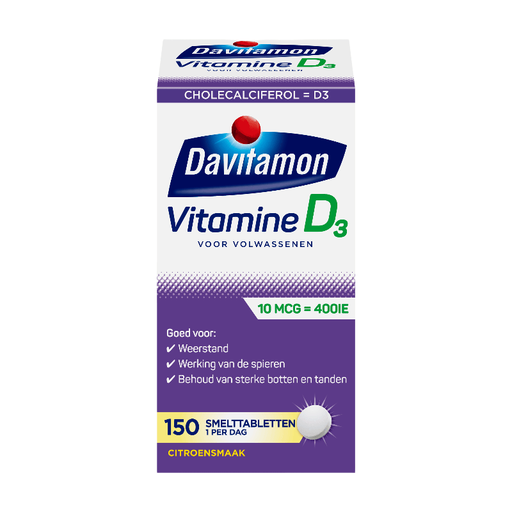
Why this fits the profile: The pack contains 150 melt-in-the-mouth tablets with 10 mcg of vitamin D3 per tablet. That makes the daily amount and number of servings easy to follow.
You’re not paying for an unnecessarily high dosage, and you don’t need water.
10 mcg per tablet, 150 tablets, gluten-free and lactose-free according to the product information.
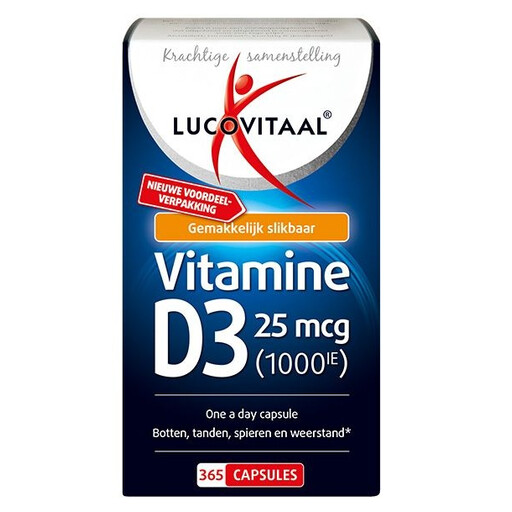
Why this fits the profile: If you want one fixed daily intake and a long-lasting supply, this gives you 365 capsules with 25 mcg per capsule.
The number of capsules and the dosage are clearly stated, so you can calculate the cost per day.
365 capsules, 25 mcg per capsule and one capsule per day according to the product information.
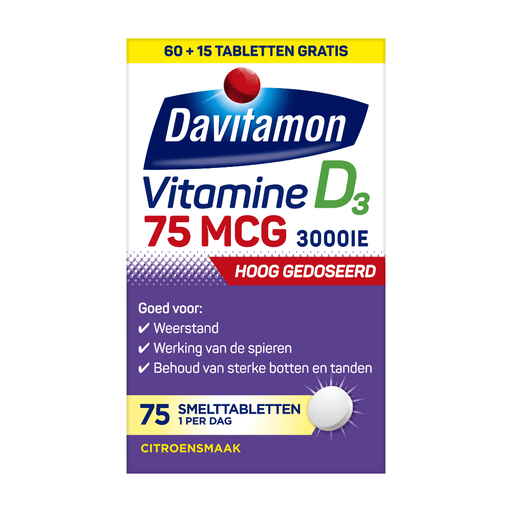
Why this fits the profile: This is a high-dose melt-in-the-mouth tablet for adults. According to the product information, this variant is intended for temporary use.
The pack clearly states 75 mcg and warns that you should not exceed the recommended daily amount.
75 mcg per melt-in-the-mouth tablet, no water needed and, according to the product information, gluten-free, lactose-free and gelatine-free.
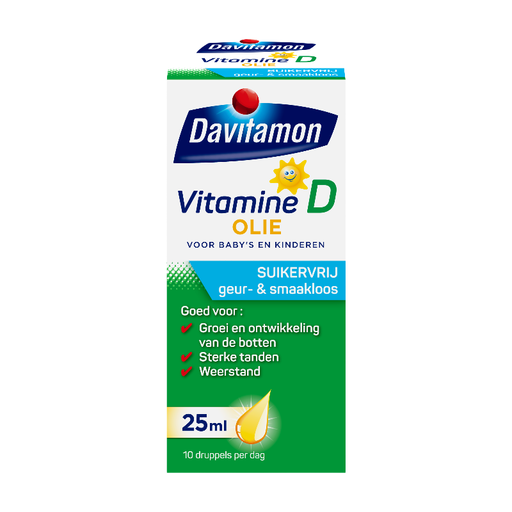
Why this fits the profile: Drops can be given on a spoon, according to the product description. The stated daily dose is 10 drops.
The dosage is linked to a specific number of drops. Do check the peanut oil in the ingredients list.
10 mcg per daily dose, sugar-free and suitable for babies and children according to the product information.
We’ve put together a full, up-to-date list of products that fully meet these strict selection criteria and comply with current European safety regulations.
That depends on your preference. Capsules are compact and easy to take with you. Melt-in-the-mouth tablets and chewable tablets are suitable if you’d rather not swallow capsules. For young children, drops can be more convenient. Always check the age, dosage and ingredients.
For certain groups, the Health Council recommends daily supplementation throughout the year. The right amount varies by age and situation. Follow the product label and, if you are taking medication, are pregnant or have a medical condition, ask your doctor or pharmacist for advice.
The difference is the amount of vitamin D3 per daily dose. 20 mcg is found in products for adults with a higher need, 25 mcg in capsules and gummies, among others, and 75 mcg in high-dose variants. A higher dosage does not automatically mean the product is more suitable for you.
