
当日/次日达

品质保障

开启新人专享福利: 全场免邮 | 低至 2 折 | 免费试用 30 天 JoyPlus 会员
下载 Joybuy
When you set out to buy Vietnamese rice noodles, you’ll quickly come across dozens of packets labelled “authentic”, “premium” and “traditional flavour”. Those words don’t always tell you enough. The real difference often lies in the noodle width, cooking time, ingredients and packaging.
As Joybuy’s Product Recommendation Officer, I filter out the key product information so you can make a targeted choice without relying solely on marketing claims.
A 3 mm rice noodle behaves very differently from a 5 mm or 10 mm rice stick. Thin noodles work well in light soups and salads. Wider rice sticks hold more sauce and are ideal for stir-fries.
A packet that simply says “rice noodles” doesn’t give you enough information. Look for the diameter or width, such as rice noodles 3 mm or rice noodles 5 mm.
Instant noodles usually contain more than just rice noodles – they also include a soup base, oil, flavour enhancers and dried vegetables. That’s handy for a quick meal, but less suitable when you want to control your own broth and toppings.
Always check the ingredients list. Some instant varieties contain wheat, gluten, soya or fish. The word “pho” on the packet doesn’t automatically mean the product is free from these ingredients.
A 400 g or 500 g bag is practical for several meals, but dried noodles can absorb moisture once opened. Check the seal and store the packet in a cool, dry place away from direct sunlight. For instant noodles, a multipack is convenient for stocking up, but do pay attention to the best-before date and portion size.
Use this simple guide:
The term rice sticks usually refers to straight-cut, flat rice noodles. Pho noodles are intended for Vietnamese soup but can also be used in other dishes.
Some dried rice noodles contain only rice and water. Other varieties include tapioca starch or stabilisers. Instant noodles often add seasoning mixes, oil and flavourings.
Pay particular attention to:
Farmer Brand lists rice flour and water as the ingredients for its 5 mm rice sticks, and none of the 14 major EU allergens. Nevertheless, always check the current packaging, especially if you have an allergy or coeliac disease. Product information can change.
The preparation method has a big impact on texture. Some dried noodles need to be soaked in warm water for 15 to 20 minutes first, then briefly boiled. Other varieties can be cooked directly for around 3 to 4 minutes. According to the product information, Farmer Brand recommends soaking for 30 to 45 minutes in cold or warm water.
Don’t cook the noodles for longer than stated. Overcooking makes them soft and sticky. For a salad, rinse them with cold water after cooking. For pho, add them to the hot broth only at the very end.
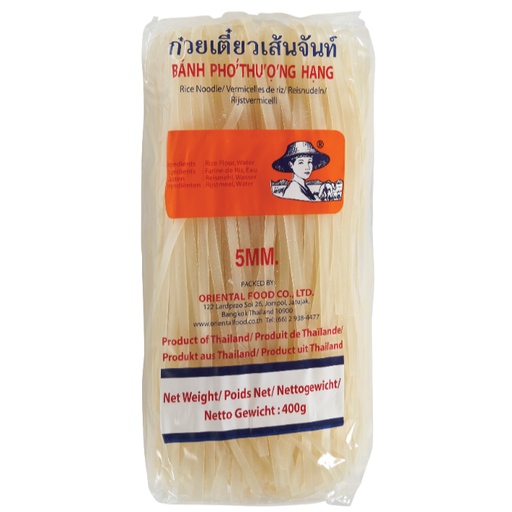
Why it fits this profile: An accessible 400 g bag for anyone wanting to try different Asian dishes without committing to a bulk pack straight away.
The product information clearly states a width of 5 mm and a preparation method that requires pre-soaking.
400 g, 5 mm wide, rice flour and water listed as ingredients; suitable for soups, steaming and stir-frying.
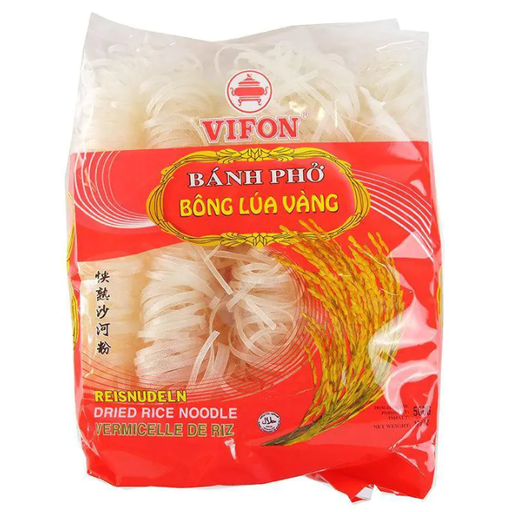
Why it fits this profile: A larger pack for home cooks who regularly make Vietnamese pho, bun or stir-fries.
The product listing mentions the weight, Vietnamese origin and noodle diameter. Note: the title and description state different widths; check the label before purchasing.
500 g per pack; according to the product information, no additives or preservatives.
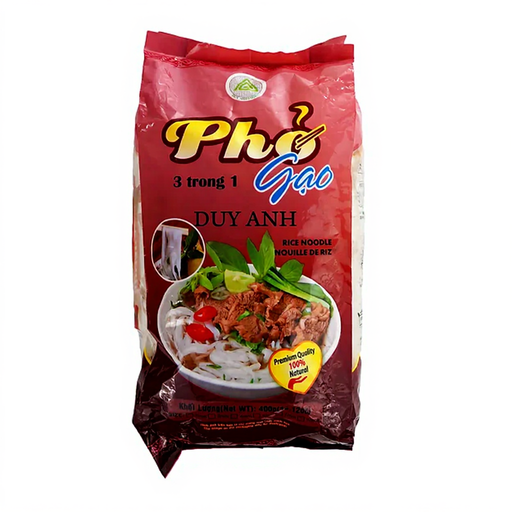
Why it fits this profile: Aimed at pho lovers who want a simple base without seasoning sachets, to pair with their own broth, herbs and toppings.
The product information lists rice as an ingredient and states none of the 14 major EU allergens. Check the current packaging if you have a food allergy.
400 g, intended for pho and stir-fries; the base is 100% rice according to the product listing.
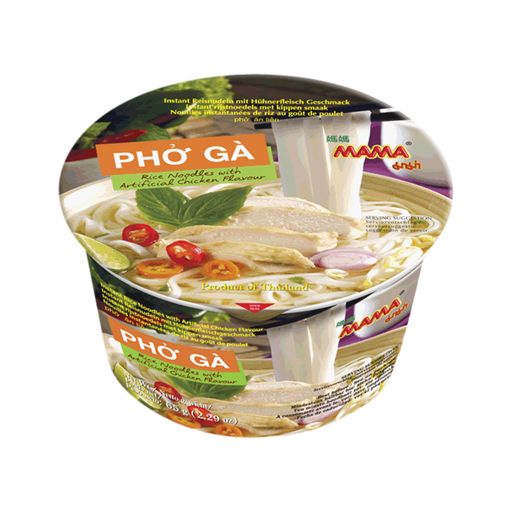
Why it fits this profile: A 65 g portion that, according to the product information, is ready in around 3 minutes.
The portion size, preparation time and ingredients are all listed. The ingredients include wheat, soya and fish; check this before purchasing.
Instant rice noodles in a pot; chicken broth flavour, dried vegetables and a cooking time of around 3 minutes.
We’ve put together a full, up-to-date list of products that fully meet these strict selection criteria and comply with current European safety regulations.
For dried Vietnamese pho noodles, this method usually works well:
Instant varieties such as chicken pho or beef pho are especially handy when speed matters. For a home-assembled meal, dried rice noodles without a seasoning mix offer more flexibility.
That varies from product to product. Dried noodles made with only rice and water can be suitable, but always check the label and allergen information. Instant noodles often contain wheat, gluten, soya or fish sauce. A packet labelled “rice noodles” is not a guarantee in itself.
Refer to the date on the packet. Unopened dried rice noodles generally keep well for a long time when stored in a cool, dry place away from direct sunlight. Seal an opened packet tightly and do not use any product whose packaging is damaged or has let moisture in.
For pho, thin rice noodles 3 mm are often used because they soften quickly and combine well with broth. A 5 mm variety can also work, especially if you prefer a firmer texture. Pay attention to the cooking instructions and adjust the cooking time accordingly.
