
当日/次日达

品质保障

开启新人专享福利: 全场免邮 | 低至 2 折 | 免费试用 30 天 JoyPlus 会员
下载 Joybuy
When you want to buy tropical drinks online, you’ll quickly come across dozens of types of coconut water, mango drinks, lychee drinks and exotic fruit beverages. The packaging often shows a large fruit or words like “natural” and “refreshing”. That doesn’t always tell you how much fruit is actually inside or how much sugar you’re getting per glass.
With the following checkpoints, you can compare drinks based on ingredients, nutritional values, size and usage scenario. This way, you’ll avoid a bad purchase and find a suitable option more easily for home, on the go, for a family or for catering.
A mango, guava or coconut image makes the flavour recognisable, but always check the ingredients list. A mango drink, for example, might contain 17% or 30% mango purée. With coconut water, the difference can be significant between 100% coconut water, coconut water with added sugar, and a coconut drink containing coconut flesh.
Look at the order of the ingredients. In the European Union, ingredients are generally listed in descending order by quantity. If sugar appears early in the list, it’s not a minor detail but a key part of the composition.
A drink with no added sugar can still contain natural sugars from fruit juice. So always check the “of which sugars” line per 100 ml. For example, Maaza Guava Sugar Free Drink lists 11.2 grams of sugars per 100 ml, despite the “sugar free” claim on the product information.
For Iam Superjuice products, “no added sugar” is stated. The energy values vary by flavour: according to the product information, the mango drink contains 17 kcal per 100 ml, the lychee drink 15 kcal and the soursop drink 18 kcal. So compare the full nutritional table rather than just the front of the packaging.
A soft drink multipack or a case of 12 litres is handy for families, offices and catering, but it does require storage space. Compare the price per litre and check the best-before date. Small 330 ml cans are practical for individual portions, while 1-litre cartons are better suited for shared use or for using in smoothies and desserts.
When looking at offers, also check the number of units. A pack of six 1-litre bottles and a tray of twelve cans may look similar at first glance, but they have a very different total volume.
Make a distinction between:
With KATO Mango Juice with Nata De Coco, the product information combines mango with nata de coco. Mogu Mogu Coconut Flavored Drink lists, among other things, coconut, fructose, sugar and coconut flavouring in the ingredients. These are products for those who value texture, not just fruit flavour.
Use the values per 100 ml to compare products fairly. A 330 ml can contains roughly 3.3 times the value per 100 ml. So a drink with 5 grams of sugar per 100 ml works out at around 16.5 grams of sugar per can.
“Sugar-free drink” can, according to the product information, mean that no added sugar is present or that a legal designation is used. Therefore, always read the current packaging. Also look out for sweeteners, such as steviol glycosides, if you prefer to avoid them.
Pay attention to the size, material and instructions after opening. Unopened cartons and cans should generally be stored in a cool, dry place away from direct sunlight. Once opened, a drink usually needs to be refrigerated and used within the time stated on the label.
For sporty consumers, families and catering businesses, 1-litre packs are efficient. For lunch, a picnic or a tasting session, 250 ml or 330 ml packs are more manageable. If you have allergies, always check the current ingredients list; the information on the website may differ from the packaging.

Why this fits the profile: The tray of 12 cans of 330 ml is practical for storing at home and serving in individual portions. According to the product information, the drink contains 30% mango juice and 17 kcal per 100 ml.
The fruit percentage and energy per 100 ml are clearly stated. This means you’re not comparing the mango flavour based solely on the picture on the packaging.
12 portions of 330 ml; no added sugar according to the product description; made with 30% mango.
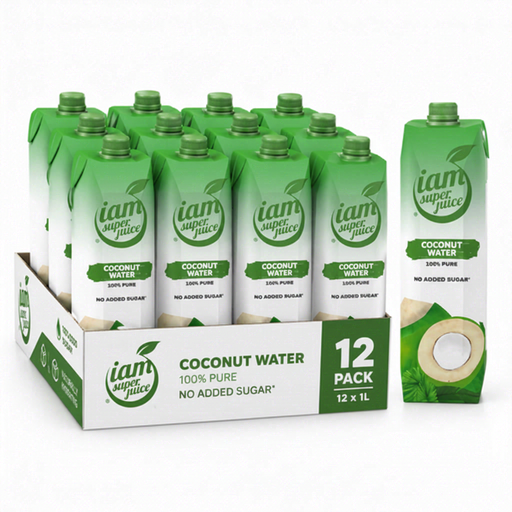
Why this fits the profile: If you’re looking for a short ingredients list, this one shows 100% coconut water with no added sugar, according to the product information. The 1-litre cartons are suitable for serving chilled or using in recipes.
The name “coconut water” is backed up by an ingredients list with just one ingredient. Always check the current packaging when you receive it, though.
100% coconut water according to the product description; 12 cartons of 1 litre; 21 kcal per 100 ml according to the stated nutritional values.
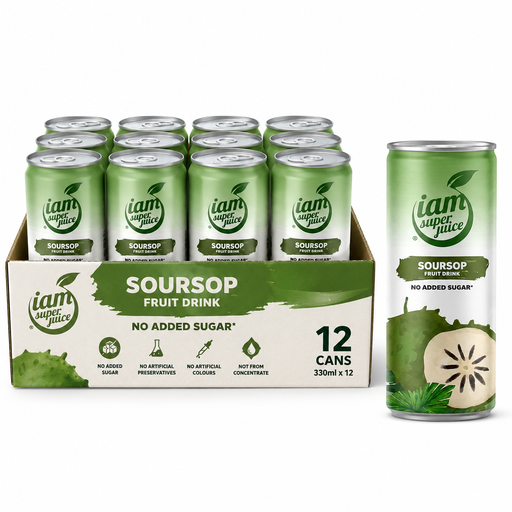
Why this fits the profile: The 330 ml cans are ideal for stocking up, events or catering. The flavour of soursop, also known as guanabana, offers a change from mango, coconut and guava.
The product information states 18 kcal per 100 ml, no added sugar and no artificial colours or preservatives. Check these details on the can itself.
12 cans; soursop as a less common fruit flavour; according to the product description, not made from concentrated fruit juice.
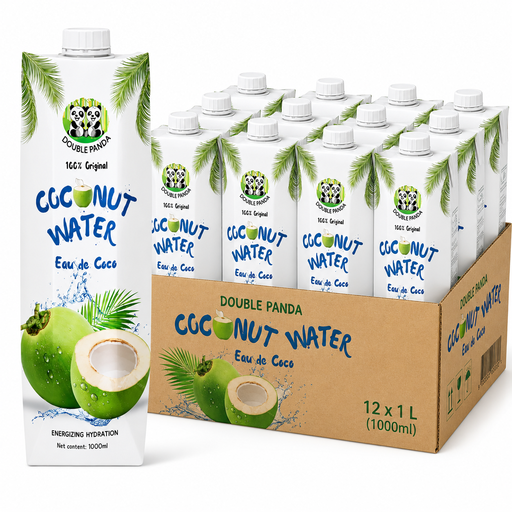
Why this fits the profile: The case of 12 cartons of 1 litre is aimed at larger consumption, catering and preparations. According to the product information, the drink contains coconut water and cane sugar.
The ingredients list clearly shows that cane sugar has been added. This means you won’t expect an unsweetened coconut water based on the product name alone.
12 × 1 litre; 23 kcal and 4.5 grams of sugar per 100 ml according to the product information; suitable for drinking and mixing.
We’ve put together a full, up-to-date list of products that fully meet these strict selection criteria and comply with current European safety regulations.
For a broader tasting, you might also consider:
Coconut water comes from the coconut and can be sold as a single ingredient. Coconut drink may also contain water, sugar, coconut flesh, flavourings or other additions. So always check the ingredients list and the nutritional values.
Follow the label. In many cases, an opened carton or can should be kept in the fridge and consumed within a few days. Seal a carton well and do not use an opened product if the packaging is damaged or if it smells unusual.
That depends on the promotional price, the total volume and the delivery costs. Divide the total price by the number of litres. Also take into account storage space, the best-before date and whether you need one large pack or several 330 ml portions.
