
Vandaag of morgen in huis

Kwaliteit gegarandeerd

Welkomstaanbiedingen ontgrendelen: GRATIS bezorging | Tot 80% korting | Gratis 30 dagen JoyPlus-proefperiode
Download de app
When you want to buy tools, you will often look first at the number of pieces, the power or an unusually low price. That may seem convenient, but these are precisely the areas where many poor purchases are made. A large tool set may contain items you never use, while one missing size can bring a job to a standstill. A powerful machine is not automatically suitable for every material or workspace either.
This buying guide helps you compare DIY tools, car tools, gardening equipment and kitchen tools. The focus is on verifiable specifications, safe use and the key question: is this product right for my job?
A tool set with 121 or 123 pieces sounds comprehensive. However, check which sizes and fittings are actually included. For car maintenance, the drive sizes, metric sockets, SAE sockets, ratchets and extensions are all important. A set with lots of bits but no suitable deep sockets may be impractical for certain bolts.
The same applies to a hydraulic jack. The stated tonnage must be suitable for the vehicle and the ground beneath it. The maximum lifting height is at least as important as the load capacity. Also, always check the manual and use suitable axle stands when working under a car. A jack is designed for lifting, not for supporting a vehicle for long periods.
Terms such as SK5 steel, chrome vanadium steel or rust-resistant coating are useful, but they do not tell you everything about the overall construction. Also consider the thickness, joints, handle, finish and maintenance requirements.
With a cutter knife featuring snap-off segments, the holder must lock the blade firmly in place. For replacement blades, the width is crucial: 18 mm fits many standard cutting knives, but check this before buying. Store sharp blades securely and replace or snap off blunt segments according to the instructions for use.
A long garden rake with a working width of 67 cm can be efficient on a large lawn, but less convenient between closely planted borders. An electric jigsaw with a dust extraction connection is useful for indoor jobs, but you will also need a suitable blade, a power connection and eye and ear protection.
For every product, consider storage, accessibility, cleaning and the material you actually intend to work on.
Three details are relevant when choosing a hydraulic jack:
Some models in the range list EN 1494 and a CE marking in the product information. Check the latest specifications, warnings and included components on the product page. When working beneath a vehicle, always use sturdy axle stands on a flat, stable surface.
For an electric jigsaw, wattage is only one part of the comparison. Also look at the number of speed settings, pendulum settings, cutting depth and the ability to cut at an angle. The POWERPLUS POWESET3 lists 710 W, six speed settings, four pendulum positions, a dust extraction connection and a maximum cutting depth of 65 mm in wood. Use a suitable blade for each material and follow the safety instructions.
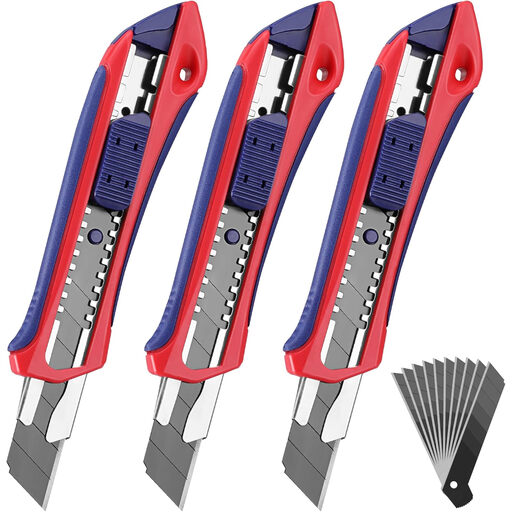
Why it suits this profile: A practical starting point for cutting and trimming jobs around the home, such as working with cardboard, tape, paper and packaging materials.
The 18 mm size and included replacement blades make compatibility and product life clearer than with an unspecified knife.
Three knives, 10 SK5 replacement blades, rubber handle and a locking mechanism.
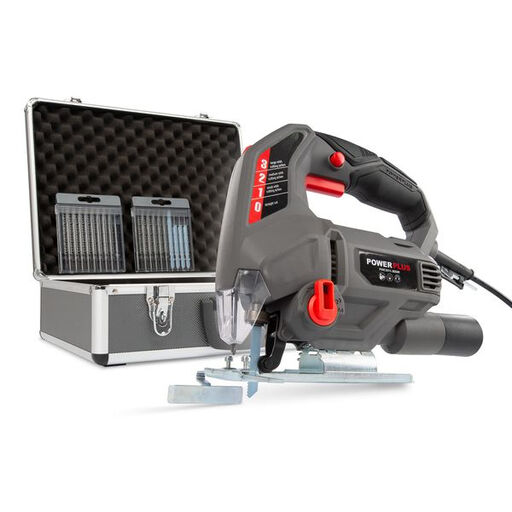
Why it suits this profile: Suitable for DIY enthusiasts who want to make straight cuts, curves and mitre cuts in wood, plastic or metal.
The product information lists not only 710 W, but also cutting depths, speed settings, pendulum positions and dust extraction.
710 W, 20 accessories, six speed settings, four pendulum settings and a 24-month warranty according to the product information.
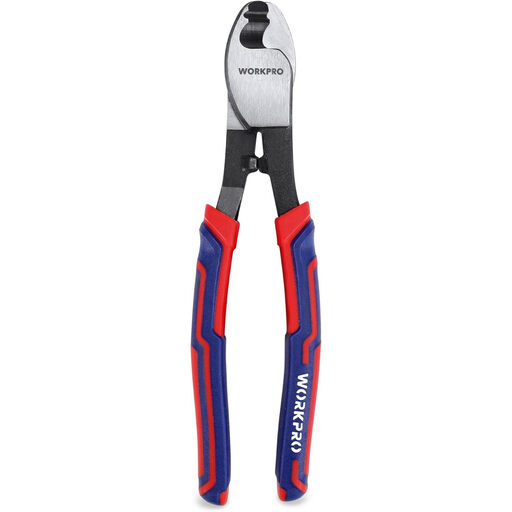
Why it suits this profile: A targeted choice for electrical work, DIY projects and maintenance involving copper or aluminium cables.
The maximum capacity of 33.6 mm² and the restriction to copper and aluminium are clearly stated. This makes it clear what the cutter is not designed for.
210 mm long, chrome vanadium steel, TPR handle and a stated cutting capacity of up to 33.6 mm².
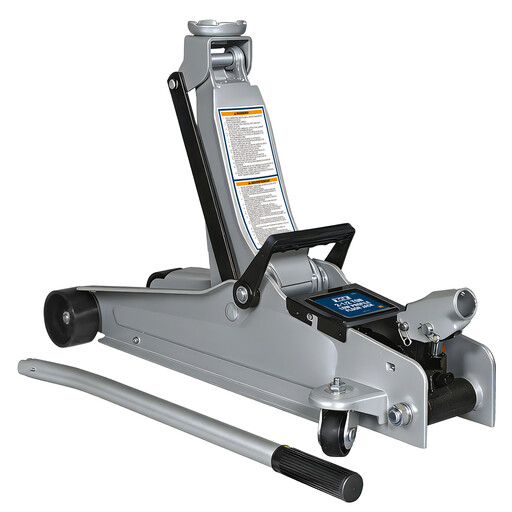
Why it suits this profile: The low entry height is useful for saloons, SUVs and vehicles with limited clearance beneath the sill.
The minimum lifting height of 85 mm and range up to 380 mm are clearly stated. Before buying, check that these measurements suit your vehicle’s jacking points.
2.5 tonnes according to the product information, an 85–380 mm lifting range, and EN 1494 and CE listed.
We have put together a complete, up-to-date list of products that fully meet these strict selection criteria and the applicable European safety regulations.
Start with tools for the jobs you actually carry out. A basic set with a ratchet, sockets, screwdrivers, bits, measuring tools and a cutter knife is often more practical than a highly specialised set. For a car, you may also need a hydraulic jack and axle stands. Always check the sizes and load capacity before buying.
Their lifespan depends on the material, workload, maintenance and storage. Keep cutting edges clean, dry metal parts after use and store blades securely. Use a cable cutter only within its stated capacity, and avoid overloading ratchets and sockets. Regularly checking for rust, play, cracks or blunt cutting edges helps you replace worn tools in good time.
That depends on what it contains. A large set can be good value if you carry out several types of job and it includes the key sizes. For occasional use, a smaller set with the right components may be more practical. So do not compare only the price or number of pieces; also compare the material specifications, drives, warranty, storage and suitability for your intended use.
