
Vandaag of morgen in huis

Kwaliteit gegarandeerd

Welkomstaanbiedingen ontgrendelen: GRATIS bezorging | Tot 80% korting | Gratis 30 dagen JoyPlus-proefperiode
Download de app
Buying sweets online seems simple: choose a bag, pay and wait for delivery. Yet there are a few pitfalls that can mean a product is less suitable for you than expected. Think of a bag that looks larger in the photo, a mix containing allergens you have overlooked, or a product that sounds appealing mainly because of terms such as “fruity”, “light” or “natural”.
Use these practical selection points to compare sweets based on verifiable information. This makes it easier to find sour sweets, fruit sweets, Haribo sweets, konjac jelly and international sweets that suit the occasion.
A large pack does not automatically mean lots of individual portions. Always check the net weight, the number of bags and the portion size. A box containing several small packs is handy for a party or as a treat, while a 200 to 250 gram bag is generally more suitable for a sweet jar.
Fruit sweets and jelly products can have a fruit flavour without containing much fruit juice. Check the ingredients list for terms such as fruit juice, fruit concentrate or fruit pulp. COZZO Fruit Jelly Sticks, for example, specify a particular proportion of jelly for each flavour and include mango, lychee, apple and grape flavours, among others. This provides more information than simply showing fruit on the packaging.
Terms such as sugar-free, keto-friendly or low-calorie should always be considered alongside the full ingredients list and nutritional information. Some konjac jelly products, for example, state 5 to 7 kcal per 100 grams, but this says nothing about the flavour, texture or suitability for young children. Always check the usage and storage instructions on the packaging too.
First decide what you need the sweets for:
Bear in mind that “10 pieces” is not the same as “10 portions for ten people”. The contents of each bag or stick remain the deciding factor.
Read the allergen information before ordering. Many gummies contain gelatine. Other products may contain wheat, gluten, milk or coconut. Haribo Duo’s Fruity, for example, lists wheat and gluten and may contain milk. Haribo Rotella contains wheat and may contain milk. By contrast, several konjac jelly products state that they contain none of the 14 main EU allergens. Always check this again on the label, as recipes can change.
Suitability for vegetarians also varies from product to product. Some Haribo products are labelled as suitable for vegetarians, while others contain gelatine. So do not rely on the brand name alone.
Nutritional information helps you compare products within the same category. According to the product information, Haribo Tangfastics contains 346 kcal and 50 grams of sugar per 100 grams. Haribo Duo’s Fruity lists 381 kcal and 61 grams of sugar per 100 grams. This makes these products suitable as an ordinary sweet treat, not as a substitute for a meal.
The stated energy value is often lower for konjac jelly. Hethstia Konjac Jelly Orange lists 7 kcal per 100 grams, while DELIEF Vegan Collagen Konjac Jelly Green Grape contains 5 kcal per 100 grams. The addition of “collagen” or “vitamin C” should not be viewed as a medical claim. Check the ingredients and follow the instructions on the packaging.
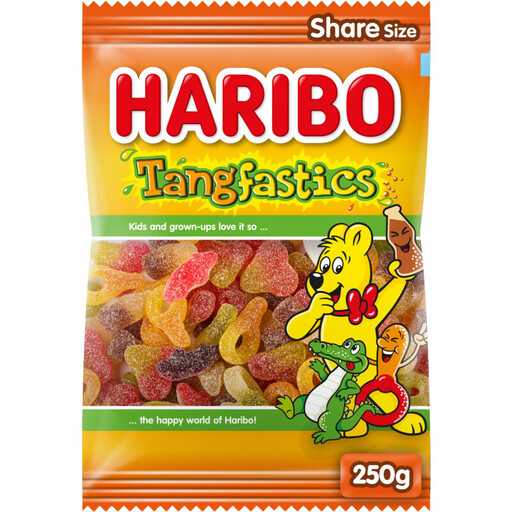
Why it suits this profile: A familiar mix of sweet and sour flavours in a format that is suitable for enjoying at home or sharing.
The net weight of 250 grams is clearly stated. The product information also includes the nutritional values and ingredients.
Sweet-and-sour mix, 250 grams of sweets and, according to the product information, no artificial colourings.
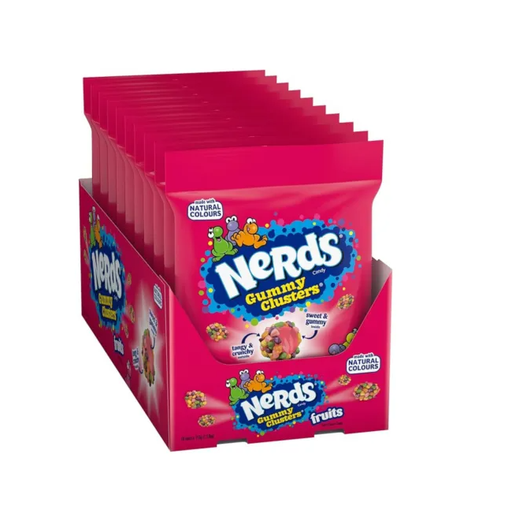
Why it suits this profile: The combination of a soft gummy centre and a crunchy coating appeals to anyone who enjoys unusual textures and international sweets.
The box contains 10 bags of 113 grams. This makes the total quantity clearer than with a large, unspecified pack.
10×113 grams, several fruit flavours and a combination of soft and crunchy textures.
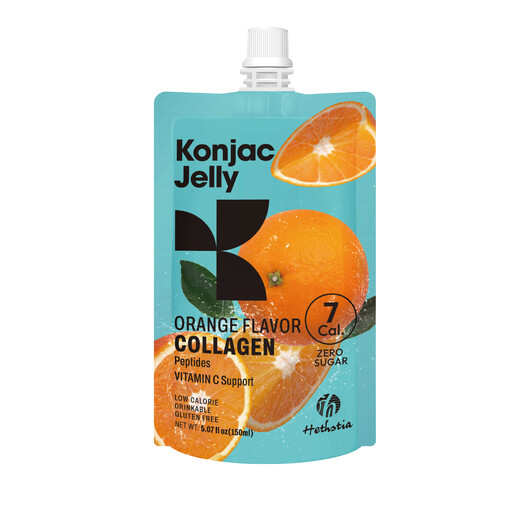
Why it suits this profile: The individually wrapped squeeze pouches are convenient for travelling, at work or while out and about.
The packaging states that it contains 10 individual pouches. Once opened, the product must be refrigerated and consumed within 2 days.
Orange flavour, 7 kcal per 100 grams according to the product information and a convenient squeeze pouch.

Why it suits this profile: Ten small portions with sour strips and liquorice laces are practical when several people want to choose something.
The number of portion packs is clearly stated. However, note that the ingredients information lists wheat and gluten.
10 small packs, several flavours and a format that is suitable for sharing at a party.
We have put together a complete, up-to-date list of products that fully meet these strict selection criteria and the applicable European safety regulations.
Check the net weight, ingredients, allergens, nutritional information and best-before details. Also check whether you are buying a single bag, a multipack or individually wrapped portions. This helps prevent the quantity or packaging from being different from what you expected.
The best-before date is shown on the packaging. As a general rule, store sweets in a cool, dry place away from direct sunlight, heat and moisture. Reseal opened packaging securely. Jelly in an opened pouch or pack may have additional storage instructions, such as refrigeration and consumption within 2 days.
Packs of 200 to 250 grams are practical for sharing. For parties, small portions or multipacks are more convenient. A sweet mix with different flavours, such as sour sweets, fruit sweets and gummies, offers more variety. When children are involved, always check the age and safety information on the packaging, and never leave young children unsupervised while eating.
Look for products with clear origin and ingredients information. Orihiro jelly is an example of Japanese sweets made with konjac, while SEOJU and Haitai are examples of Korean sweets. Before ordering, compare the flavour, texture, packaging and allergens for each product.
