
Vandaag of morgen in huis

Kwaliteit gegarandeerd

Welkomstaanbiedingen ontgrendelen: GRATIS bezorging | Tot 80% korting | Gratis 30 dagen JoyPlus-proefperiode
Download de app
Are you looking to buy sugar-free soft drinks, but can't decide between cola, fruit drinks, iced tea and energy drinks? The range is huge, and packaging uses terms like "zero", "light" and "no added sugar" interchangeably. This makes every product seem suitable if you want to drink less sugar, even though the ingredients and nutritional values can differ.
When comparing, pay close attention to the nutrition table, the number of cans and the ingredients. That way, you'll avoid buying a large soft drink multipack that doesn't match your taste, diet or usage.
A product labelled as soft drink with no added sugar may contain naturally occurring sugars from fruit. This is different from a drink with 0 grams of sugar per 100 ml. This is especially important for fruit drinks and tropical fruit drinks. Always check the "of which sugars" line in the nutrition table.
A zero soft drink typically contains no sugar, but it may still contain sweeteners such as aspartame, acesulfame-K, sucralose or steviol glycosides. Check the ingredients if you want to avoid certain sweeteners. Products containing aspartame also state that they are a source of phenylalanine.
A 24-can soft drink pack is handy for a household, office or party, but it takes up more storage space. If you're trying a new flavour, a 12-can pack might be a wiser choice. Compare the price per litre and also look at the size: 24 cans of 330 ml contain 7.92 litres in total, while 12 cans of 330 ml contain 3.96 litres.
Don't just look at the front of the packaging. The nutritional values per 100 ml make products easier to compare. For example, Pepsi Zero Sugar Cola states 0.4 kcal and 0 grams of sugar per 100 ml. Coca-Cola Zero Sugar also states 0 grams of sugar and 0 kcal per 100 ml according to the product information provided.
Not every "zero" variant has exactly the same values. Sprite Zero Sugar, for instance, states 0 grams of sugar but also 3.3 grams of carbohydrates per 100 ml. Always check the actual packaging before you order.
Cola such as Pepsi Zero Sugar and Coca-Cola Zero Sugar contains caffeine according to the product information. Sugar-free energy drinks also often contain caffeine and other ingredients like taurine, glucuronolactone or vitamins. Slammers Sugar-Free Energy Drink, for example, states 0.032% caffeine. Monster Energy Ultra White states 0.03% caffeine according to the description.
Want to avoid caffeine? Sprite Zero Sugar is described as caffeine-free in the product information. Again, check the label, as recipes can vary by market and packaging.
A 330 ml can is suitable for an individual drinking occasion. A 500 ml can, such as with Monster Energy Ultra White, contains more drink but is less convenient if you want smaller portions. Check the best-before date on the packaging upon delivery and store cans in a cool, dry place away from direct sunlight.
Once opened, the general rule is: keep refrigerated and consume as soon as possible. Always follow the instructions on the label.
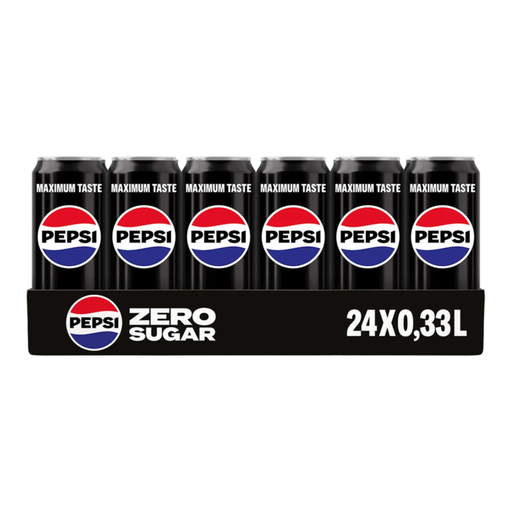
Why this fits the profile: A familiar cola option in a tray of 24 cans of 330 ml. Handy for home, an office or a party where multiple servings are needed.
The product information states 0 grams of sugar and 0.4 kcal per 100 ml. Do check the actual label, especially if you want to avoid aspartame or caffeine.
24 x 330 ml, 0 grams of sugar per 100 ml according to the description, and suitable for serving chilled.
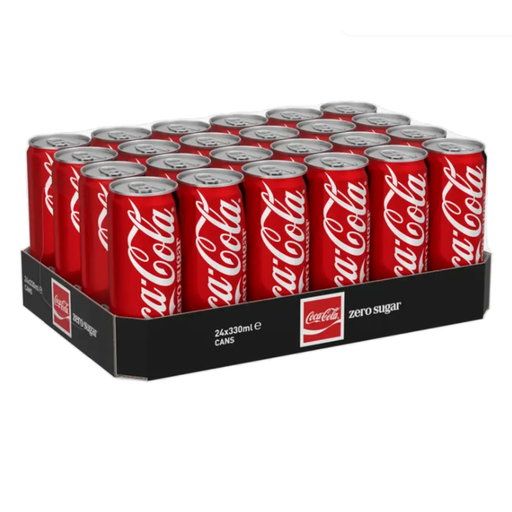
Why this fits the profile: A solid choice for anyone who wants a classic cola combined with a clear format and a large multipack for regular use.
The product description specifies 24 cans of 330 ml and 0 grams of sugar per 100 ml. The ingredients include aspartame and acesulfame-K among others.
24 x 330 ml, according to the supplied data 0 kcal and 0 grams of sugar per 100 ml; the description states the product is suitable for vegetarians and vegans.
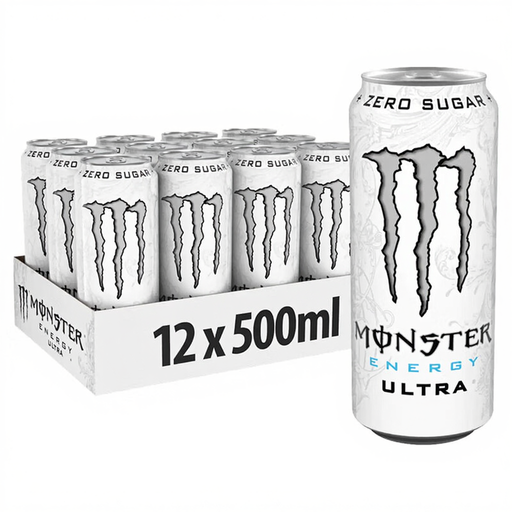
Why this fits the profile: For those consciously looking for a larger energy drink pack for work, on the go or for stocking up. It comes in 12 cans of 500 ml.
The product information states 0 grams of sugar per 100 ml, but also 0.03% caffeine. The size and caffeine content are therefore central to the choice.
12 x 500 ml, citrus profile and according to the product information contains none of the 14 major EU allergens.

Why this fits the profile: An alternative to cola and standard squash, with a tropical mango flavour and a tray of 12 cans for home or with a meal.
The product information mentions 30% mango juice, no added sugar and 17 kcal per 100 ml. This makes it clear that "no added sugar" is not necessarily the same as 0 kcal.
30% mango, 12 x 330 ml, 17 kcal per 100 ml according to the description and suitable for serving chilled.
We've put together a full, up-to-date list of products that fully meet these strict selection criteria and comply with current European safety regulations.
No. Check the nutrition table per 100 ml. A product may have "zero" or "no added sugar" on the packaging, yet still contain carbohydrates or naturally occurring sugars. The term "no added sugar" only means that, according to the product information, no sugar has been added to the recipe.
This varies by product. Cola and energy drinks often contain caffeine. Sprite Zero Sugar is listed as caffeine-free in the product description provided. Always check the ingredients list and any caffeine declaration on the packaging before you order.
A multipack can offer a lower price per litre, but this isn't automatically the case. Divide the total price by the total volume and compare that with other packs. A 24-pack is especially practical if you already know you like the flavour and serve soft drinks regularly. For a new tropical fruit drink, a 12-can pack is a less significant purchase.
