
Vandaag of morgen in huis

Kwaliteit gegarandeerd

Welkomstaanbiedingen ontgrendelen: GRATIS bezorging | Tot 80% korting | Gratis 30 dagen JoyPlus-proefperiode
Download de app
Want to buy soft drinks online, but finding your way through the American, Asian and tropical flavours is proving difficult? Ordering online is convenient, especially when you’re looking for supplies for home or a party. However, there are a few potential pitfalls: an eye-catching can reveals little about its contents, a multipack isn’t automatically better value and “zero sugar” doesn’t mean you can skip checking the ingredients list.
Use these practical checks to compare soft drinks based on objective product information. You’ll then find some popular choices for different situations.
“Grape”, “peach”, “tropical” and “lychee” mainly describe the flavour profile. The amount of fruit juice can vary considerably. For example, Fanta Grape Soda lists a grape flavour and natural flavourings, while the product information for Fanta Orange Soda states that it contains 3% orange juice from concentrate. When buying exotic soft drinks, it’s therefore sensible not to look only at the front of the packaging.
Check:
A tray of 24 cans is useful for a party or a household with several people. For someone who wants to try a new flavour first, however, this type of pack may simply create unnecessary stock. Also pay attention to the size: 200 ml, 330 ml, 355 ml and 473 ml cannot be compared directly.
If in doubt, calculate the price per litre:
total price ÷ total number of litres = price per litre
This allows you to compare a 6-pack of 473 ml Calypso fairly with a 12-pack of 355 ml or a tray of 24 x 330 ml.
In sugar-free soft drinks or zero-sugar soft drinks, sugar is often replaced with sweeteners. For example, Coca-Cola Zero Sugar lists aspartame and acesulfame-K. According to the product information, Pepsi Zero Sugar also contains aspartame and acesulfame-K, among other ingredients. If you want to avoid certain sweeteners, always check the current packaging.
Also look out for warnings. Products containing aspartame may carry the statement “contains a source of phenylalanine”. The information on the product label takes precedence, as recipes and packaging may change.
Choose the size based on how you intend to use it:
Also check whether the product comes in cans, bottles or pouches. This affects storage, chilling and transport.
Always compare nutritional values per 100 ml, not just per can. For example, Calypso Yuzu Lychee Lemonade lists 11 g of sugar per 100 ml and 46 kcal. Fernandes Green Punch lists 10.2 g of sugar per 100 ml. By contrast, according to the product information, zero-sugar varieties such as Pepsi Zero Sugar contain 0 g of sugar.
Bear in mind that “zero sugar” doesn’t mean the same as “caffeine-free”. Coca-Cola Zero Sugar Caffeine Free is specifically described as both sugar-free and caffeine-free. Regular cola and some energy drink-style soft drinks may contain caffeine.
With imported Japanese soft drinks, American soft drinks and other international products, the product information and packaging may differ. According to the online description, HATA Lychee Ramune contains, among other ingredients, carbonated water, sugar, lychee flavouring and colour E133. The seller states that the packaging may contain more or different information than the website.
Before consuming, therefore check:
Store unopened soft drinks in a cool, dry place away from direct sunlight. Once opened, the drink should generally be refrigerated and used within the period stated on the label.
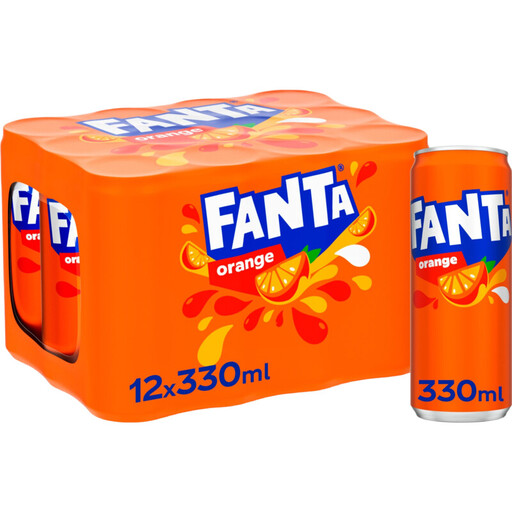
Why it suits this profile: A familiar fruity flavour in a manageable 12-pack, without having to buy a full tray of 24 cans straight away.
The fixed quantity and size make it easy to calculate the total volume. Still, check the current ingredients and nutritional values on the packaging.
12 bottles of 330 ml; orange flavour; suitable for serving chilled.
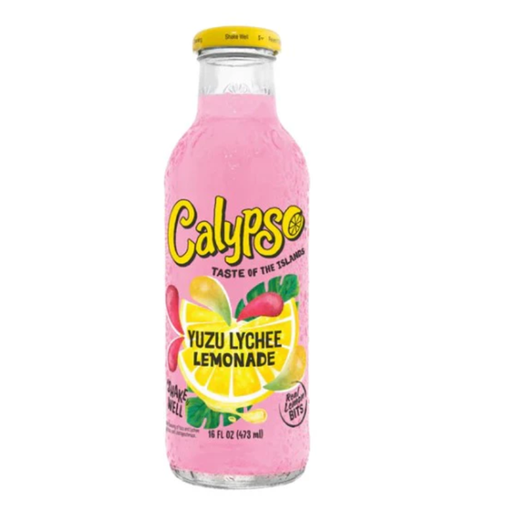
Why it suits this profile: For anyone looking for a distinctive combination of yuzu, lychee and lemon instead of a standard cola flavour.
The flavour profile and nutritional values are clearly stated: 46 kcal and 11 g of sugar per 100 ml. That way, you know what you’re ordering.
473 ml per bottle; yuzu and lychee flavour; lemon base; shake before use.

Why it suits this profile: A supply for home, work or an event, for people who want to avoid both sugar and caffeine.
The product name and description explicitly mention zero sugar and caffeine free. Even so, check the packaging before consuming.
24 cans of 330 ml; 0 g of sugar per 100 ml according to the product information; caffeine-free variety.
We’ve put together a complete, up-to-date list of products that fully meet these strict selection criteria and the applicable European safety regulations.
That depends on the price per litre, delivery costs and pack size. A multipack can be practical, but always compare the total volume. Also check whether an offer only applies when buying multiple packs. The price per can or per litre gives a more reliable picture than the discount shown on the product label.
Unopened soft drinks can generally be kept until the date shown on the packaging, provided they are stored in a cool, dry place away from direct sunlight. Once opened, the quality deteriorates more quickly. Seal the bottle or can properly and refrigerate opened soft drinks. The date and instructions on the actual label take precedence.
Look at both characteristics separately. According to the product information, Pepsi Zero Sugar and Coca-Cola Zero Sugar are sugar-free, but may contain caffeine. Coca-Cola Zero Sugar Caffeine Free states that it contains neither sugar nor caffeine. Sprite Zero Sugar is described as caffeine-free, but here too, check the current packaging and ingredients list before ordering.
