
Vandaag of morgen in huis

Kwaliteit gegarandeerd

Welkomstaanbiedingen ontgrendelen: GRATIS bezorging | Tot 80% korting | Gratis 30 dagen JoyPlus-proefperiode
Download de app
Anyone looking to buy snacks online will quickly encounter a wide selection: from granola and muesli bars to fruit and vegetable crisps, nut bars and Chinese snacks. That variety is convenient, but product packaging also uses terms such as “natural”, “no added sugar” and “high in fibre”. Such claims do not always tell the full story.
As a Joybuy Product Recommendation Officer, I filter product information based on verifiable criteria. This helps you compare offers more effectively and choose a snack that suits your dietary preferences, household and occasion.
A product with no added sugar may still contain naturally occurring sugars. Sweeteners such as maltitol can also affect the nutritional profile and usage advice. Always check:
For example, Hero B'Tween Muesli Bar Zero White Chocolate lists 1.7 grams of sugar per 100 grams, but contains 42 grams of polyols. The product information warns that excessive consumption may have a laxative effect. This makes it important to look beyond the front of the packaging.
A product claim should correspond with the ingredients and allergen information. MadeGood products are described as containing vegan and organic ingredients. At the same time, the supplied product information for some variants states “contains gluten”. Always check the current label before ordering, particularly in cases of coeliac disease, allergies or a strictly controlled diet.
Also pay attention to the differences between:
A low item price means little without the net weight. Compare the price per 100 grams or per serving instead. A box of individually wrapped snacks may appear more expensive, but can be more practical for school, work or travel. Conversely, a large bag may offer less value if its contents quickly lose their crispness after opening.
The nutritional table per 100 grams makes products easier to compare. Pay particular attention to:
A snack that is high in fibre or protein is not automatically the right choice for everyone. The overall composition, serving size and your personal preferences determine what works in practice. When choosing low-sugar snacks, it is also wise to check the ingredients list for sweeteners, syrups and dried fruit.
Ingredients are generally listed from the largest to the smallest proportion. MUSHAN BASE Mixed Fruit and Vegetable Crisps, for example, contain purple sweet potato, banana, taro, apple, green peas and carrot, among other ingredients. The nutritional information per 100 grams lists 469 kcal and 26.4 grams of sugars. Fruit and vegetable crisps can therefore add variety, but they are not the same as fresh vegetables or fruit.
The preparation method also deserves attention. MUSHAN BASE refers to low-temperature vacuum frying; according to the brand’s product description, this is intended to preserve colour, flavour and nutrients. Treat this as a product claim, not as a guaranteed health benefit.
For snacks on the go, individual portions and sturdy packaging are practical. On delivery, check:
Crisps and crunchy granola generally retain their texture better when the packaging is sealed properly and stored in a dry place. Some products state that they should be consumed shortly after opening. This is relevant when ordering a large quantity for a family.
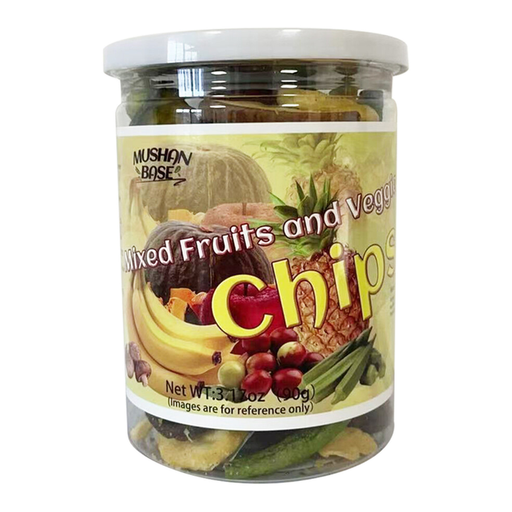
Why This Fits Their Persona: A compact bag with a variety of flavours for anyone who wants to try different fruit and vegetable crisps without committing to a large pack.
The nutritional values are clearly stated: 469 kcal, 26.4 g of sugars and 0.3 g of salt per 100 g. This keeps the product choice transparent and verifiable.
90 g pack; a blend of purple sweet potato, banana, apple, carrot and other ingredients.
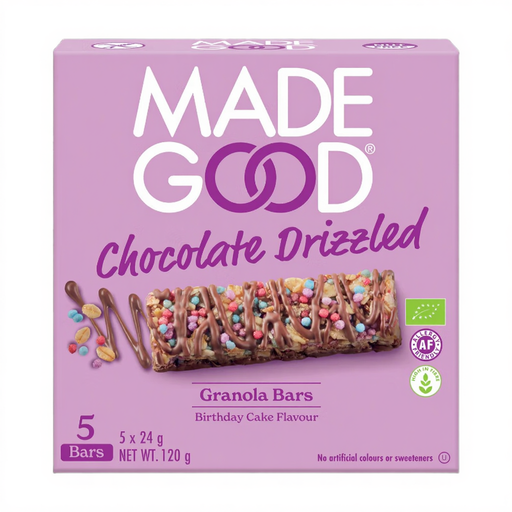
Why This Fits Their Persona: A sweet granola bar for work, school or a treat, with organic ingredients according to the product information.
The bar is not assessed solely on the basis of being “vegan” or “organic”: it also lists 26 g of sugar, 436 kcal and 0.16 g of salt per 100 g.
Gluten-free oats according to the ingredients list; the product description states that it is vegan and made with organic ingredients. Check the current label if you have allergies.
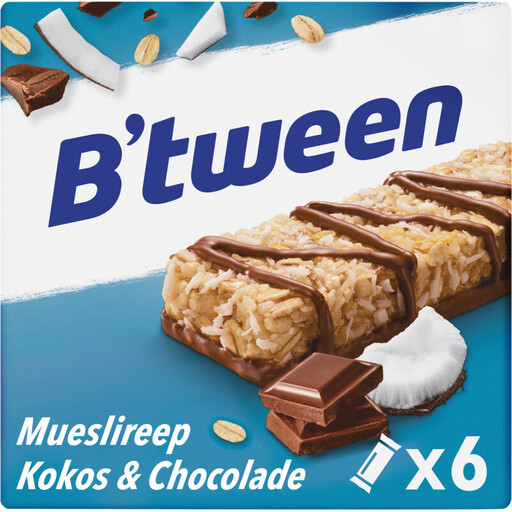
Why This Fits Their Persona: Six individually wrapped bars are practical for a bag, desk, car or family pantry.
The pack states the contents as 6 x 25 g. This allows you to calculate the price per bar and per 100 g.
Individually wrapped; contains cereals, coconut and milk chocolate. Per 100 g: 462 kcal, 28 g of sugars and 5.5 g of fibre.
Explore a current selection of grain-based snacks and compare pack sizes, ingredients, nutritional values and occasions.
For anyone looking to tailor snacks bought online to a specific occasion, these are practical directions to explore:
Start by comparing the net weight and price per 100 grams. Then check the ingredients, allergens, sugar, salt and serving size. A multipack can be convenient for a family; for occasional use, a smaller pack is often easier to manage.
No. Muesli bars may contain grains or fibre, but they can also contain syrups, chocolate and relatively high levels of sugar. Review the full nutritional table. A bar is most practical when its composition and serving size suit your preferences.
Store unopened snacks according to the label, usually in a cool, dry place away from direct sunlight. Seal opened bags securely. Check the best-before date on delivery and do not use any product whose packaging is damaged.
