
Vandaag of morgen in huis

Kwaliteit gegarandeerd

Welkomstaanbiedingen ontgrendelen: GRATIS bezorging | Tot 80% korting | Gratis 30 dagen JoyPlus-proefperiode
Download de app
Buying a blender seems simple—until you get tangled in a web of wattages, RPMs, and marketing promises. Many people end up with an expensive appliance that gathers dust in a cupboard because it fails to meet their expectations. Before you make a choice, it's smart to know what to look for. We'll break down the most common pitfalls and the most important specifications for you.
Manufacturers often use clever marketing to promote their products. Don't fall for these common traps that lead to buyer's remorse.
To buy the right blender, focus on the specifications that truly matter for your needs.
The power, expressed in watts, indicates the motor's strength. For making a simple smoothie with soft fruit, 300-600 watts is often sufficient. If you plan to regularly process hard vegetables, nuts, or ice cubes, look for a model with 900 watts or more.
Also, consider the type of blender:
The jug or cup is a crucial component. Glass is heavy and breakable but hygienic. Plastic is lighter, but the quality varies enormously. As mentioned earlier, Tritan is a popular and reliable material that is BPA-free. Always check if the removable parts, such as the cup, lid, and blade assembly, are dishwasher-safe. This will save you a lot of time and effort in the long run.
To help you find the blender that fits your lifestyle, we've highlighted a few popular choices based on their specifications and use cases.

Why This Fits Their Persona: This cordless blender is made for an active lifestyle. It's lightweight, charges quickly via USB-C, and is compact enough for your gym bag or desk. Make a fresh smoothie wherever you are, without being tied to a power outlet.
This model focuses on convenience and portability, not on extremely high power. The detachable parts are easy to rinse, bypassing the "self-cleaning" myth with a practical solution.
Fully cordless with a battery that, according to Nutribullet, is good for over 15 blends. The well-sealing drinking lid makes it leak-proof for on-the-go use.
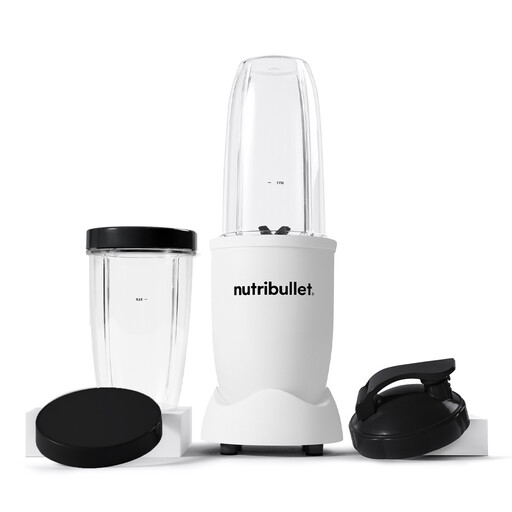
Why This Fits Their Persona: Daily smoothies for the whole family require power and capacity. This model combines a 900W motor with two large 900 ml cups, allowing you to easily prepare multiple servings at once.
The 900W motor is a proven powerhouse that isn't overhyped. The cups are made of BPA-free Tritan and the parts are dishwasher-safe, avoiding the pitfalls of poor materials and difficult cleaning.
Powerful enough for hard ingredients like nuts and frozen fruit. The included To-Go lids make it easy to take smoothies to school or work.

Why This Fits Their Persona: If you're looking for a reliable and affordable **smoothie maker** with no frills, this is a solid choice. It's compact, easy to use, and does what it's supposed to do: make smooth smoothies from soft to medium-hard fruit.
With 350W of power, this model makes no false promises. According to Philips, their ProBlend technology ensures efficient mixing. The removable parts are dishwasher-safe, which makes cleaning simple.
A compact and affordable entry-level model from a well-known brand. The two speed settings give you control over the texture, even for crushing ice.
A good blender is half the battle, but the ingredients determine the taste and nutritional value. Frozen fruit is an excellent base for a cold, thick smoothie. Products like G'woon Frozen Forest Fruits or G'woon Frozen Summer Fruit are handy to keep on hand.
We have compiled a complete and up-to-date overview of blenders and ingredients that meet strict selection criteria and safety standards.
Here are answers to a few questions that are often asked when purchasing a blender.
For most smoothies with fruits and vegetables, a blender with a power rating between 300 and 600 watts is sufficient. If you regularly want to blend hard ingredients like ice, nuts, or frozen fruit, a model with 900 watts or more is recommended for a smoother result.
Some more powerful 'to-go' blender models can handle small ice cubes or frozen fruit, but they are generally not designed for heavy-duty work. Always check the manufacturer's specifications. Models like the Nutribullet Pro 900W are specifically designed to process ice and hard ingredients.
The easiest way is right after use. Rinse the jug and blades with warm water. For a more thorough cleaning, fill the jug with warm water and a drop of dish soap and run the blender for a few seconds. Check if the removable parts are dishwasher-safe for maximum convenience. Never submerge the motor base in water.
