
Vandaag of morgen in huis

Kwaliteit gegarandeerd

Welkomstaanbiedingen ontgrendelen: GRATIS bezorging | Tot 80% korting | Gratis 30 dagen JoyPlus-proefperiode
Download de app
Choosing a new refrigerator seems simple, until you dive into the specifications. Manufacturers use all sorts of terms that create more confusion than clarity. The result? You pay for features you don't use or end up with a model that becomes an annoyance after just one year. As a Joybuy Product Recommendation Officer, I'll help you cut through the marketing jargon. Let's look at the three most common pitfalls so you can make an informed choice.
Pitfall 1: The "Gross" Capacity Deception A common mistake is fixating on the total volume in liters. Manufacturers often advertise the gross capacity, while the actual, usable space (net capacity) can be significantly smaller due to shelves, drawers, and the motor.
Pitfall 2: Paying for Features You'll Never Use A refrigerator with Wi-Fi, a built-in tablet, or cameras might sound modern, but ask yourself: will you really use it? These extras drive up the price significantly, while the core function—cooling—isn't necessarily any better.
Pitfall 3: Ignoring the Noise Level Especially in an open-plan kitchen or studio apartment, a noisy refrigerator can be a constant source of annoyance. The noise level, expressed in decibels (dB), is often overlooked. A seemingly small difference of 3 dB on paper is, in reality, a doubling of the perceived noise.
To avoid a bad buy, focus on the specifications that truly matter. These are the objective criteria that determine whether a refrigerator fits your household and budget.
Since 2021, the energy label has been updated, running from A (most efficient) to G (least efficient). An energy-efficient refrigerator can lead to significant savings on your energy bill in the long run. Don't just look at the letter; also check the annual energy consumption in kWh. This figure gives a concrete indication of the running costs. One model with a C rating can sometimes be more efficient than another C-rated model, depending on its size and features.
The market offers various types of refrigerators. The right choice depends on your family size, eating habits, and available space.
Ice build-up in the freezer compartment reduces efficiency and costs you extra energy. No Frost technology prevents ice formation by constantly circulating air and removing moisture. This means you'll never have to manually defrost the freezer again—a practical feature that saves a lot of time and effort.
Based on objective specifications, we have selected a number of models that suit different households.
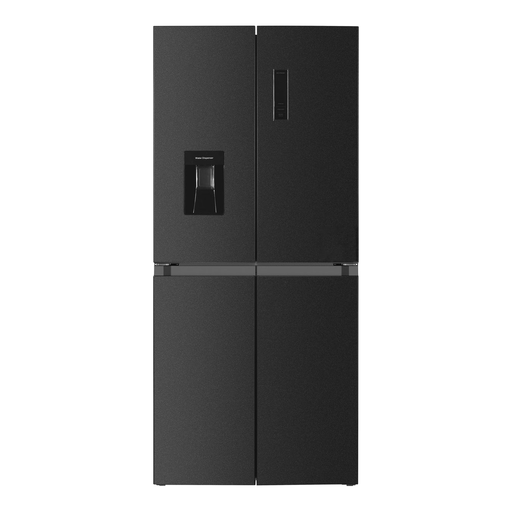
Why This Fits Their Persona: For families who buy groceries in bulk, maximum storage space is essential. This model offers a very generous net capacity and convenient extras like a water dispenser that doesn't require a water line connection.
This model focuses on usable space with a net capacity of 419 liters. Its features (Total No-Frost, water dispenser) are practical, not expensive and unnecessary 'smart' gimmicks.
Very spacious fridge (269L) and freezer (150L) sections, and the Total No-Frost technology prevents ice build-up in both compartments.
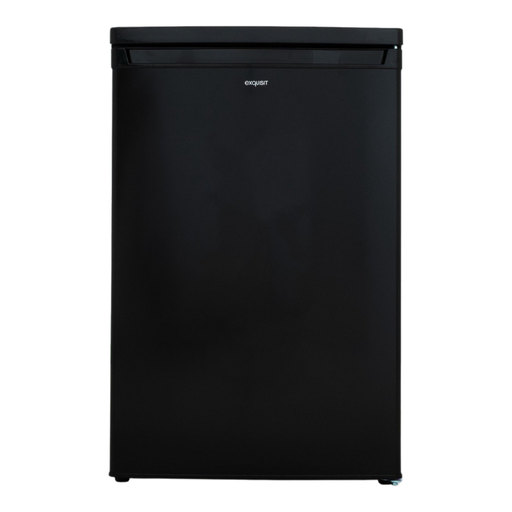
Why This Fits Their Persona: For those living in a smaller apartment, a compact and stylish model is a perfect solution. This black refrigerator in a counter-top format combines a modern look with enough space for a one or two-person household.
This model is a relatively quiet refrigerator with a noise level of 39 dB, so it won't be disruptive in a studio or open-plan kitchen. It focuses on the basics (cooling) without costly extras.
Stylish black design with an integrated handle and a practical layout offering 127 liters of net capacity.
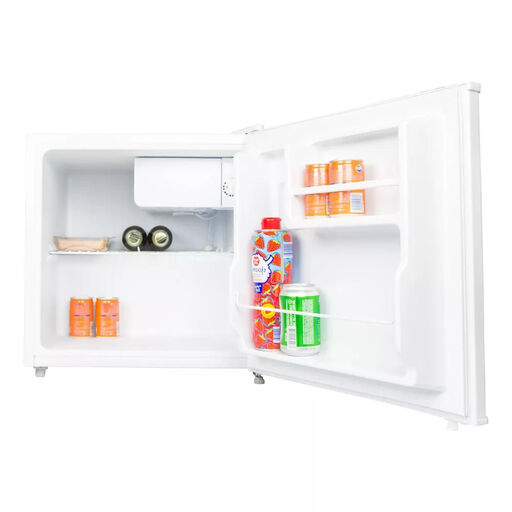
Why This Fits Their Persona: For students in dorms or as a secondary fridge for drinks, a compact, affordable, and functional model is the only logical choice. This mini fridge is designed for exactly that purpose.
This model does one thing: it cools in a small space. It avoids the pitfall of unnecessary features, focusing instead on a low purchase price and compact dimensions.
Very compact with a net capacity of 43 liters, it fits in the smallest of spaces. Includes a small freezer compartment for ice cubes.
We have compiled a complete, up-to-date list of products that fully meet these strict selection criteria and local regulations.
A refrigerator is considered quiet when its noise level is below 40 decibels (dB). Models around 35-37 dB are very quiet and barely audible, making them ideal for open-plan kitchens or studios. Always check the specifications for the exact dB rating.
The new energy label, introduced in March 2021, is stricter than the old one (which ran from A+++ to D). A product that previously had an A+++ label might now have a C or D rating. This doesn't mean the appliance has become less efficient; the scale has simply been recalibrated to make room for future, even more efficient innovations. The A and B classes are now reserved for the most energy-efficient models available.
The average lifespan of a refrigerator is about 10 to 15 years. This depends heavily on the quality of the model, its maintenance (like keeping the condenser coils at the back clean), and how intensively it's used. A well-maintained, energy-efficient refrigerator can be a wise long-term investment.
