
Vandaag of morgen in huis

Kwaliteit gegarandeerd

Welkomstaanbiedingen ontgrendelen: GRATIS bezorging | Tot 80% korting | Gratis 30 dagen JoyPlus-proefperiode
Download de app
If you’re looking to buy protein powder, you’ll soon come across dozens of flavours, pack sizes and marketing claims. Protein powder can be a convenient way to top up your daily protein intake, but not every formula suits every goal. A regular whey shake is different from a mass gainer, clear whey or casein protein.
Most poor purchases come down to three common mistakes:
So use the product packaging as your guide. Ingredients, allergens and recommended serving sizes can vary by flavour or pack size.
Whey protein comes from milk and is often used after exercise or as a protein-rich top-up during the day. Check the amount of protein per 100g and per serving. Whey products generally contain fewer calories and carbohydrates than weight gainers, but the exact values vary by formula.
Whey concentrate, isolate or a blend of different whey sources can all be suitable. If you’re keeping an eye on calories and carbohydrates, also compare the amount of sugar and fat per shake.
Clear whey is made with whey isolate and has a clear, more drink-like consistency. It may suit you if you’d rather not have a creamy shake. For example, Ghost Clear Whey Strawberry Watermelon lists 25g of protein and around 100 kcal per serving of approximately 32g. According to the product information, this variant contains no added sugars, but its sweet taste comes from sweeteners.
Check the preparation instructions: this type of powder often needs more water than a traditional shake and may foam temporarily after mixing.
Casein protein is a milk protein with a thicker consistency. Micellar casein is generally described on the product packaging as slow-digesting. It can be a practical option between meals or before bed if you’re looking for a protein-rich choice that keeps you feeling fuller for longer.
That doesn’t mean it’s automatically essential for building muscle. Your total protein intake, usual diet and training routine matter more than the timing of a single shake.
A mass gainer or weight gainer combines protein with plenty of carbohydrates and calories. These products are aimed at people who find it difficult to get enough energy from regular meals or who deliberately want to consume more calories.
Check the serving size carefully. Optimum Nutrition Serious Mass Strawberry lists 50g of protein, 250g of carbohydrates and around 1,269–1,292 kcal per 334g serving. That’s considerably more than a regular protein shake. A full serving may therefore be impractical if you only need a small calorie boost.
Don’t just compare the big number on the front of the pack. A serving may contain 20, 24, 25 or 30g of protein, but it could also be much larger than a serving of another product. So check:
For example, Optimum Nutrition Gold Standard 100% Whey lists around 24–25g of protein per serving of approximately 30g, depending on the product listing. Applied Nutrition Critical Whey lists around 20g per 30g serving for certain variants. Always check the label for your chosen flavour.
A calorie surplus can be relevant when building muscle, but not everyone wants hundreds of extra calories in every shake. In the product variants listed, around 100–120 kcal per serving is typical for whey products. Serious Mass, by contrast, contains over 1,200 kcal per full serving.
Pay particular attention to the difference between carbohydrates and sugars. A product can be high in carbohydrates without all of them being listed as sugars. In a gainer, for example, much of the carbohydrate content may come from maltodextrin.
Milk is a key allergen in whey and casein products. Some formulas also contain soya as an emulsifier and may contain traces of egg, gluten, peanuts or nuts. If you’re sensitive to them, check for sweeteners, thickeners and flavourings too.
A product containing whey isolate isn’t automatically suitable if you have a milk allergy. You should only assume that a product is “low sugar” or “lactose-free” if this is clearly stated on the current packaging. If in doubt, follow the product information on the label.
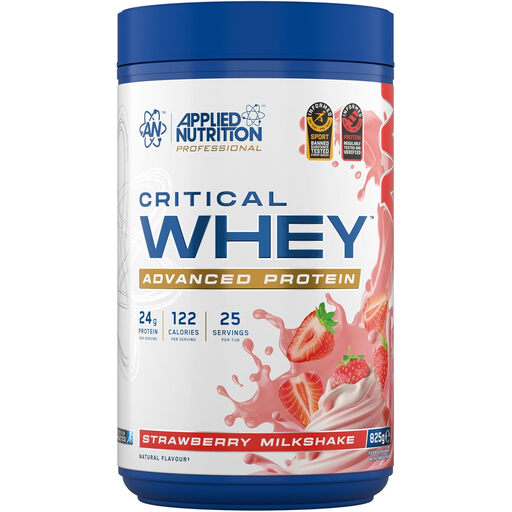
Why it suits this profile: The 825g pack is a manageable size if you’re trying protein powder for the first time and don’t want to buy several kilos straight away. The strawberry flavour works well in a simple protein shake made with water.
The product information lists a serving of around 30g and approximately 20g of protein. This makes it easier to assess the ratio of serving size to protein content than by looking at the front of the pack alone.
Whey concentrate, whey isolate and hydrolysed whey protein; approximately 20g of protein per serving according to the product information.
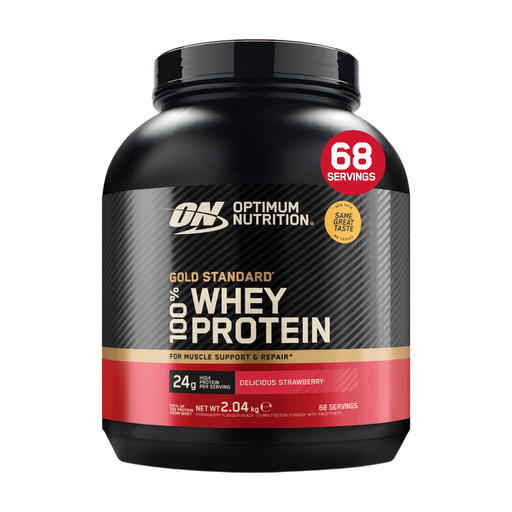
Why it suits this profile: This size is designed for regular use and, according to the product information, contains a blend of whey isolate, whey concentrate and hydrolysed whey peptides.
The nutritional information lists the serving size, calories, carbohydrates, fats and protein separately. That means you don’t have to rely solely on brand recognition or flavour claims.
Around 24–25g of protein per serving of approximately 30g; relatively low sugar and fat values according to the product listing.
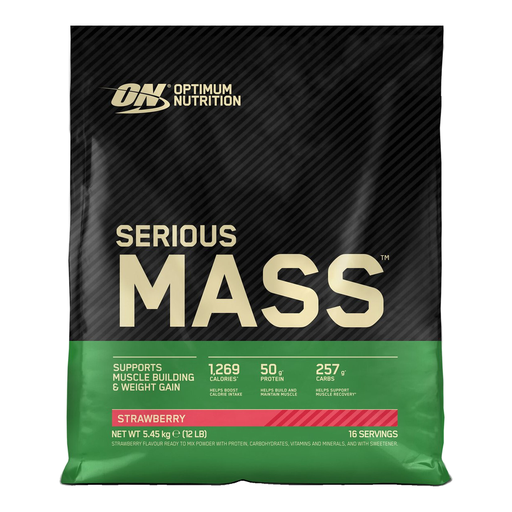
Why it suits this profile: This mass gainer is intended for adults with high energy needs who want to add extra calories and protein between meals or around their workouts.
The product details make it clear that a full serving weighs 334g and provides around 1,269–1,292 kcal. This lets you decide in advance whether the amount fits your dietary goal.
50g of protein and 250g of carbohydrates per serving according to the product information; 5.45 kg pack with 16 stated servings.
We’ve put together a complete, up-to-date list of products that meet these strict selection criteria and the applicable European safety regulations.
You can use protein powder after exercise as a convenient addition to your daily diet. You don’t necessarily need to drink a shake straight after your workout. What matters more is that your total protein intake and regular meals support your goal. Follow the serving instructions on the label and don’t exceed the recommended daily amount.
That depends on the best-before date, packaging and storage conditions. Keep protein powder in a cool, dry place and seal it tightly. Always follow the date and instructions on the packaging. Moisture can cause clumping, but if the product smells unusual, the seal is damaged or you’re unsure, it’s best not to use it.
Not always. Divide the price by the stated number of servings, then compare the protein content per serving. A mass gainer serving can weigh hundreds of grams, so the pack may run out sooner than you’d expect from its total weight. That makes the price per serving and price per gram of protein more useful comparisons than the price of the tub alone.
