
Vandaag of morgen in huis

Kwaliteit gegarandeerd

Welkomstaanbiedingen ontgrendelen: GRATIS bezorging | Tot 80% korting | Gratis 30 dagen JoyPlus-proefperiode
Download de app
Looking to buy protein bars for after your workout, on the go or as a protein-rich snack? Then the flavour on the front of the pack is not enough. A bar labelled “high protein” can vary considerably in protein, sugar, calories and sweeteners per serving. The number of bars in a pack also affects the actual price.
The main pitfalls are easy to avoid: compare nutritional values per bar, check the ingredients list and make sure the packaging suits how and when you plan to use it.
A 60-gram bar with 20 grams of protein provides something different from a 40-gram bar with 15 grams of protein. So first check the nutritional value per piece. This is the amount you actually eat.
A standard muesli bar is not automatically a protein bar either. According to the product information, the Hero Coconut Muesli Bar contains 5.7 grams of protein per 100 grams, whereas a genuine protein bar often contains around 18 to 25 grams per serving.
A protein bar with little sugar can still contain relatively high levels of calories, fat or carbohydrates. Some products use polyols such as maltitol, sorbitol or glycerol to maintain a sweet flavour and soft texture.
Excessive consumption of polyols may have a laxative effect. So do not just check the “of which sugars” line; also look at the ingredients list and the nutritional value per bar.
A protein bar multipack is useful if you eat a bar regularly, but check the total contents first. For example, a box containing 12 bars of 55 grams holds 660 grams of product. Compare the price per bar and per 100 grams with smaller packs.
Also check the best-before date. Store bars according to the packaging instructions, usually somewhere cool and dry, away from direct sunlight. You can also find products with a shorter shelf life in the food with a short shelf life category.
For many adults and athletes, it is practical to start by looking at the protein content per bar. The amounts in the range vary:
A higher content does not automatically make a bar suitable for everyone. A smaller bar may be more convenient between meals, while a larger bar may be better suited to a substantial post-workout snack.
If you are specifically looking for low-sugar protein bars, check the full table. According to the stated nutritional values, the Barebells Caramel & Cashew contains 1.5 grams of sugar and 200 kcal per 55-gram bar. The product information also states that it contains no added sugars and has 5 grams of polyols per bar.
For comparison, the Nutramino XL Chocolate and Caramel contain 19 grams of sugar per 74-gram bar according to the product details. They do, however, provide 25 grams of protein. This shows why you should assess sugar, protein and calories together rather than relying on a single marketing claim.
Always check whether the bar contains milk, soya, peanuts, nuts, gluten or other allergens. Product formulations can change, so the packaging remains the most important source of information.
Take extra care when looking for a bar without animal ingredients. Some bars contain milk protein, whey, casein or collagen. A vegetarian label does not automatically mean that a product is vegan.
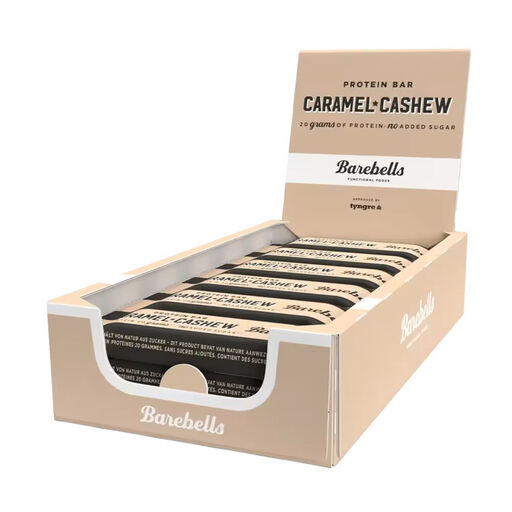
Why this suits the profile: A multipack containing 12 individually wrapped bars is practical for anyone who regularly wants to take a protein-rich snack to work, the gym or on the go.
The amount per bar is clear: 55 grams and 20 grams of protein. Do check the current packaging for the sugar content and allergens.
20 grams of protein per bar, 200 kcal per bar, caramel-cashew flavour and 3.1 grams of fibre according to the product details.
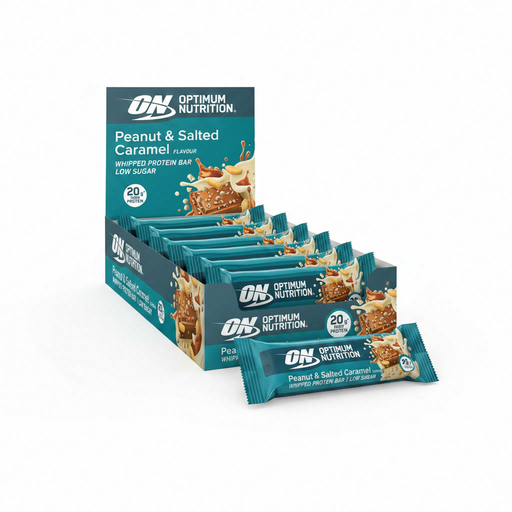
Why this suits the profile: This option is ideal for anyone who values a softer, layered texture and a larger 60-gram portion per bar.
The product information lists the serving size, protein claim and allergens. Check the current ingredients list, particularly if you have a peanut or soya allergy.
10 bars per box, peanut & salted caramel flavour and, according to the product information, 20 grams of protein per bar.
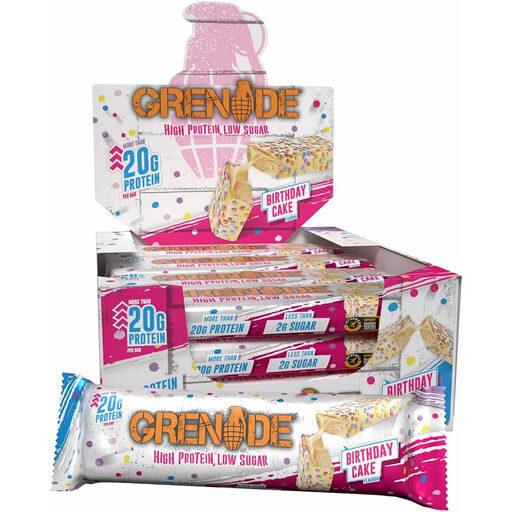
Why this suits the profile: A box of 12 bars is suitable for anyone who works out several times a week and wants to keep a regular supply of sports nutrition at home.
The product details state both 20 grams of protein and 1.6 grams of sugar per bar. Because it contains polyols, checking the ingredients list remains important.
60 grams per bar, 20 grams of protein, 1.6 grams of sugar and a birthday cake flavour according to the product description.
We have put together a complete, up-to-date list of products that fully meet these strict selection criteria and the applicable European safety regulations.
A protein bar can be practical after working out or between meals when you do not have a proper meal to hand. Look at the serving size and protein content. A bar is not a substitute for a varied diet.
Shelf life varies by product and batch. Check the date on the packaging and store the bar somewhere cool and dry, away from direct sunlight. Once opened, it is best to store the packaging according to the instructions on the label.
Not necessarily. Compare the price per bar, the weight, the protein content and the number of bars. A protein bar multipack may work out cheaper per bar, but only if you use the bars before their best-before date.
