
Vandaag of morgen in huis

Kwaliteit gegarandeerd

Welkomstaanbiedingen ontgrendelen: GRATIS bezorging | Tot 80% korting | Gratis 30 dagen JoyPlus-proefperiode
Download de app
When you want to buy plates, you will soon find yourself comparing colour, price and the number of pieces in a pack. However, it is mainly the material, size and care requirements that determine whether a plate remains practical to use. A cheap plate that cannot go in the microwave, breaks easily or turns out to be too small for a meal is not necessarily a good-value purchase.
In this guide, we compare practical options for UK households, families, campers and party organisers. This will help you see which features matter before ordering a dinnerware set or individual plates.
Terms such as bamboo, bagasse and compostable are often used interchangeably for disposable plates. Always check the material and the usage instructions. Compostable plates cannot automatically be placed in food waste: the correct disposal method depends on local regulations and the waste management provider.
A pack of 50 sugarcane or bagasse plates can be useful for catering, birthdays and barbecues. For everyday use, reusable tableware is generally more practical, as you will not need to keep a stock of disposable tableware.
Ceramic plates and earthenware give a table a solid, traditional look, but they can break if dropped or exposed to a major change in temperature. Stainless steel plates are generally less vulnerable to knocks, but they are not suitable for microwave use. Always check the product details rather than relying solely on a marketing term.
A dinner plate of around 27 cm provides enough room for a full meal, while breakfast plates measuring around 19 to 20 cm are more practical for bread, fruit or pastries. Deep plates are suitable for soup, pasta and dishes with sauce. Also consider the height of the rim: a low rim takes up less space but is less effective at containing liquid food.
A practical household will often benefit from a combination of:
For a family, the number of pieces is at least as important as the design. For example, an 18-piece dinnerware set contains items for six people, while individual plates are more convenient when adding to an existing collection.
Look specifically for the following in the product information:
Bear in mind that features vary by model. According to the product description, the Colorama stoneware set is suitable for microwave and dishwasher use, but not for the oven or freezer. According to the product information, the PURECOOK divided stainless steel plates are not suitable for microwave use.
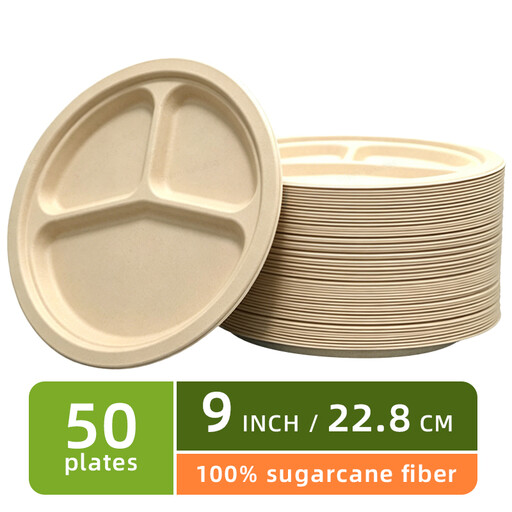
Why it suits this profile: A supply of 50 disposable 23 cm plates is practical for a birthday, barbecue or temporary catering event without the washing-up.
The size and quantity are clearly stated. However, check the local rules for compostable or bagasse products yourself.
50 pieces; 23 cm diameter; intended for parties, catering and food service.
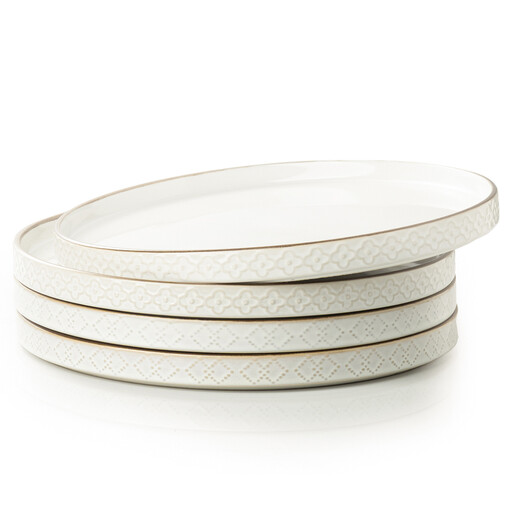
Why it suits this profile: These large 10.25-inch ceramic plates are ideal for households looking to combine style and versatility for everyday meals.
The product description explicitly states that the plates can be used in the microwave, oven, fridge, freezer and dishwasher. Nevertheless, check the markings on the plate before use.
Set of 4; generous surface area; stackable and dishwasher-safe according to the product description.
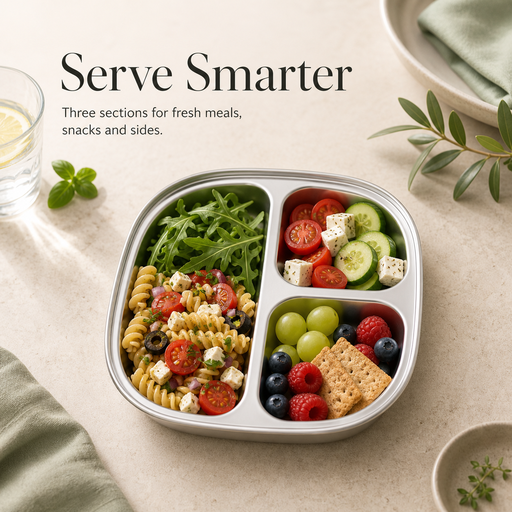
Why it suits this profile: The three sections are useful for children, lunch boxes, campsites, picnics and meals where ingredients need to be kept separate.
The material, three sections, dimensions and microwave warning are all stated. According to the product description, the plate is not suitable for microwave use.
304 stainless steel; three integrated sections; dishwasher-safe according to the product information.
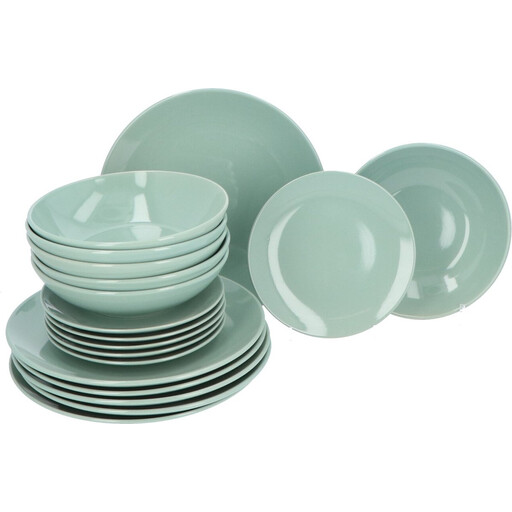
Why it suits this profile: The set is designed for six people and includes dinner, dessert/breakfast and deep plates in a matching colour scheme.
The set specifies the quantities and diameters: 27.5 cm dinner plate, 19.5 cm dessert plate and 20.5 cm deep plate.
18 pieces for six people; stoneware; microwave- and dishwasher-safe according to the product description.
We have put together a complete, up-to-date list of products that fully meet these strict selection criteria and the applicable European safety regulations.
That depends on your household. Ceramic or stoneware plates are suitable if you want a coordinated dinnerware set. Check that they are dishwasher- and microwave-safe. For children, outdoor use or environments where plates are likely to receive frequent knocks, stainless steel plates may be more practical.
For one person, two dinner plates are often a useful minimum if you use the dishwasher regularly. A family should ideally allow for the number of people using them each day, plus a few spare plates. Dinnerware sets for six people often also include deep and breakfast plates, so you will need to combine fewer individual pieces.
Not necessarily. Consider the material, disposal instructions, manufacturing process and how you use them. A plate marketed as compostable must also be collected and processed correctly. For repeated use, ceramic, metal or other reusable plates are generally a more practical alternative to disposable tableware.
