
Vandaag of morgen in huis

Kwaliteit gegarandeerd

Welkomstaanbiedingen ontgrendelen: GRATIS bezorging | Tot 80% korting | Gratis 30 dagen JoyPlus-proefperiode
Download de app
Are you looking to buy pickled gherkins, but finding yourself faced with jars that all look the same? The difference often lies in flavour, size, drained weight and ingredients. A jar that seems attractively priced might, for example, contain relatively few vegetables. What’s more, a product may be less suitable for your household due to sugar, salt, mustard or sulphites.
This buying guide will help you practically compare sweet and sour gherkins, sour bombs and other pickled vegetables. That way, you can make a targeted choice for sandwiches, salads, snacks, sharing platters or international dishes.
The weight of a jar includes both the gherkins and the pickling liquid. That’s why, especially with gherkins in a jar, the drained weight is what matters. This tells you how much product you’ll actually have left once you’ve poured off the liquid.
A 320 g jar may therefore contain fewer vegetables than you’d expect based on the total weight. For a family or regular use, a larger jar with a clearly stated drained weight is often more practical.
Sweet and sour gherkins usually contain sugar alongside vinegar, whereas sour bombs or traditional pickled gherkins can have a more pronounced sour and salty taste. The flavour doesn’t just depend on the name on the label. Always check the nutritional values and ingredients list too.
For example, g'woon Sweet And Sour Gherkins state 5.5 g of sugar per 100 g. The ingredients include sugar, vinegar, mustard seed, dill, bell pepper and onion. That profile suits sandwiches and salads where a hint of sweetness is welcome.
Mustard seed is a common ingredient in gherkins and piccalilli. Other pickled vegetables may contain sulphites. The product page and packaging will state which allergens apply. Always check this again before purchasing, as only the actual packaging is legally binding.
Also pay attention to the condition of the jar. Do not buy or use any product where the packaging is damaged, the lid is bulging or the safety seal is broken.
Choose the size based on how you plan to use the gherkins:
Beyond cucumber, there are many other types of pickled vegetables. Consider Turkish pickled peppers, pickled bell pepper, pickled radish, pickled onions, piccalilli, pickled ginger and kimchi.
Compare the nutritional values per 100 g. A higher sugar content doesn’t automatically mean a product is better or worse, but it does help you choose a sweeter or, conversely, a fresher-tasting option. The same goes for salt.
For example, Sera Sus Biber Tursusu lists a salt content of 3.935 g per 100 g. According to the product description, these pickled peppers are spicy and intended as a side dish, snack or addition to salads, sandwiches and grilled meat.
For a milder flavour, you could opt for gherkins with sugar, such as the g'woon varieties. If you’re mainly after sourness and crunch, you might prefer traditional sour bombs or Turkish gherkins with garlic and herbs.
At a minimum, check:
Once opened, a jar should generally be kept tightly sealed and stored according to the label. For many products, this means storing in the fridge. Always follow the instructions on the packaging.
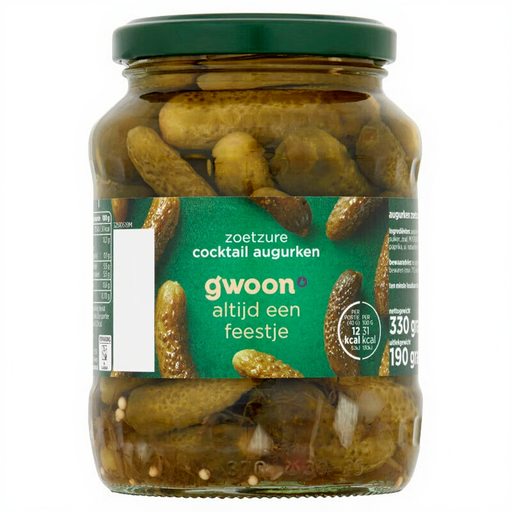
Why this fits the profile: The compact size is ideal if you want to try sweet and sour cocktail gherkins for snacks, sandwiches and salads for the first time.
The product states the size, ingredients and sugar and salt content, so you don’t have to rely solely on what’s on the front of the jar.
320 g, cocktail size and suitable for snacking or as a flavour enhancer. Contains mustard seed.
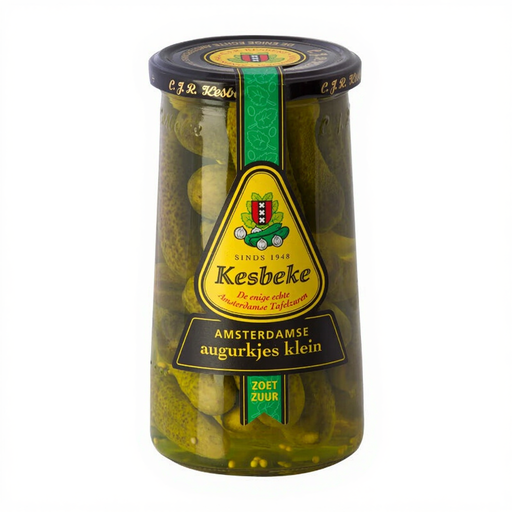
Why this fits the profile: The generous jar suits households that regularly serve pickles with meals, sandwiches or drinks.
The nutritional information states 17 kcal and 0.25 g salt per 100 g. This allows you to compare the product directly against other jars.
720 ml, traditional Amsterdam pickles and, according to the product information, free from the 14 major EU allergens.
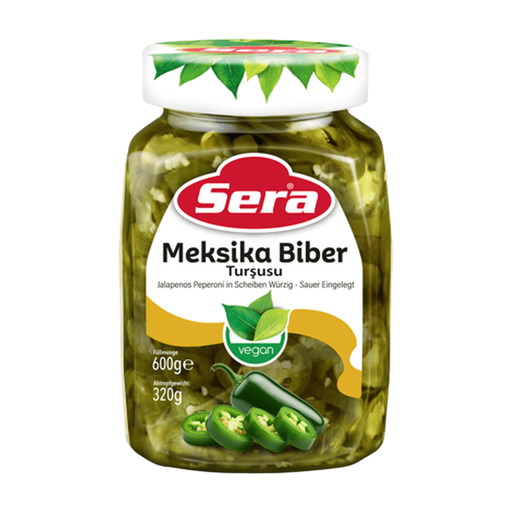
Why this fits the profile: These spicy pickled peppers are aimed at fans of sandwiches, pizza, salads, mezze and dishes with an extra kick.
The ingredients list hot peppers, salt, citric acid, vinegar and turmeric. So you know in advance that this isn’t a mild gherkin variety.
600 g, ready to use and, according to the product information, free from the 14 major EU allergens.
Other suitable choices include pickled bell pepper, g'woon Sour Onions for salads and Kesbeke Amsterdam Smul Onions for a sweet and sour table component. For Asian dishes, you could look at Obento pickled ginger, Obento pickled radish, Green Dragon pickled mustard greens or Jongga kimchi. With kimchi, pay extra attention to possible fish or shellfish ingredients.
We’ve put together a full, up-to-date list of products that fully meet these strict selection criteria and comply with current European safety regulations.
Choose slices, pieces or firm cocktail gherkins. Sweet and sour varieties combine easily with cheese, cold meats and potato salads. Pickled bell pepper, radish and pickled onions are also useful for salads.
This varies by product. Store the opened jar according to the label, usually tightly sealed in the fridge, and use clean utensils. Check the smell, colour and texture before eating. The shelf-life information on the packaging is the deciding factor.
No. Sour bombs usually refer to whole, distinctly sour gherkins with a firm bite. Sweet and sour gherkins often contain sugar alongside vinegar and therefore have a milder, rounder flavour. Always check the ingredients and nutritional values to compare varieties properly.
