
Vandaag of morgen in huis

Kwaliteit gegarandeerd

Welkomstaanbiedingen ontgrendelen: GRATIS bezorging | Tot 80% korting | Gratis 30 dagen JoyPlus-proefperiode
Download de app
If you're looking to buy peanuts for a drinks party, celebration or to stock your cupboard, you'll quickly notice plenty of similar-looking packs. Yet they differ greatly in flavour, ingredients, size and when you'd eat them. A bag of salted peanuts isn't the same as spiced peanuts with a crunchy coating. And a large pack isn't automatically better value if you only snack on them occasionally.
The following points will help you choose wisely and judge marketing claims more accurately.
Peanuts 1 kg can be handy for a big party, catering-style supplies or regular use. For a household that snacks now and then, a smaller bag may be more practical. Once opened, peanuts and savoury snacks lose their crunch more quickly if the pack isn't sealed properly.
So don't just compare the price – also consider:
With roasted peanuts, the product can be almost entirely peanuts, whereas savoury snacks may have a coating of flour, starch, sugar or spices. That affects the texture, weight and nutritional values.
Always check the percentage of peanuts in the ingredients list. According to the product information, Duyvis Roasted Peanuts contains 97% peanuts. For Want Want Tiaodou, that figure is 70%, with glutinous rice flour and wheat flour among the coating ingredients. Both are crunchy, but they offer a different snacking experience.
Oriental snacks and Asian snacks often use ingredients such as soy sauce, wheat, fish, sesame or celery. A spicy or teriyaki flavour may therefore contain more than just seasonings.
Always read the allergen information, even if you've bought the product before. Recipes can change. If you have a serious allergy, the packaging is the final authority. Also check whether it states that the product may contain traces of nuts, milk or mustard.
First, choose the basic type:
Note the difference between "roasted" and "dry-roasted". The product information may indicate whether oil, palm oil or sunflower oil has been added. For example, Verse Extra Large Roasted Peanuts lists 100% peanuts as the ingredient and a very low salt content of 0.02 grams per 100 grams.
Always compare nutritional values per 100 grams, not just per serving. Serving sizes vary by brand. Duyvis, for instance, states a serving of 30 grams, while other packs don't highlight a fixed serving.
With spiced varieties, sugar, salt and carbohydrates can be higher due to the coating. The nutritional information won't tell you whether a snack suits your taste, but it does help you compare products objectively.
A protective atmosphere or resealable bag can help keep the texture for longer, but always follow the storage instructions on the label. Store peanuts:
Don't use a product if the packaging is damaged, bloated or damp. With individual sachets, such as some Asian snacks, it's best to eat the contents shortly after opening.
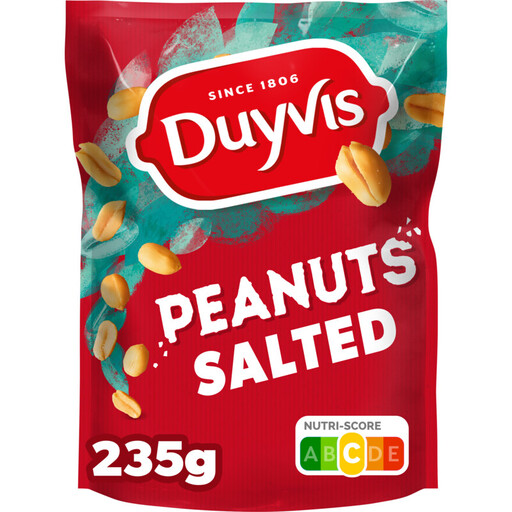
Why this fits the profile: A familiar snack in a manageable size for everyday snacking or a small gathering.
The ingredients list is short: peanuts, sunflower oil and salt. This makes the composition easy to check.
235 grams, classic salty flavour and, according to the product information, 26 grams of protein per 100 grams.
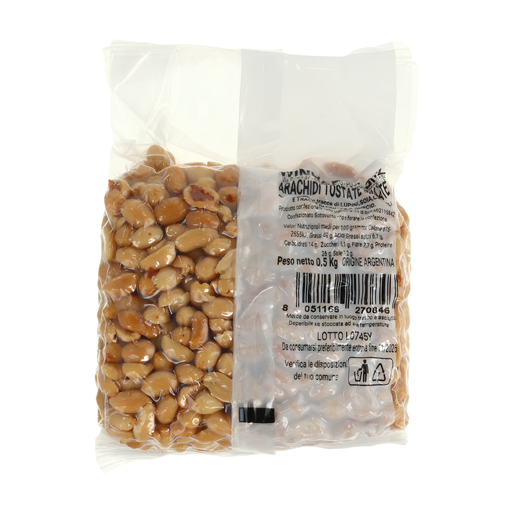
Why this fits the profile: For those who want a larger pack and a clear, traditional preparation method.
The ingredients are limited to peanuts and salt. There's no coating to obscure the peanut content.
500 grams, dry-roasted and salt-baked according to the product description; ideal for sharing.
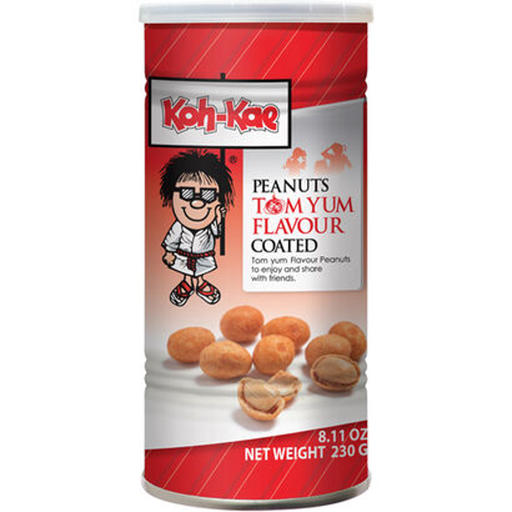
Why this fits the profile: For fans of bold Asian snacks to enjoy with beer, a party table or a themed drinks evening.
The product description clearly mentions the coating and Tom Yum flavour. Do check the packaging for peanuts, fish and wheat.
230 grams, crunchy coating and a combination of spicy and sour Tom Yum seasoning.
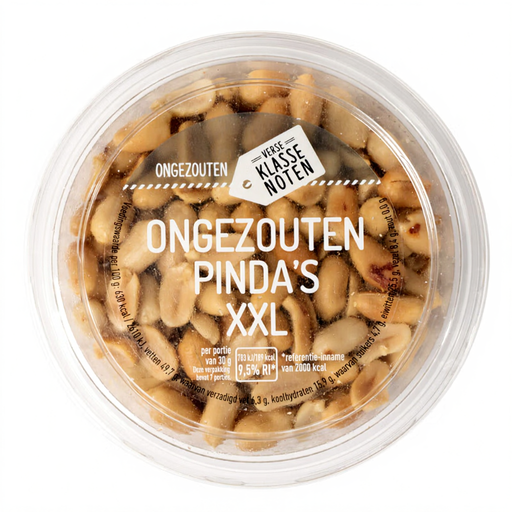
Why this fits the profile: For those looking for unsalted peanuts with a large kernel and minimal added ingredients.
The ingredients list states only 100% peanuts. So you know in advance that no coating, sugar or extra spices have been added.
210 grams, extra large roasted peanuts and, according to the product information, 0.02 grams of salt per 100 grams.
We've put together a full, up-to-date list of products that fully meet these strict selection criteria and comply with current European safety regulations.
Salted peanuts and roasted peanuts are classic choices. If you want more variety, combine a neutral variety with spiced peanuts, savoury snacks or an Asian snack such as Tom Yum, teriyaki or chilli. When serving several bowls, be mindful of allergens and ideally place the packs near the drinks table.
Seal the bag as airtight as possible and store it in a cool, dry place away from direct sunlight. A well-sealed storage container can help protect against moisture. Before eating, check the smell, texture and packaging. The best-before date and storage advice on the original packaging remain the most important guide.
That depends on the price per 100 grams and how much you actually use. A large pack can be cost-effective for parties or regular snacking, but a smaller bag reduces waste if you eat peanuts less often. So calculate the price per kilo and consider how well you can keep them crunchy after opening.
