
Vandaag of morgen in huis

Kwaliteit gegarandeerd

Welkomstaanbiedingen ontgrendelen: GRATIS bezorging | Tot 80% korting | Gratis 30 dagen JoyPlus-proefperiode
Download de app
Anyone looking to buy nuts and seeds online will quickly come across dozens of varieties. Salted peanuts, unsalted cashews, pistachios, macadamia nuts, sunflower seeds, pumpkin seeds and party nuts differ in more than just taste. The ingredients, pack size, packaging and allergen information can also vary considerably.
A striking package or a claim such as “natural” therefore does not tell the whole story. Use these practical checks to compare products based on information that is actually shown on the label or in the product description.
A 500-gram pack may look appealing, but it only offers good value if you can use the contents in time. Once opened, roasted nuts and seeds can lose their crunch when exposed to moisture and air. So check the net quantity, the closure and the recommended storage method. For a one-person household, a 100 to 250-gram bag may be more practical than a large multipack.
A nut mix may contain several varieties, but the first ingredients usually indicate which component makes up the largest share. For example, the product information for g'woon Macadamia Mix lists peanuts, almonds and cashews before macadamia nuts. So if you are mainly looking for macadamia nuts, you need to look beyond the product name.
Also check whether a mix contains seeds, maize, dried fruit, sugar or flavourings. That does not automatically make the product unsuitable, but it is important when you are specifically looking for unsalted nuts or a simple ingredient list.
Salted sunflower seeds and pumpkin seeds can contain noticeably more salt per 100 grams than unsalted nuts. Anatolia Dakota Aycekirdegi Tuzlu, for example, lists 3 grams of salt per 100 grams. Anatolia salted roasted pumpkin seeds contain 3.5 grams of salt per 100 grams.
So always compare salt, sugar and saturated fat per 100 grams. This allows you to assess different packs on the same basis, rather than focusing only on the serving size.
Read the ingredients list from top to bottom. According to the description, g'woon Sugar Peanuts contain 59% peanuts and 33% sugar, along with ingredients including sunflower oil, glucose syrup, honey and colourings. This may suit someone deliberately looking for a sweet snack, but not a buyer expecting unsalted nuts with a short ingredients list.
Also check the 14 mandatory EU allergens on the label. These include peanuts, nuts, wheat, milk and sesame. Warnings such as “may contain traces of” are also relevant if you have allergies. Product information can change, so always use the label on the packaging for the final check.
The nutrition table generally lists values per 100 grams. Pay particular attention to:
A product with “unsalted” in its name may still naturally contain a small amount of sodium or salt. For example, g'woon Roasted & Unsalted Cashew Nuts list 0.067 grams of salt per 100 grams.
Choose the pack size according to how you intend to use it:
A resealable bag helps retain freshness after opening, but it does not replace cool, dry and dark storage. Keep the packaging tightly closed and follow the date and instructions on the label.
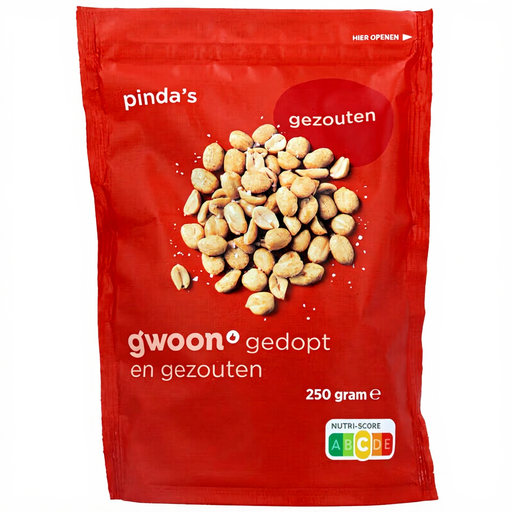
Why it suits this profile: A familiar choice for drinks gatherings and everyday snacking, in a convenient 250-gram pack.
The ingredients list 99% peanuts, sunflower oil and 0.7% salt. This makes the composition easy to check.
250 grams net; 99% peanuts; contains peanuts and may contain traces of cashews.
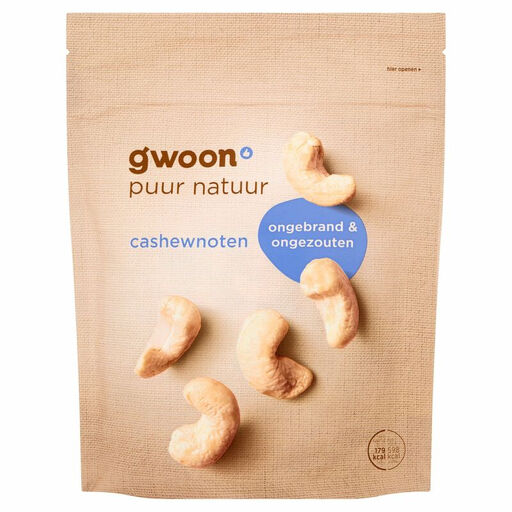
Why it suits this profile: Ideal for lovers of roasted, unsalted cashews without a spice mix or sugar coating.
The product information lists only cashews as an ingredient. Check the packaging at the time of purchase for any changes.
200 grams; roasted; unsalted; contains cashews.
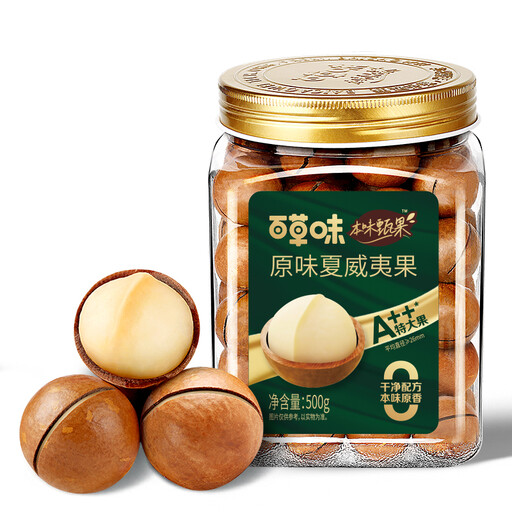
Why it suits this profile: A large pack for baking, sharing or enjoying macadamia nuts regularly.
The product description states that it contains 100% macadamia nuts, with no added salt, sugar or seasoning.
500 grams; 100% macadamia nuts according to the product information; suitable for snacking and baking.
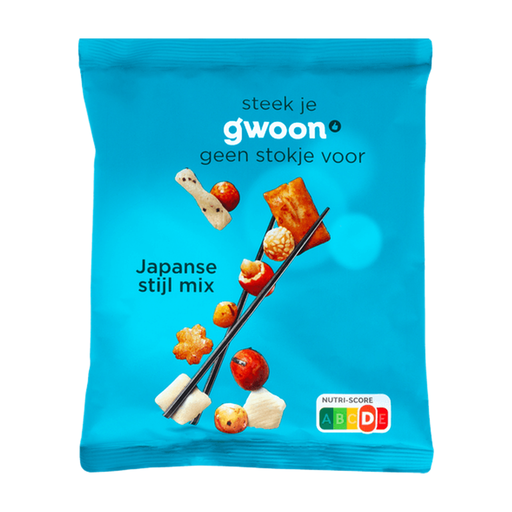
Why it suits this profile: For anyone who wants to serve a seasoned, crunchy Japanese mix alongside regular nuts at a drinks gathering.
The product information lists, among other ingredients, 37% maize starch and 21% peanuts. This makes it clear that it is not a pure nut mix.
250 grams; seasoned coating; resealable jar according to the product description.
We have put together a complete, up-to-date list of products that fully meet these strict selection criteria and the applicable European safety regulations.
Your choice of product depends on the occasion and how you want to use it:
That depends on your taste, serving size and preference for salt or sugar. Unsalted cashews, unsalted macadamia nuts or a simple nut mix often have a shorter ingredients list than coated or sugared snack nuts. Always check the nutritional information and allergens on the packaging.
Store them according to the product instructions in a cool, dry and dark place. Seal a bag or jar tightly to limit moisture and the transfer of odours. Ideally, use opened products within the period stated on the packaging and look out for changes in smell, taste or texture.
Compare the price per 100 grams as well as the ingredients. A mix may appear cheaper, but it could contain a relatively high proportion of peanuts, maize or coating. If you are looking for a specific variety, such as pistachios or macadamia nuts, buying a pack containing just one type can be a more targeted choice.
