
Vandaag of morgen in huis

Kwaliteit gegarandeerd

Welkomstaanbiedingen ontgrendelen: GRATIS bezorging | Tot 80% korting | Gratis 30 dagen JoyPlus-proefperiode
Download de app
If you’re looking to buy nuts, you’ll soon find dozens of varieties, flavours and pack sizes online. Roasted, salted, unsalted and mixed nuts may seem easy to compare at first. But the key differences often lie in the ingredients, portion size and how you plan to use the pack.
Here are some common pitfalls to watch out for:
Start with the ingredients list. A simple variety might contain just pistachios and salt, or only cashews. Seasoned snacks can have a much longer list of ingredients.
Pay particular attention to the 14 major EU allergens. Nut products may contain almonds, cashews, hazelnuts, walnuts, pistachios, macadamias or pine nuts. Some snacks may also contain peanuts, soya, milk, sesame or gluten.
A mixed nut selection is a convenient way to enjoy different flavours, but check that the listed ingredients match what you expect. For example, ChaCha Daily Nuts contains walnuts, raisins, cranberries, cashews, almonds and hazelnuts. The individual percentages are shown on the label.
Roasted nuts usually have a more intense flavour and a firmer bite than unroasted varieties. For salted nuts, the salt content is an important point of comparison. Check the amount of salt per 100 grams on the label, rather than relying on terms such as “lightly salted”.
Oil may also be used in preparation. Some pine nuts, for example, are roasted with vegetable oil. This affects both the ingredients list and nutritional information. Use the values per 100 grams to compare different packs fairly.
Nutritional information isn’t personal dietary advice, but it can help you compare products objectively. For example, according to the product information, g’woon Cashew Nuts Roasted & Unsalted contains 596 kcal, 46.67 grams of fat, 18.67 grams of protein and 0.067 grams of salt per 100 grams.
A 100 to 200 gram bag is suitable for occasional snacking, lunchboxes or keeping a small supply. A large pack of nuts weighing 500 grams or 1 kilo makes more sense for baking, cooking, parties or everyday use by several people.
Once opened, follow the storage instructions:
So, a large pack isn’t automatically better value. If you don’t use many nuts, several smaller packs may be more practical.
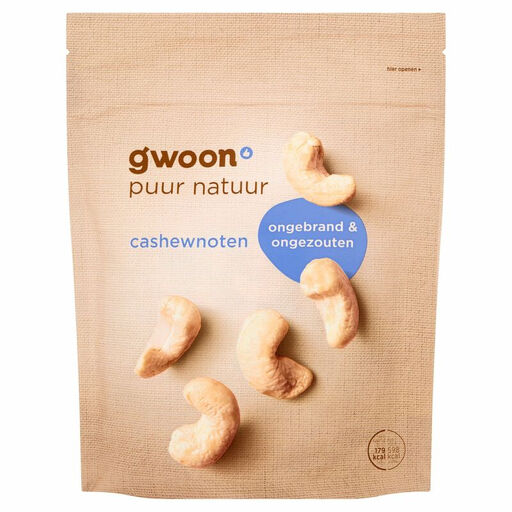
Why it suits this profile: A handy 200-gram pack of roasted, unsalted cashews. It’s a good way to try the flavour before buying a larger pack.
The product information lists one main ingredient: cashews. No added salt is listed as a seasoning, making the ingredients easy to check.
200 grams; roasted and unsalted; per 100 grams, the label lists 596 kcal, 18.67 grams of protein and 0.067 grams of salt.
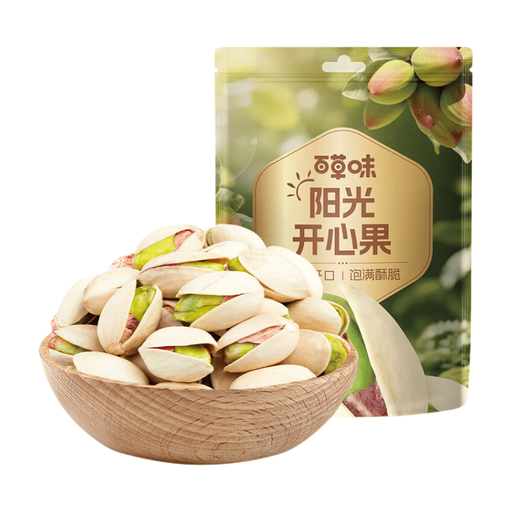
Why it suits this profile: A compact pack of pistachios with a clear, straightforward flavour: roasted and salted.
The product description lists pistachios and salt as ingredients. So it’s clear that this is a salted variety, not one with a sweet coating or complex seasoning mix.
100 grams; ready to eat; according to the product information, 580 kcal, 45 grams of fat, 20 grams of protein and 1.5 grams of salt per 100 grams.
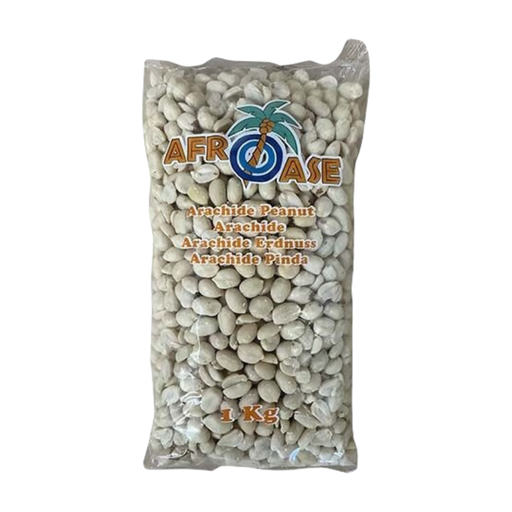
Why it suits this profile: A kilo is a good choice for households that regularly use peanuts for snacking, cooking, baking or larger gatherings.
The product information distinguishes between raw, roasted and sugar-coated varieties. Before buying, check which version will be supplied and store the opened pack in a tightly sealed container.
1 kilo; suitable for a range of uses; the product information lists different preparation options and storage guidance.
As well as cashews and pistachios, there are plenty of other practical options:
We’ve put together a complete, up-to-date list of products that meet these strict selection criteria and comply with current European safety regulations.
“Roasted” describes how the nuts are prepared using heat. “Unsalted” refers to the amount of salt added. So a product can be both roasted and unsalted, as with some cashews. Always check both details separately on the product page and packaging.
It depends on the type of nut, packaging and storage conditions. Keep opened nuts in a cool, dry place in an airtight container. When using them, check for an unusual smell, a soft texture or a rancid taste. The exact shelf life and date are shown on the pack.
It can be, but compare the price per 100 grams and consider how much you’ll use. A 500-gram or 1-kilo bag is particularly practical if you eat nuts regularly or use them for cooking and baking. For occasional snacking, a smaller pack can help you avoid waste.
