
Vandaag of morgen in huis

Kwaliteit gegarandeerd

Welkomstaanbiedingen ontgrendelen: GRATIS bezorging | Tot 80% korting | Gratis 30 dagen JoyPlus-proefperiode
Download de app
When you want to buy muesli online, you’ll quickly come across terms like “no sugar”, “high in fibre”, “organic” and “crunchy”. These labels can be helpful, but they don’t tell the whole story. A product with no added sugar, for example, can still contain naturally occurring sugars. And a larger pack isn’t automatically better value if you stop enjoying the taste after a few bowls.
With these practical checks, you can compare muesli, granola, porridge oats and wholegrain breakfast cereals based on the information on the label.
Muesli with no added sugar contains no sugar added during production, but dried fruit can still provide natural sugars. So always check:
For example: B+ Muesli Nuts and Fruit states 0g added sugars, but according to the nutritional information it contains 20.8g of sugars per 100g. This difference is partly due to the dried fruit.
You should always cross-check a fibre claim against the nutrition table. Values vary widely across the range. Zonnatura Organic Whole Wheat Oatmeal lists 11g of fibre per 100g. Quaker Cruesli Zero Sugar Added Apple, Pecan and Cinnamon lists 24g per 100g. The latter product contains chicory root fibre and soluble maize fibre, among other ingredients.
More fibre isn’t automatically better for everyone. If you’re not used to a high-fibre diet, it’s best to build up gradually and drink plenty of water. This is nutritional information, not a medical claim.
A bag of 6 x 400g might seem handy for a family, but only if everyone likes the same flavour. For a first purchase, 275g to 500g is often more manageable. Portion packs are practical for work, travel or a quick breakfast, but compare the price per 100g and check how much product you actually get.
Also pay attention to the best-before date, how the pack reseals after opening, and storage instructions. Keep muesli and granola dry, cool and well sealed.
Check which ingredients are listed first. In a wholegrain breakfast cereal mix, you should see oats, wheat, rye or spelt clearly in the ingredients list. Also look at the percentages of nuts and fruit. “Muesli with nuts and fruit” might, for example, contain only a small percentage of nuts or fruit.
B+ Muesli Nuts and Fruit lists, among other things, 22% dried grapes, 5% apricot, 1.5% hazelnuts and 1% almonds. This makes the composition much clearer than just the flavour name.
For a simple composition, porridge oats can be a great choice. According to the product information, Zonnatura Organic Whole Wheat Oatmeal is made from organic wholegrain oat flakes. The nutritional values show 1.7g of sugars and 11g of fibre per 100g.
Always compare products on the same basis: per 100g. At a minimum, look at:
Crunchy muesli or granola often contains oil to achieve its texture. This can increase the fat and energy content. For example, Quaker Cruesli Choco Zero Sugar lists 19g of fat and 21g of fibre per 100g. Holie’s Granola Low Carb Crunch lists 33g of fat, 18g of carbohydrates, 16g of fibre and 22g of protein per 100g.
The term sugar-free muesli needs extra attention: check whether “sugar” is truly zero, or whether the product simply contains no added sugar. Products with sweeteners may also carry usage warnings on the pack.
In the Netherlands, major allergens must be clearly stated. Pay particular attention to gluten-containing cereals, milk, soya, peanuts, nuts and sesame. “May contain” indicates possible cross-contamination and is relevant if you have an allergy.
A product with the European organic logo should be identifiable by the logo and the control code on the packaging. So don’t base your choice solely on the word “organic” in a title. According to the product information, B+ Muesli Nuts and Fruit is made with organic ingredients. Zonnatura Organic Whole Wheat Oatmeal is offered as 100% organic. Always check the actual packaging when you receive it.
For a vegan choice, Quaker Cruesli Zero Sugar Added Apple, Pecan and Cinnamon states its suitability for vegans in the product information. The strawberry and peach variant says the same. Still, check the label, as recipes can change.

Why this suits the profile: A straightforward pack with a short ingredients list, ideal for anyone wanting to try simple porridge oats first.
The nutritional information shows 1.7g of sugars and 11g of fibre per 100g. There are no chocolate pieces or dried fruit to complicate the composition.
100% organic wholegrain oat flakes according to the product information; 500g; 11g of fibre per 100g.
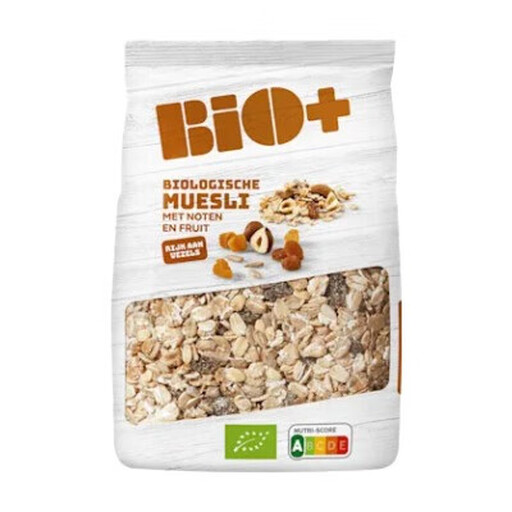
Why this suits the profile: For anyone looking for a mixed muesli with grains, seeds, nuts and fruit for yoghurt, milk or a smoothie bowl.
The composition lists the percentages of dried grapes, apricot, hazelnuts and almonds, among others. This gives you a much clearer picture of what “nuts and fruit” actually means.
9g of fibre and 10.9g of protein per 100g according to the product information; 0g added sugars; organic ingredients as per the description.
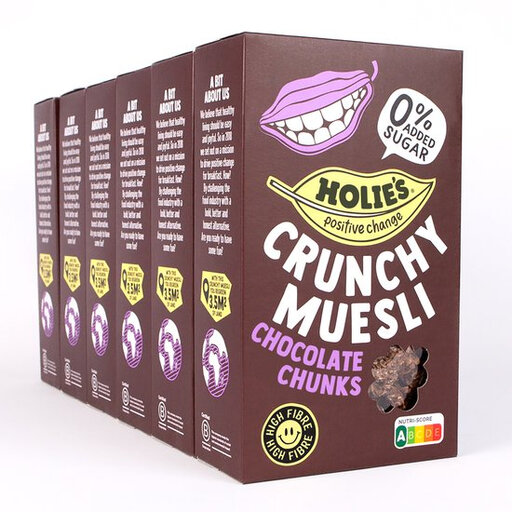
Why this suits the profile: A bulk pack for households that regularly eat crunchy muesli and are mindful of fibre and added sugar.
The product information states 0% added sugar and gives the full base of oats, spelt, chicory root fibre and cocoa. The pack contains six 400g bags.
22g of fibre per 100g; 46% wholegrain oat flakes; six individual packs for easy stock management.
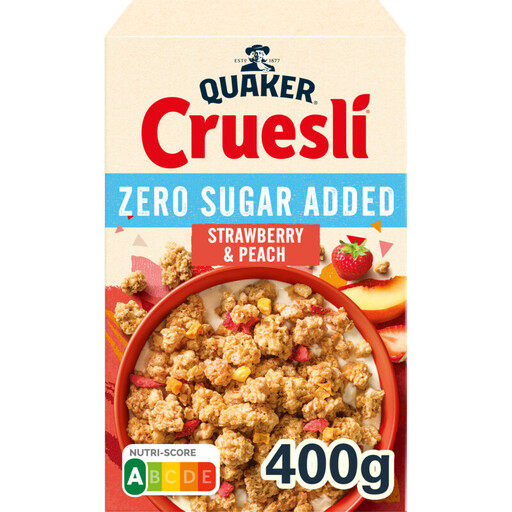
Why this suits the profile: For anyone looking for a sweet, crunchy muesli with fruit who values the product information on vegan suitability and no added sugars.
The product description states no added sugars and no sweeteners. At the same time, the table clearly shows there are 4.4g of sugars per 100g.
24g of fibre per 100g; 400g pack; listed as suitable for vegans according to the product information.
We’ve put together a full, up-to-date list of products that fully meet these strict selection criteria and comply with current European safety regulations.
Compare the nutritional values per 100g and check whether the product contains dried fruit, syrup or sweeteners. Zonnatura porridge oats list 1.7g of sugars per 100g. Quaker Cruesli Zero Sugar Added Strawberry & Peach lists 4.4g. So “no added sugars” doesn’t mean there are no sugars present at all.
No. Muesli usually consists of flakes, seeds, nuts and dried fruit without everything being baked crunchy. Granola is often roasted with oil and sometimes sugar or syrup, although sugar-free versions do exist. So always check the ingredients and nutritional values.
Keep the product cool, dry and out of direct sunlight. Seal the pack tightly or use an airtight container. Check the best-before date and discard the product if there’s an unusual smell, moisture or damaged packaging. With portion packs, unopened stock is generally easier to manage.
