
Vandaag of morgen in huis

Kwaliteit gegarandeerd

Welkomstaanbiedingen ontgrendelen: GRATIS bezorging | Tot 80% korting | Gratis 30 dagen JoyPlus-proefperiode
Download de app
Looking to buy mixing bowls for cake batter, salads or meal prep? The choice may seem straightforward, but product pages don’t always explain which features matter in practice. A bowl may look spacious in a photo, yet have a limited capacity. Terms such as “multifunctional” are also sometimes used without clear information about whether a bowl is suitable for the oven, freezer or microwave.
Use this buying guide to compare a mixing bowl, mixing bowl set or bowl set by material, size and everyday use.
A diameter of 24 or 25 cm doesn’t automatically tell you how much batter or salad a bowl can hold. Its shape and height determine its usable capacity, so always check the stated capacity in litres or millilitres.
A range of sizes is useful for everyday use:
It’s also best not to fill a bowl to the brim. You need extra room for whisking, mixing or tossing to help prevent spills.
A stainless steel mixing bowl is lightweight, doesn’t absorb many odours and is generally suitable for intensive kitchen use. Do check whether it’s microwave-safe: metal should never go in the microwave. A plastic mixing bowl is often lighter and may be suitable for microwave use, but that doesn’t automatically mean it can go in the oven or freezer.
Ceramic and earthenware bowls are suitable for serving or breakfast, but they’re heavier and more prone to damage from knocks. Check each product’s specific care instructions rather than relying on terms such as “durable” or “multifunctional”.
A mixing bowl with a non-slip base may stand more steadily while you stir, but a silicone ring won’t stop an overfilled bowl from tipping over. Place the bowl on a flat work surface and make sure the base is clean and dry.
When choosing stackable mixing bowls, pay attention to their shape too. Some bowls nest inside one another, while others can simply be stacked on top of each other. This affects how much cupboard space you’ll actually save.
Check:
An uncoated stainless steel interior is practical for mixing and cleaning. For plastic bowls, check the microwave, fridge and dishwasher instructions separately.
These features aren’t interchangeable. A dishwasher-safe bowl isn’t automatically suitable for the oven. A product that can go in the freezer may not be suitable for direct heating.
For example, note the following differences:
A dishwasher-safe mixing bowl saves time, but check whether this also applies to the lid, silicone ring and accessories. Stackable designs are useful in smaller kitchens. A handle can make pouring easier, while a wide rim gives you a better grip when whisking.
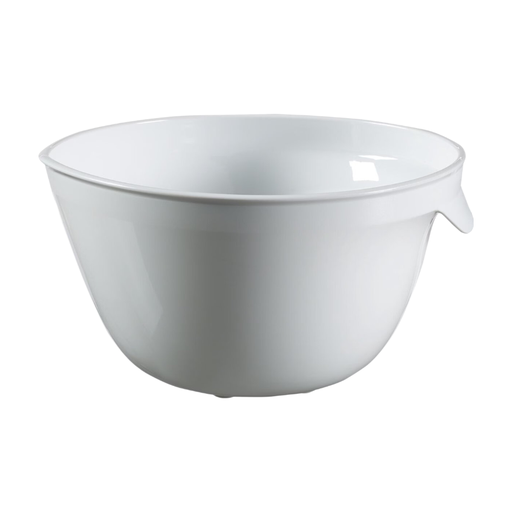
Why it suits this profile: A practical plastic mixing bowl for everyday baking, salads and marinades. Its 2.5-litre capacity is a manageable size for smaller households and beginner home bakers.
The product information lists the capacity, handle and feet separately. It also clearly states that the bowl isn’t intended for freezer or oven use.
2.5-litre capacity, ergonomic handle, feet for stability, and suitability for the dishwasher, fridge and microwave according to the product description.
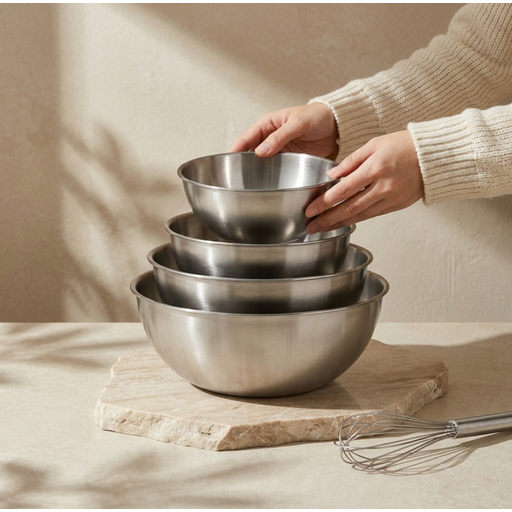
Why it suits this profile: This set is designed for anyone who wants a range of sizes for mixing, washing, marinating, serving and storing food.
The four diameters of 19, 22, 25 and 28 cm make it easier to distinguish between size and capacity. The bowls nest inside one another, so they don’t take up unnecessary cupboard space.
304 stainless steel, four sizes, a nestable design and dishwasher-safe according to the product information. Not suitable for the microwave.
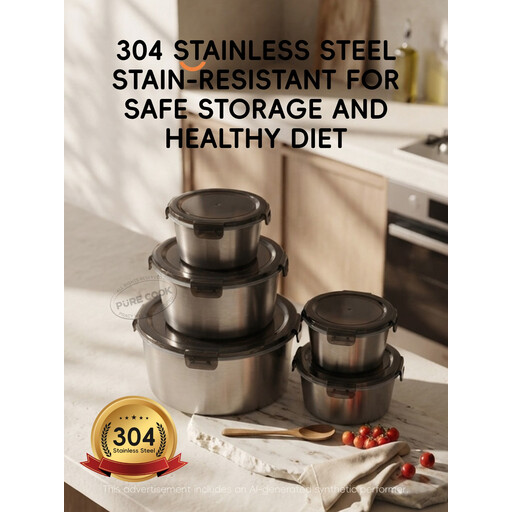
Why it suits this profile: Handy for meal preppers and families who want to store portions, leftovers and ingredients in different sizes.
The set lists five separate capacities: 350, 600, 1000, 2000 and 3500 ml. This lets you match the container to the portion, rather than using one large bowl for everything.
304 stainless steel, transparent lids, clip closures, silicone sealing rings and dishwasher-safe parts according to the product description.
We’ve put together a full, up-to-date list of products that meet these strict selection criteria and applicable European safety requirements.
For one or two people, a mixing bowl of around 1 to 2.5 litres is often practical. Families, home bakers and meal preppers will usually find a set with sizes up to 3.5 litres or more useful. You’ll need extra room when making dough or light, airy batter.
No. Stainless steel is metal and shouldn’t go in the microwave. Also check whether the bowl is oven-safe; you should only rely on a maximum temperature if the manufacturer has stated one. A dishwasher-safe mixing bowl isn’t automatically suitable for the microwave or oven.
Its lifespan depends on the material, how often you use it and how well you care for it. Stainless steel resists many odours and is suitable for regular mixing. Plastic may be lighter, but check for scratches, warping and discolouration. Replace a bowl or lid if cracks, sharp edges or permanent warping appear.
